Cabinet Hardware Installation Davie, FL
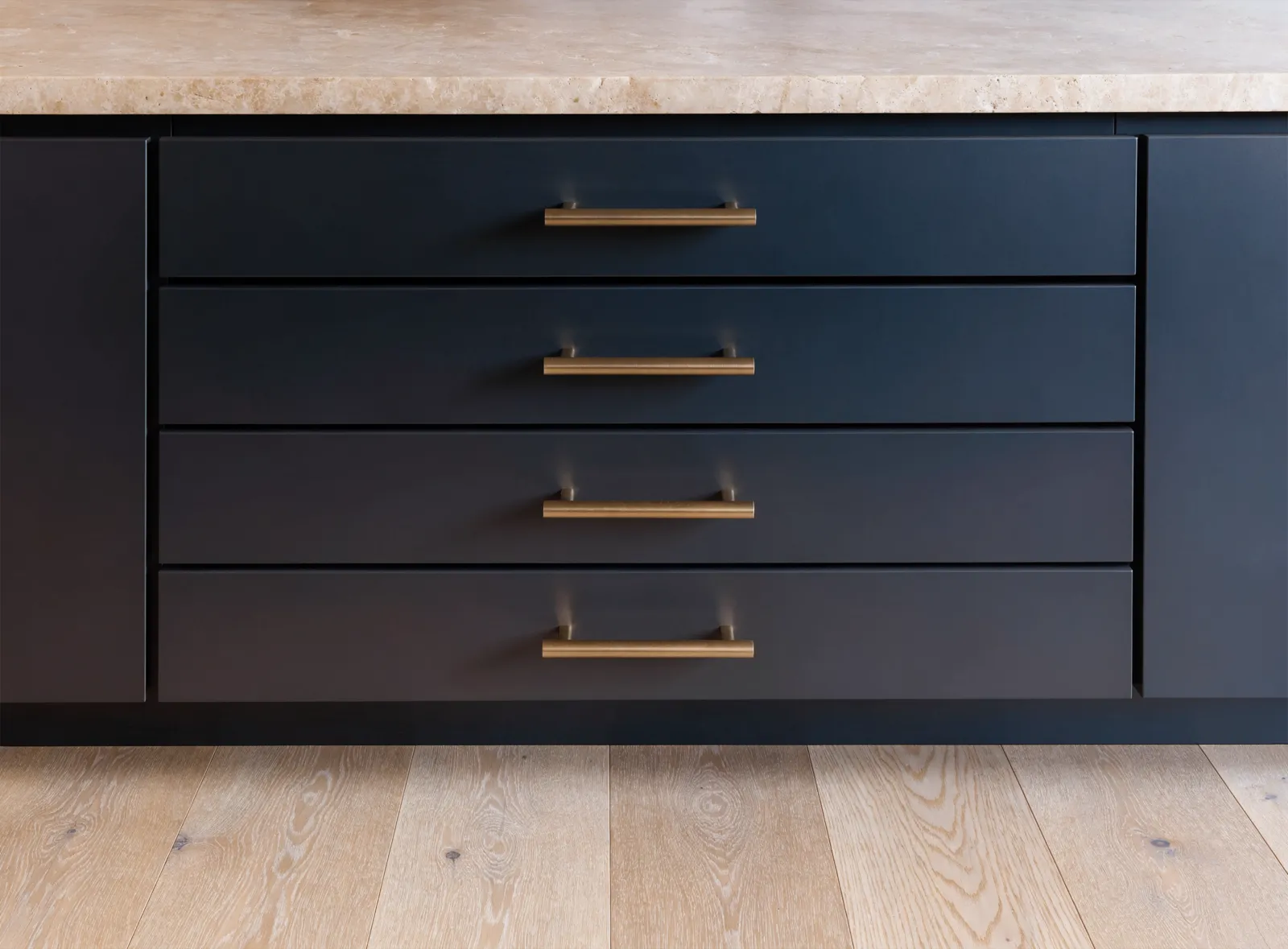
Cabinet hardware installation Davie is every knob and every pull on a kitchen, drilled to one template so the whole run lines up. Hinges and soft-close are a different job and get their own line. It is the smallest thing we take, and the one people notice without being able to name it.
- In your house
- 1 day
- Every hole
- One template
- Warranty
- 2 years
- License
- CGC1524886

- Licensed & insured: CGC1524886
- 500+ kitchens completed
- 2-year workmanship warranty
- Answered 7 AM–10 PM, 7 days
Cabinet hardware installation is the smallest job on this site and the one that gets looked at the hardest. Every knob and every pull, on the doors and drawer fronts you already have. The work is not the screwing. It is the drilling, and a finished door gives you one attempt at it.
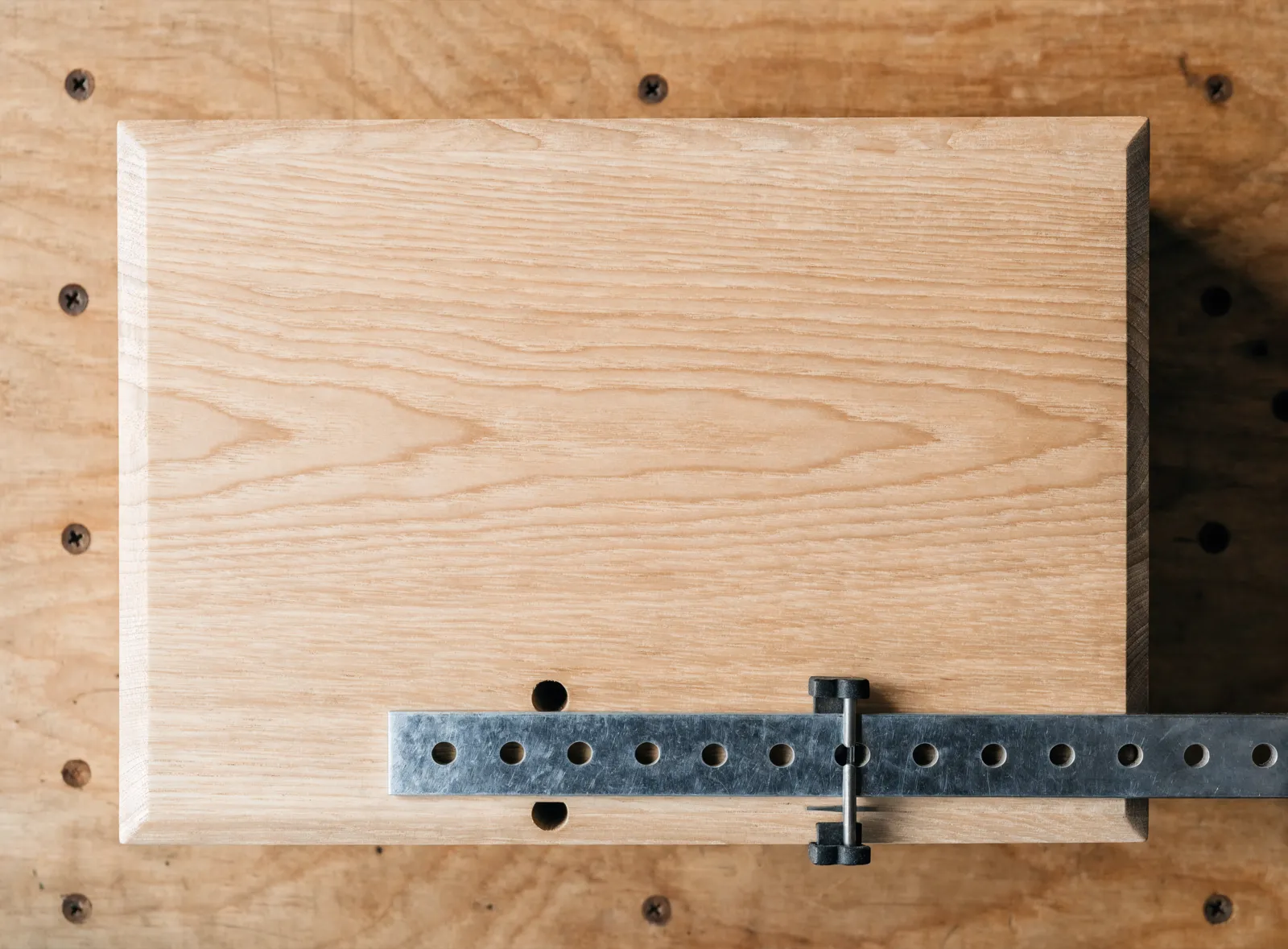
Drill the holes one at a time off a tape measure and they land close. Close is what the eye catches: a pull a sixteenth low on the third drawer, a knob a hair off the corner of the door beside it. Drill every hole off one template, registered to the same edge every time, and the run reads straight from across the room. Nobody walks in and praises the alignment. They stop noticing it, and that is the product.
When This Is Its Own Job, and When It Belongs Inside a Bigger One
There is a real trap in a job this small, and it is not the price. It is paying to drill the same kitchen twice. Before the styles and the finishes, work out which of these you are.
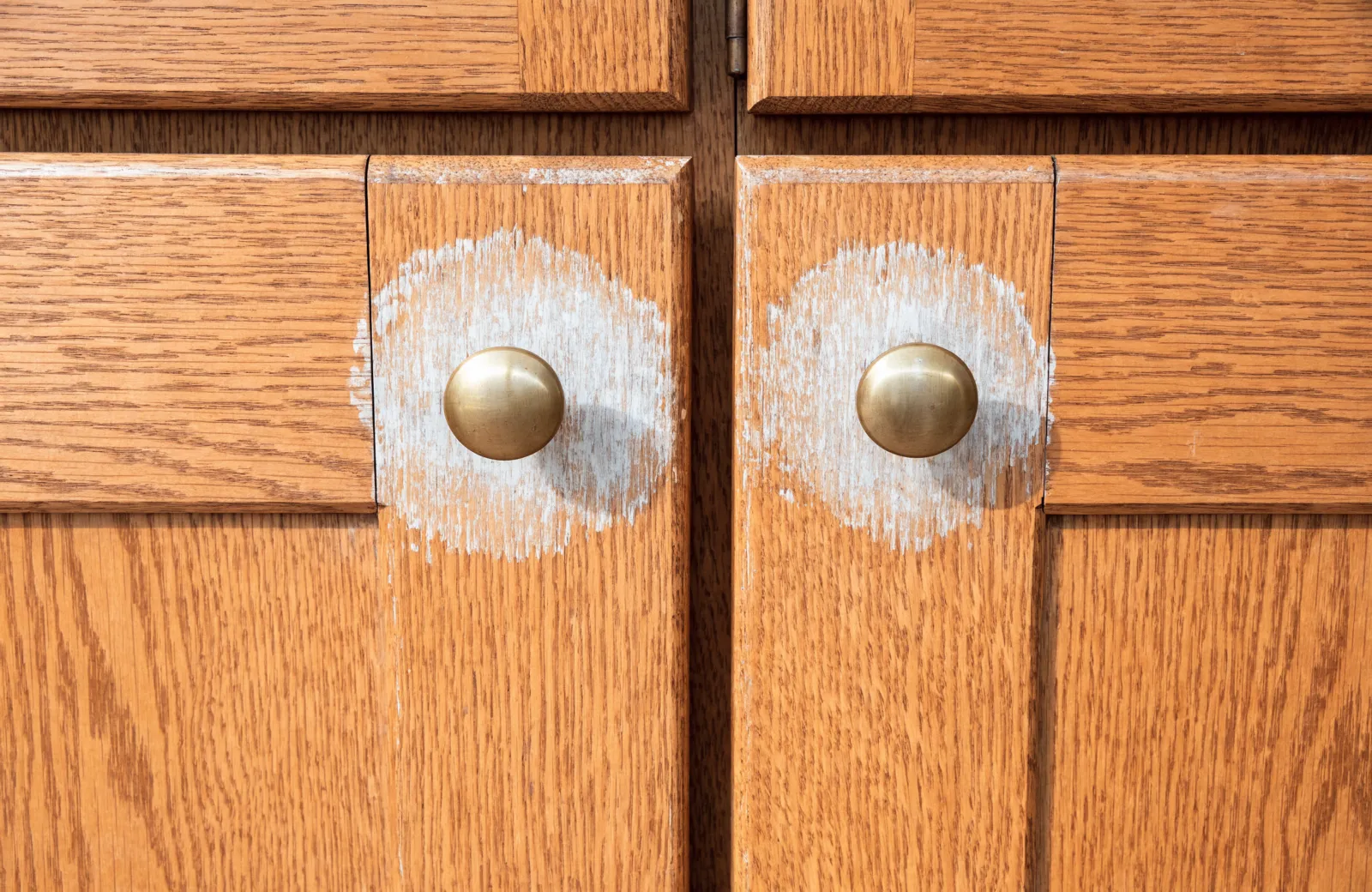
The cabinets are staying and the hardware is what dates them. The boxes are sound, the doors are ones you can live with, and the only thing announcing the decade is what your hand touches. Worn brass, a plastic knob that yellowed, a wire pull in a finish nothing else in the house matches. This is the case cabinet hardware installation exists for, and it is the cheapest change that alters how a kitchen reads.
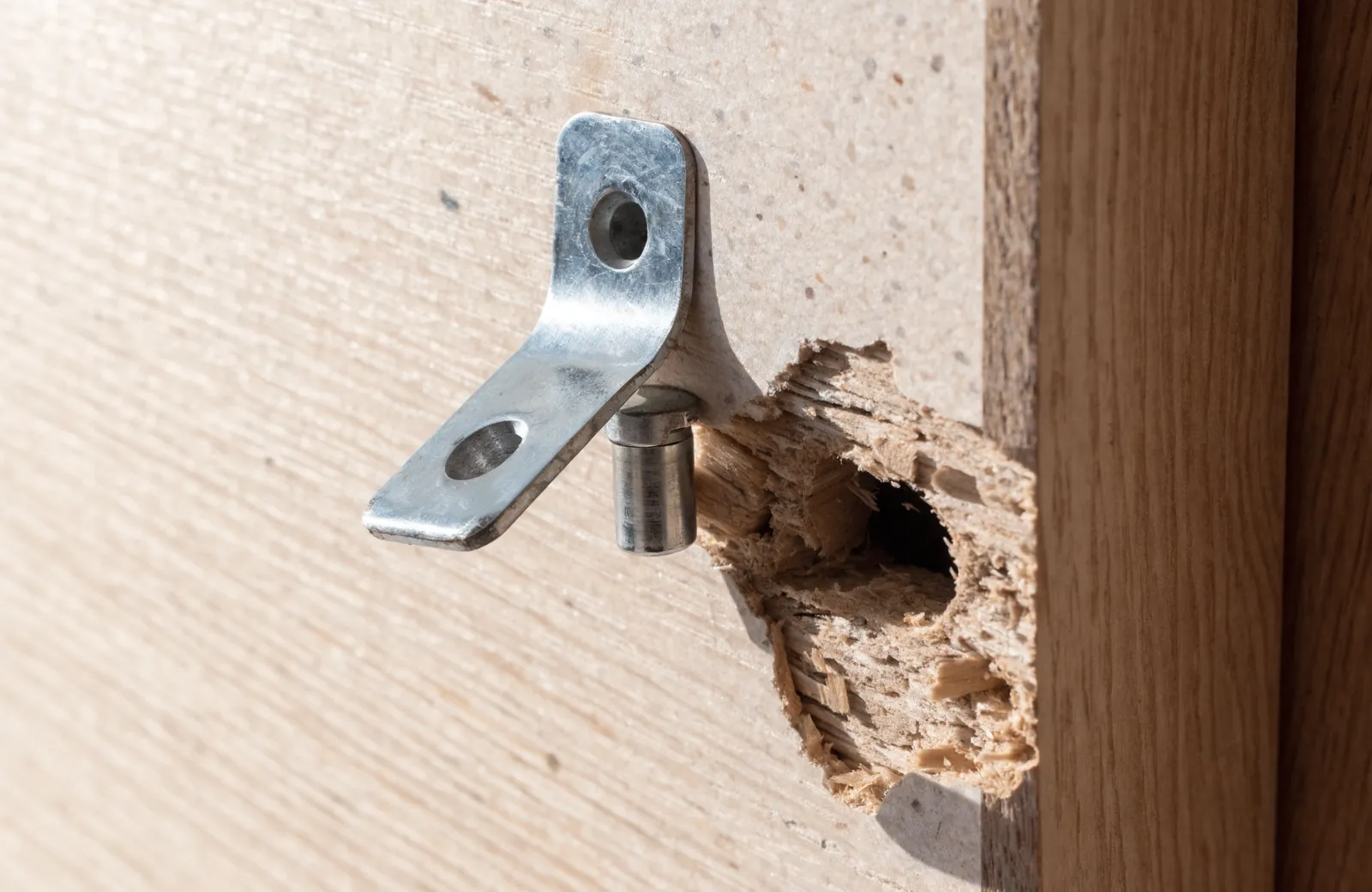
The doors sag, rub, or have stopped latching. That is almost never the door. It is the hinge, or the hole the hinge is screwed into. The screw is threaded into the edge of a cabinet box, and on most cabinets around here that edge is particleboard, where how much a screw holds is a property of the board rather than of the screw. The Forest Products Laboratory's handbook warns that the torque a screw takes in particleboard before the threads strip is set by the density of the board, which is why a hole that has let go does not come back by driving a longer screw into it. The repair is to give the screw fresh material to bite. That is hinge work, quoted on its own line, and it is still not a reason to replace a kitchen.
You want soft-close and nothing else. It is the most requested thing on this page, and it is a job of its own rather than part of putting hardware on. Whether your doors take it is decided by what is on them now.
Someone's hands are changing. Arthritis, a wrist that will not turn, a grip that is going. A knob and a pull are not the same object to that hand, and swapping them is the cheapest modification anyone can make to a kitchen.
You are selling. Hardware is what a buyer's hand lands on at the showing, and it photographs. It is the smallest amount of money that changes the first impression of a kitchen you are about to stop owning.
When we will tell you to keep your money
If the doors themselves are going, hardware on them is money spent twice. New doors get bored in a shop, on new material, and the hinges and pulls are inside that job already. That is what cabinet refacing is, and if it is where you are heading this year, drilling your current doors now throws away the first set of holes you paid for. The same goes for a door swollen at the bottom edge: new hardware on a failing front is a good pull on a bad door, and you will still see the door.
Knobs, Pulls, and the Hinges Nobody Looks At
Three pieces of hardware live on a kitchen. Two of them are the job on this page and a decision you enjoy making. The third is a different trade living inside the same cabinet, and it is quoted that way.
Knobs, and the one place they are wrong
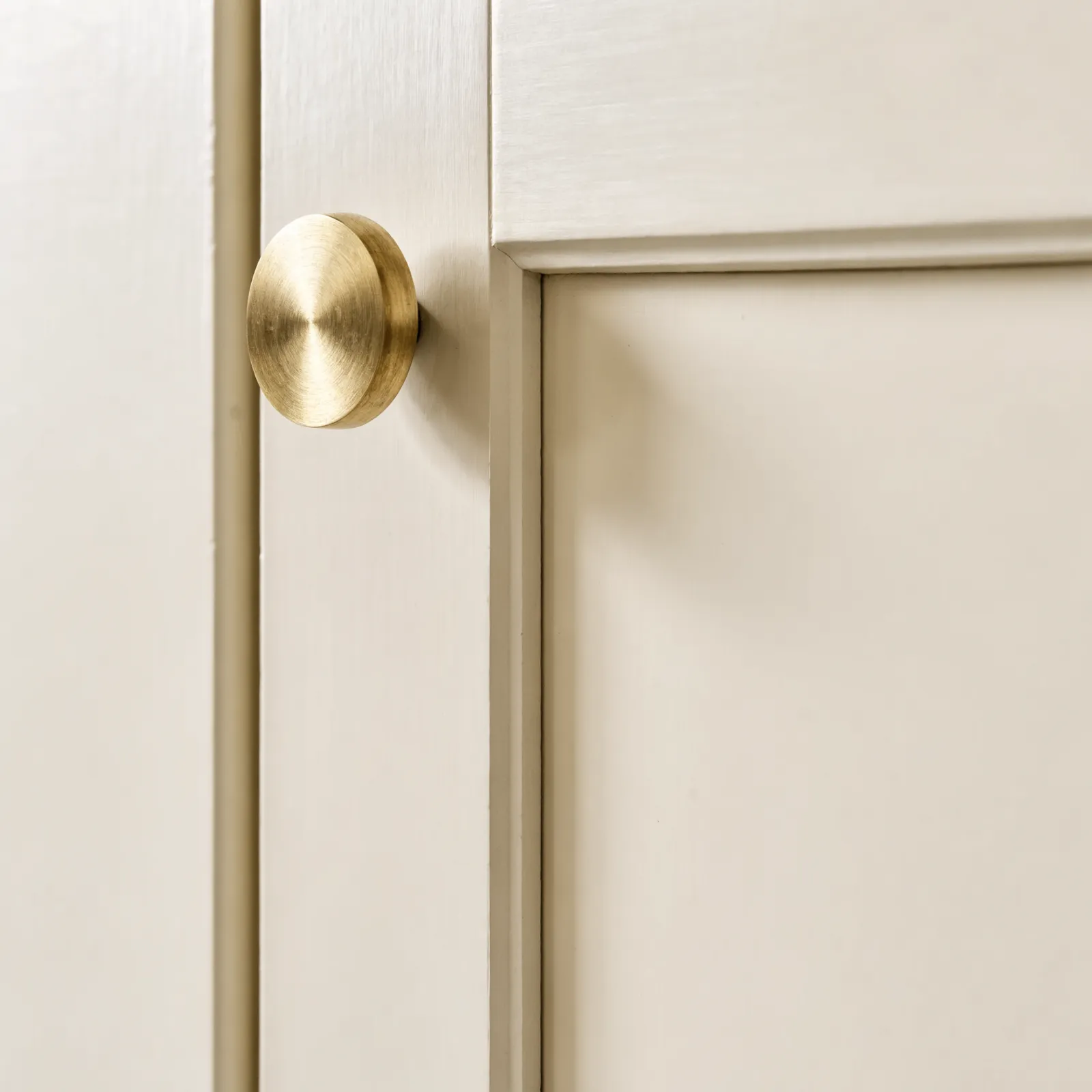
A knob is one screw through one hole, which makes it the fastest thing in this trade to install and the cheapest to correct if you change your mind. It is also a pinch: you take it between a thumb and a finger and you pull. On a wall cabinet holding plates that is nothing. On a deep drawer loaded with pots, that pinch is carrying the whole drawer several times a day, which is why knobs on big drawers wear out first.
Where a knob sits is not a matter of taste either. It goes on the stile, the vertical piece of the door frame, near the corner opposite the hinges. Put it on the flat panel in the middle and you have drilled a hole through the thinnest part of the door.
Pulls, and the measurement that decides whether a run reads straight
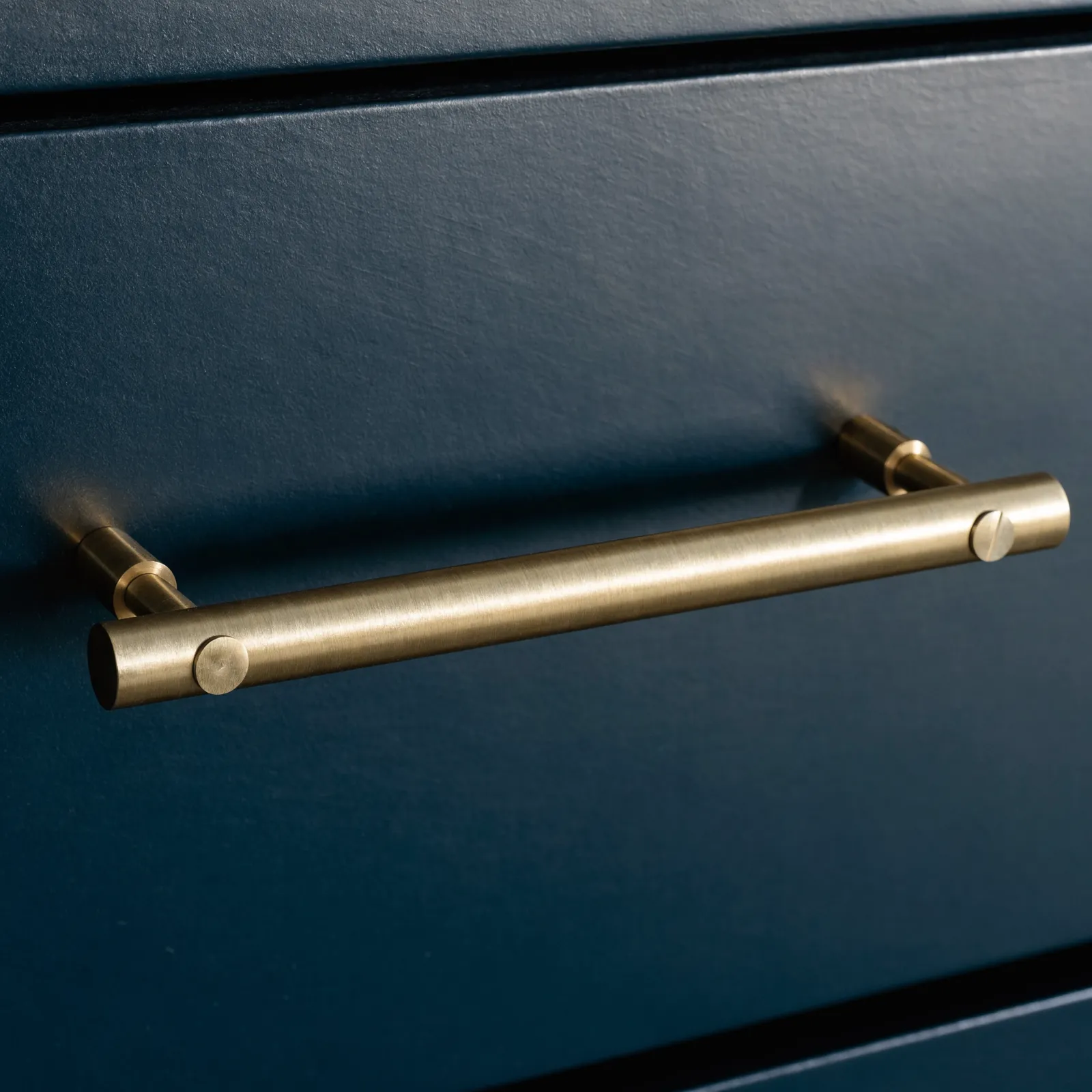
The only number that matters on a pull is center to center, the distance between its two screws. The overall length is a style question. The center to center is a drilling instruction, and it is what makes an old set of holes reusable or useless.
Two sizes carry most kitchens: 96 mm and 128 mm. A 96 mm pull is 3.78 inches between the screws, and the pull sold as 3-3/4 inch is 95.25 mm, so as a practical matter those two land on the same pair of holes. A 128 mm and a 5 inch pair up the same way, which is worth knowing when the box in your hand is written in the other unit.
Size by the front, not by the room. A narrow drawer under a cooktop and a thirty-inch pot drawer should not wear the same pull. What matters more than the size you land on is that the same logic reaches every front in the kitchen. Mixed logic is what a run of drawers shows.
Hinges, the part you do not look at and the part that gets its own line
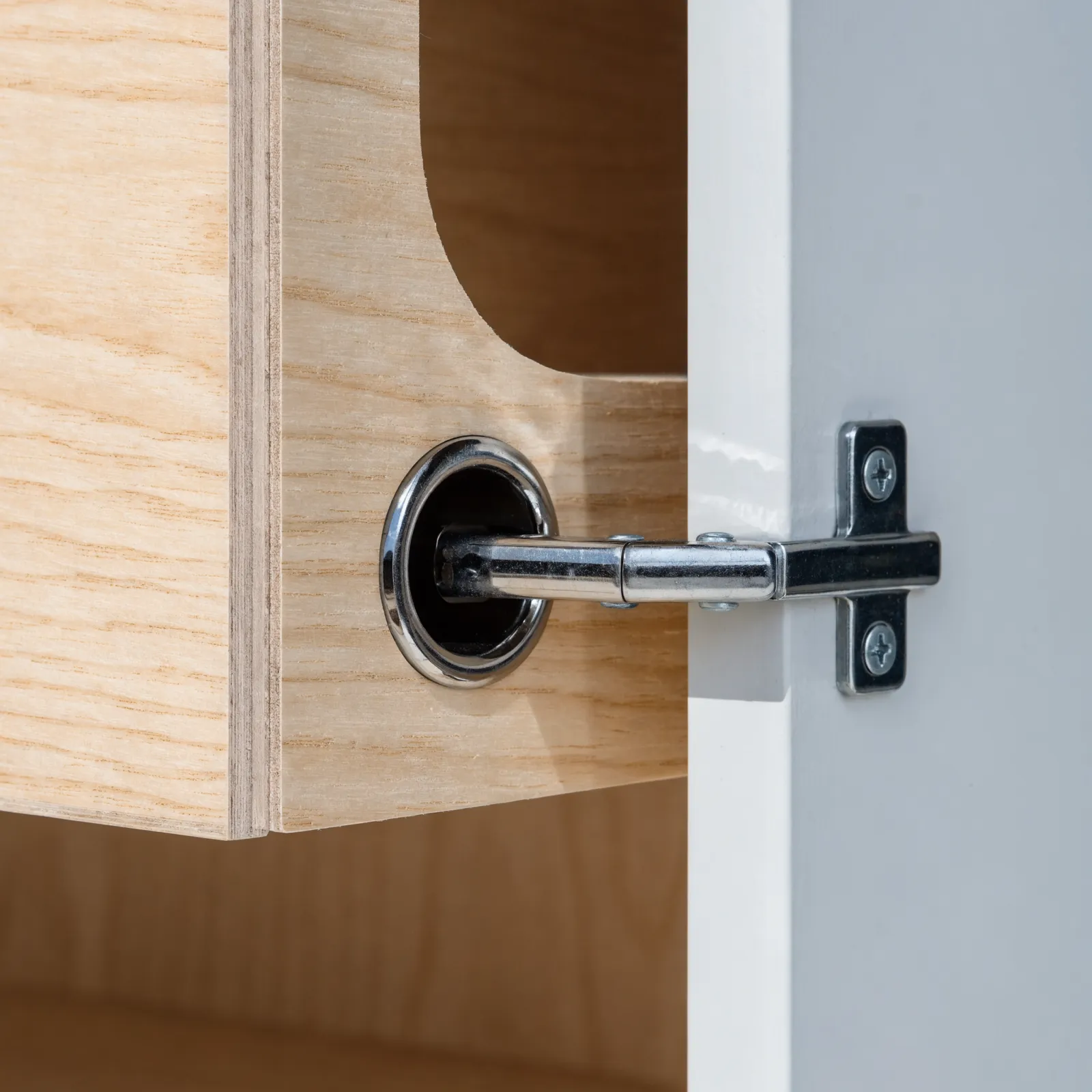
Everything above is what an install covers. Hinges are not, and this is the section that tells you whether to add them. Almost every cabinet built in the last thirty years runs on a concealed hinge: a cup bored into the back of the door, 35 mm across on nearly everything sold, and a plate screwed to the cabinet. The useful thing about it is that it still adjusts after the door is hanging, in three directions. Side to side to even the gap between two doors, in and out to bring a door flush with its neighbor, and up and down to level a row. A door that rubs is usually a hinge nobody ever turned.
Soft-close is either built into the hinge or clipped on as a separate damper. Both work, and which one your kitchen takes is answered in the questions below.
Ask whoever quotes you what hinge line they use, and whether it is built to the standard this trade writes for itself. There is one. The builders hardware association writes it and ANSI publishes it, and it covers hinges, knobs, pulls, catches and drawer slides, with tests for operation, cycling, strength and finish. A hinge that was never tested against anything is not obviously worse in the box. It is worse in the fourth year, on the door you open more than any other.
How Cabinet Hardware Installation Runs, Step by Step
- We count the fronts and look at the backs. Every door and every drawer front gets counted, and then we look at what is already drilled into them. A door that carried a single knob for thirty years has one hole in it, and a pull needs two. That fact decides most of this job.
- We check what your doors will take. The thickness of a shaker rail, whether the drawer front has a lip, whether the cabinets are face frame or frameless, and what hinge is on them now. These are what make hardware you already bought not fit, and installation morning is the expensive place to find out.
- A written number before we start. Itemized, and the itemizing is the point. The install of the knobs and pulls on one line. Anything you add on its own: hinges, soft-close, the correcting of holes somebody drilled before us. Hauling the old hardware away. You approve each line separately, and the total does not move unless the scope does.
- You choose in your own kitchen. Samples held against your doors, under your light, with your hand on them. A pull that felt right in a store is a pull you held for four seconds standing up.
- One template, registered to the same edge, for every hole in the kitchen. The template gets set once for the doors and once for the drawer fronts, and every front is registered off the same edge, so whatever the error is, it is identical everywhere and therefore invisible.
- The hardware on, and the run walked. If hinges are in your scope, that is where they go in: cups bored where a door needs new ones, plates screwed to sound material, then door by door on all three adjustments until the gaps are even and the fronts sit in one plane. If they are not, we still walk the run and tell you what your hinges are doing.
- The walkthrough, with everything open. We open every door and pull out every drawer with you there, and anything that is not right gets written down before we ask for the last payment.
What Cabinet Hardware Installation Costs in Davie
We do not publish our own price for cabinet hardware installation, and we do not publish a starting figure for it either. Both are decisions rather than gaps. The labor is counted per piece, the piece count belongs to your kitchen, and a galley with two runs of base cabinets is not the house down the street with a pantry, an island and a bank of pot drawers. A price printed before somebody counts your fronts is a number about a kitchen we have not seen.
The floor is the second decision, and it is about what a floor would tell you. Any figure low enough to be true of the smallest version of this work describes an afternoon with a drill and two doors. This job gets measured, templated, adjusted and warrantied like every other one on this site, so that number would sell you the wrong thing before we ever reach your kitchen. What the page gives you instead is what moves the money. The money arrives after the count, in writing.
What the number covers, and what gets its own line
In it. The walkthrough and the measuring, the drilling against one template, and the knobs and pulls going onto the doors and drawer fronts you already have.
Added only if you ask, on its own line. Replacing hinges, moving to concealed hinges, converting the kitchen to soft-close, and correcting holes somebody drilled before us. None of them is included by being nearby.
Not in it at all. New doors, refinishing, and the repair of a damaged front or of an old hole that took the material around it with it. New pulls settle none of those, and you hear so at the measurement rather than after.
What actually moves it
The count, before anything else. Every door plus every drawer front, the pantry side included. Everything else is a rate against that number, and only somebody standing in the room can take it.
The spacing on what you picked, against what is already drilled. Center to center is the whole question. If the pulls you chose land on the holes your fronts already have, a large part of this work does not happen and there is nothing to patch at the end of it. If they miss, every front gets drilled fresh, you get the hardware you actually wanted, and the holes you leave behind become a decision of their own.
Knobs against pulls. A knob is one hole in a front and a pull is two, and the two have to agree with each other as well as with the front.
Whatever you added from the list above. Hinges, soft-close, the correcting of somebody else's drilling. Each is counted the same way, per piece and per front, which is why you see them as their own lines instead of as a bump in one.
What the fronts are made of. Solid wood takes a patch better than a laminate or a painted composite front does, so the same abandoned hole is a smaller job on one kitchen than on another.
Your zip code is not on that list. We charge the same in Davie, Weston and Fort Lauderdale.
None of this is a price, and none of it becomes one until somebody counts. The count takes one visit, the quote comes back itemized, and the lines you did not ask for are not on it.
The comparison that costs people the most
Hardware quoted next to a refacing quote looks like the cheap alternative to it. It is not an alternative, because refacing already contains it. If new doors are anywhere in your plans for the year, drilling the doors you have now pays for the same holes twice.
The other comparison worth making is between two hardware quotes. Ask each one what happens to the old holes. It is the line that gets left out, it is the line you will look at every day, and on a painted front it is the difference between a finished job and a job you can see from the sink.
Why Choose Us
One template, and the same edge every time. That is the difference between this being a trade and being an afternoon with a drill. We do not mark a door, measure it and hope. Every hole in your kitchen is registered off one jig, which is what makes the whole run read as one line instead of a series of separate decisions.
The whole kitchen or none of it. Every door and every drawer front, the pantry side with the rest. We do not do the run you see and leave the far side for later, because a kitchen wearing two generations of hardware looks worse than a kitchen wearing one old one.
We will tell you not to buy this. If your doors are on their way out, new pulls on them are money you will spend again, and you hear that before you pay us anything. This is the smallest sale on the site and it is not worth taking under a story that does not hold.
The old holes get a line, not a surprise on the invoice. Filling and touching up whatever the new hardware leaves behind is its own item, shown to you and priced before you approve anything, because it is the part of this work that shows.
Gaven Constructions holds the license on it, CGC1524886, carries insurance, and warranties the installation for two years, which on this job means the holes. Somebody answers the phone from 7 AM to 10 PM, every day.
Licensed, Insured, and Permitted in Davie
This is the least regulated work on this site, and saying that plainly is more useful than stretching a section that does not apply to you. Nothing structural moves. No cabinet leaves the wall it is on. No pipe is opened and no circuit is touched. A knob is not regulated equipment, and we are not going to invent a reason for a permit on a job that does not need one. If what you actually want is lighting under the wall cabinets or a latch that runs on power, that is a different trade, and you would hear so at the measurement.
What does reach into your kitchen is not a building rule. It is a definition, and it is the only written one there is for the thing you are choosing. Federal accessibility standards govern public buildings and not private houses, so none of it applies to you legally. They are still where the criterion lives: an operable part has to work with one hand and must not require tight grasping, pinching or twisting of the wrist, under a maximum force of five pounds. Take hold of a round knob and try to open a loaded drawer that way, then take hold of a bar pull. If there is a hand in the house that is getting worse, that one sentence decides your hardware.
Requirements vary by project scope. Any required permitting, drawings, engineering or design services are identified and priced before the project is approved.
- License
- CGC1524886 Certified General Contractor, verifiable in the Florida DBPR licensee search.
- Insurance
- Insured and bonded Certificates are available before any work is scheduled.
- Workmanship warranty
- 2 years On installation labor. Most of this market publishes one.
- Permits and design
- Priced before approval Requirements vary by project scope. Any required permitting, drawings, engineering, or design services are identified and priced before the project is approved.
- Who contracts the work
- Gaven Constructions Kitchen Remodeler Davie was acquired by Gaven Constructions, a licensed contractor since 2015. Every estimate and invoice is issued in that name, which is what puts the license behind the job.
Common Questions
How much does it cost to have cabinet hardware installed in Davie, FL?
We do not publish a price for this one, and we do not publish a starting figure either. It is a count before it is a price, and the count is the part only your kitchen has: every door plus every drawer front, pantry included. From there it moves on what you picked against what is already drilled. Whether the center to center spacing of your new pulls matches the holes in your fronts, or every front gets drilled fresh and the old ones become work of their own. Whether you are putting on knobs or pulls. And whether hinges or a soft-close conversion are in the scope at all, which are quoted on their own line and never folded into the hardware number. Count your fronts before you call anybody.
What is the 1/3 rule for cabinet pulls, and does it matter?
It is a proportion people use, not a standard anybody publishes: a pull roughly a third as long as the front it sits on. It is a decent starting point that fails at both ends of a kitchen. On a narrow spice drawer, a third is smaller than any pull made. On a thirty-inch pot drawer it is longer than most lines carry, and the answer there is two pulls placed as though the drawer were two drawers. What decides whether a kitchen looks right is not the fraction. It is applying the same one to every front in the room. A kitchen where four drawers were sized by eye and the rest by a rule looks unresolved, and the person looking at it cannot say why.
Can you put soft-close hinges on the cabinets I already have?
Usually yes, and it is quoted on its own line. What decides whether you can have it at all is what is on your doors now. If they already run on concealed hinges, the kind with a round cup bored into the back of the door, a soft-close version drops into that cup and those plate holes in most cases. If your doors have old surface hinges, the barrel kind you can see with the door shut, going soft-close means boring cups into doors that never had them, which is real work and gets priced as such. There is a third route: a small damper that clips to the cabinet and catches the door on its way in. It costs less, and on a kitchen whose hinges are otherwise sound it is often the sensible answer.
What happens if the new pulls do not line up with the old holes?
That is the most common condition we walk into, and it has a good answer and a bad one. The good one: the old holes get filled, sanded and touched up, and the new hardware goes where the design wants it. That work is its own line on the quote, priced before you approve it and not after. On solid wood, and on a stained door, the repair disappears. The bad one is a front where it stays slightly visible, which is thermofoil, laminate and some painted composite doors, where the surface cannot be sanded and refinished the way wood can. On those we show you the patch on a door you never look at before doing the rest. The other route is choosing hardware that reuses the holes you already have.
Where do the holes go on cabinet doors and drawer fronts?
On a door the hardware goes on the stile, the vertical part of the frame, on the side away from the hinges, low on a wall cabinet and high on a base cabinet so your hand meets it where it arrives. On a drawer front it goes centered, across the width and top to bottom, unless the front is tall enough that centering leaves the pull floating. Those are the conventions. What actually reads to somebody standing in the room is consistency: one position, applied to every door of the same type, drilled from the same template. A run where each door was judged separately is a run where the eye keeps stopping, and nobody can point at the door that caused it.
Can you just do the doors we see and leave the rest?
No, and the why is worth more than the answer. Hardware is the one thing in a kitchen that gets compared all day, because your hand goes to a different piece every few minutes. Two finishes in one room read as unfinished no matter how good either of them is, and the pantry door people plan to leave is the door everybody opens in front of guests. Every job we take is the complete job. If budget is the reason for the question, waiting a month and doing the whole kitchen beats doing half of it now.
How long does cabinet hardware installation take in Davie, and do I lose my kitchen?
One day in the house on a typical kitchen, and no. The doors stay on their cabinets except while their own hinges are being worked on, nothing gets disconnected, and there is no demolition and no dust beyond what a shop vacuum lifts off the counter. What we need from you is cleared counters and the drawers we are pulling emptied. If your scope also has hinge cups being bored, or abandoned holes being patched and touched up, it runs longer, because the touch-up needs time to cure before the doors go back on. Which of the two yours is gets settled at the measurement.
Recent Kitchen Remodeling Projects in Davie
-
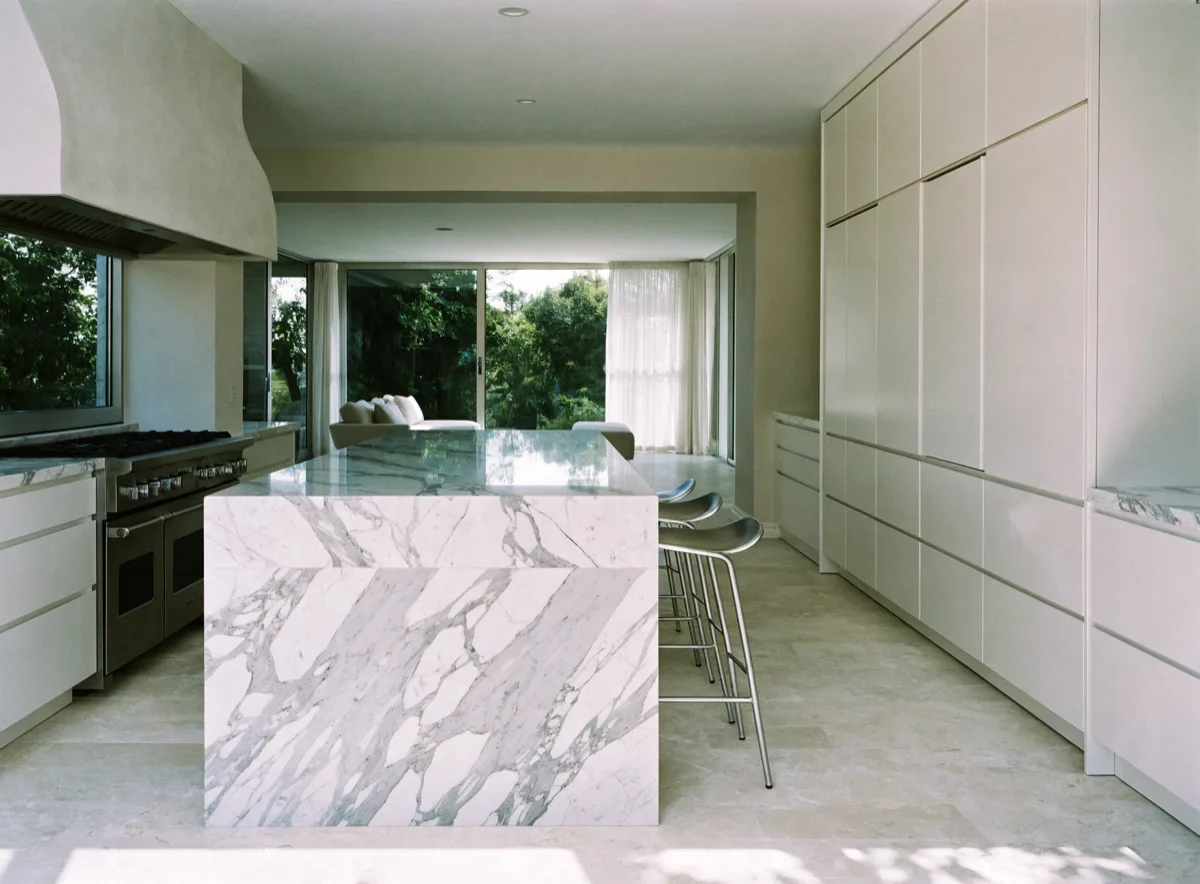
Kitchen opened to the living room, with a seated island Luxury kitchen remodeling -
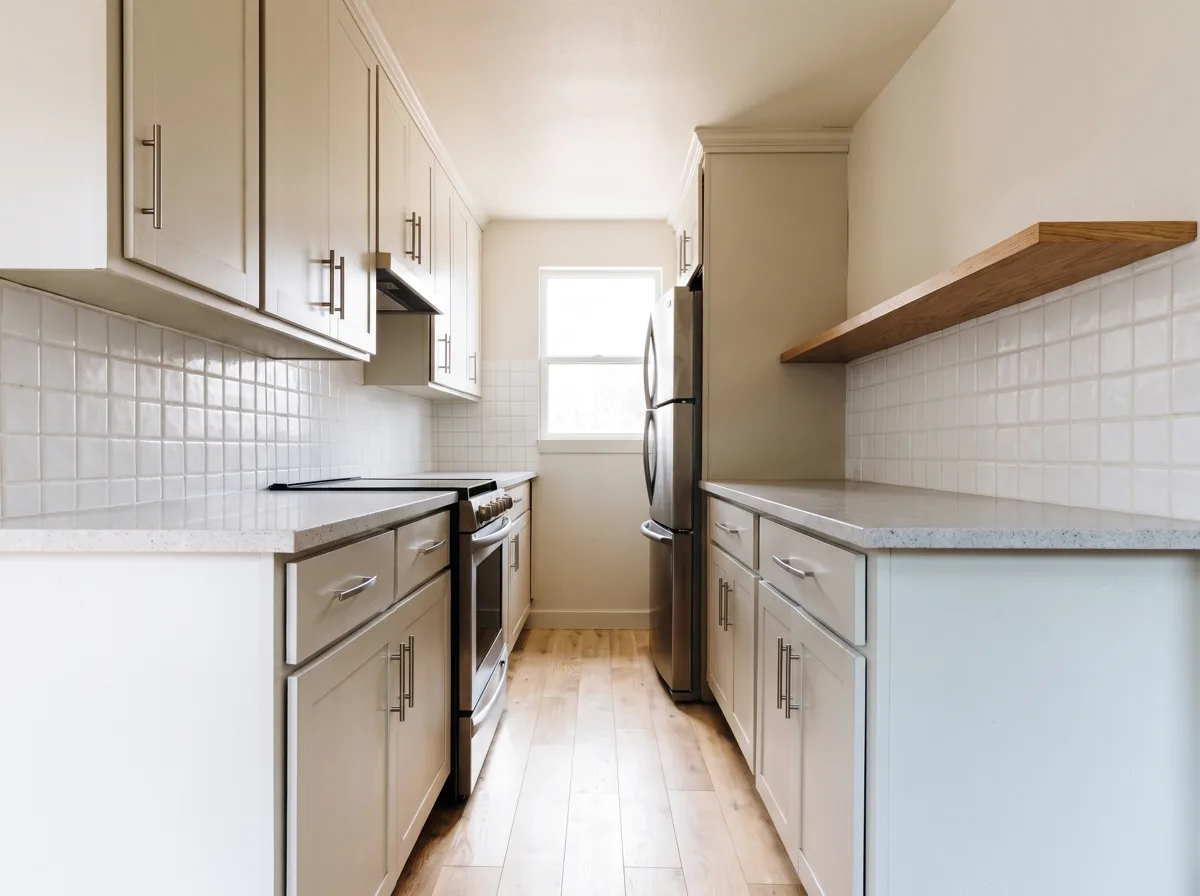
Galley kitchen opened up on one wall Galley kitchen remodeling -
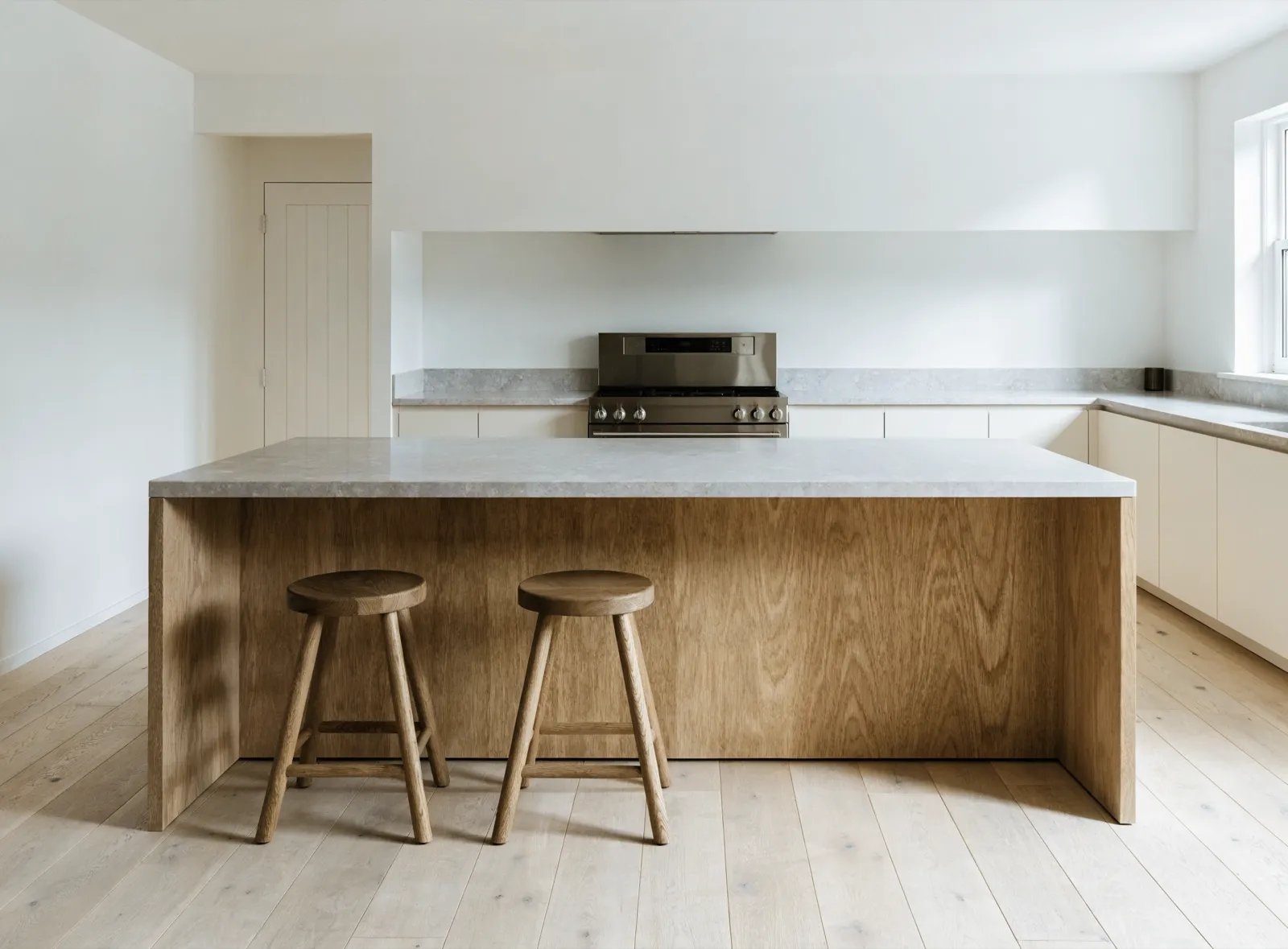
Island cabinetry with seating and a full perimeter run Kitchen island cabinetry -
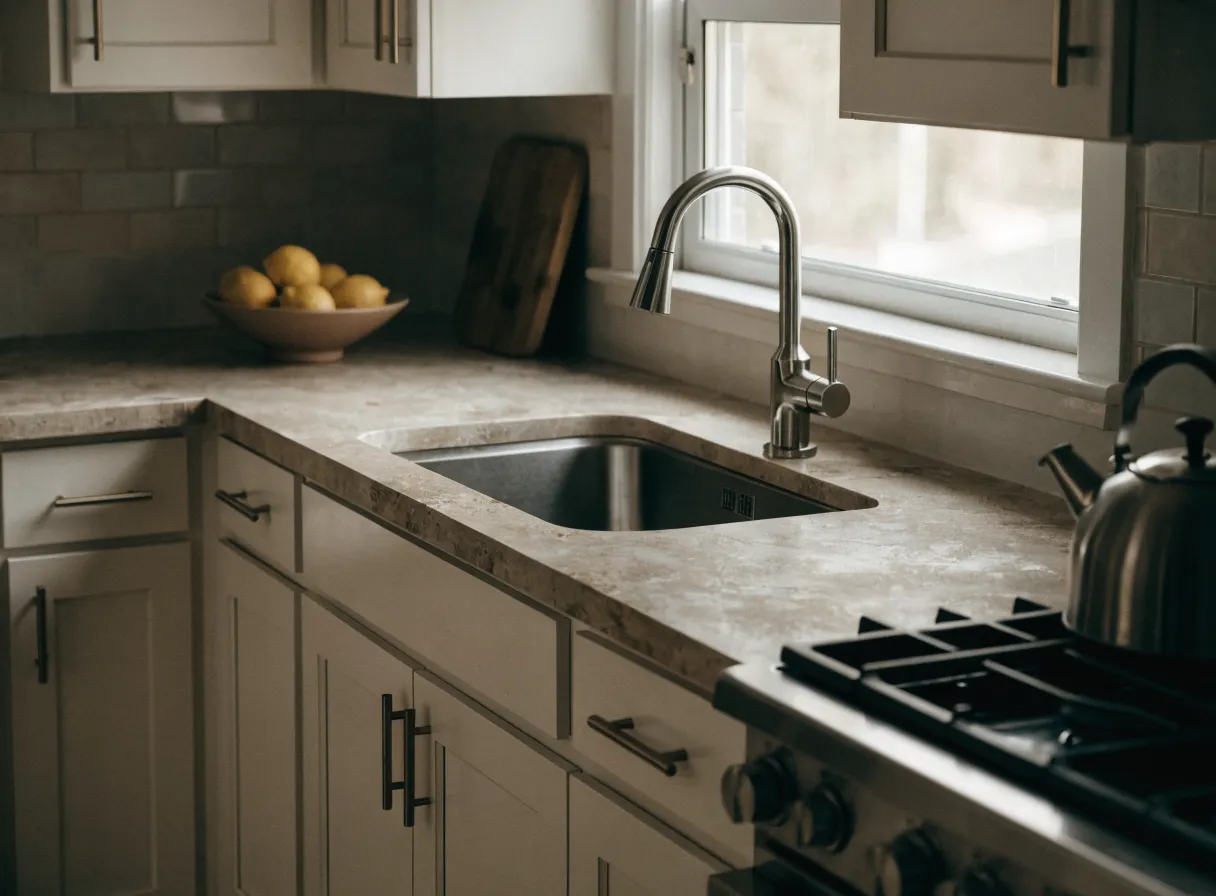
Refaced cabinets, shaker fronts and a tile backsplash Cabinet refacing
-
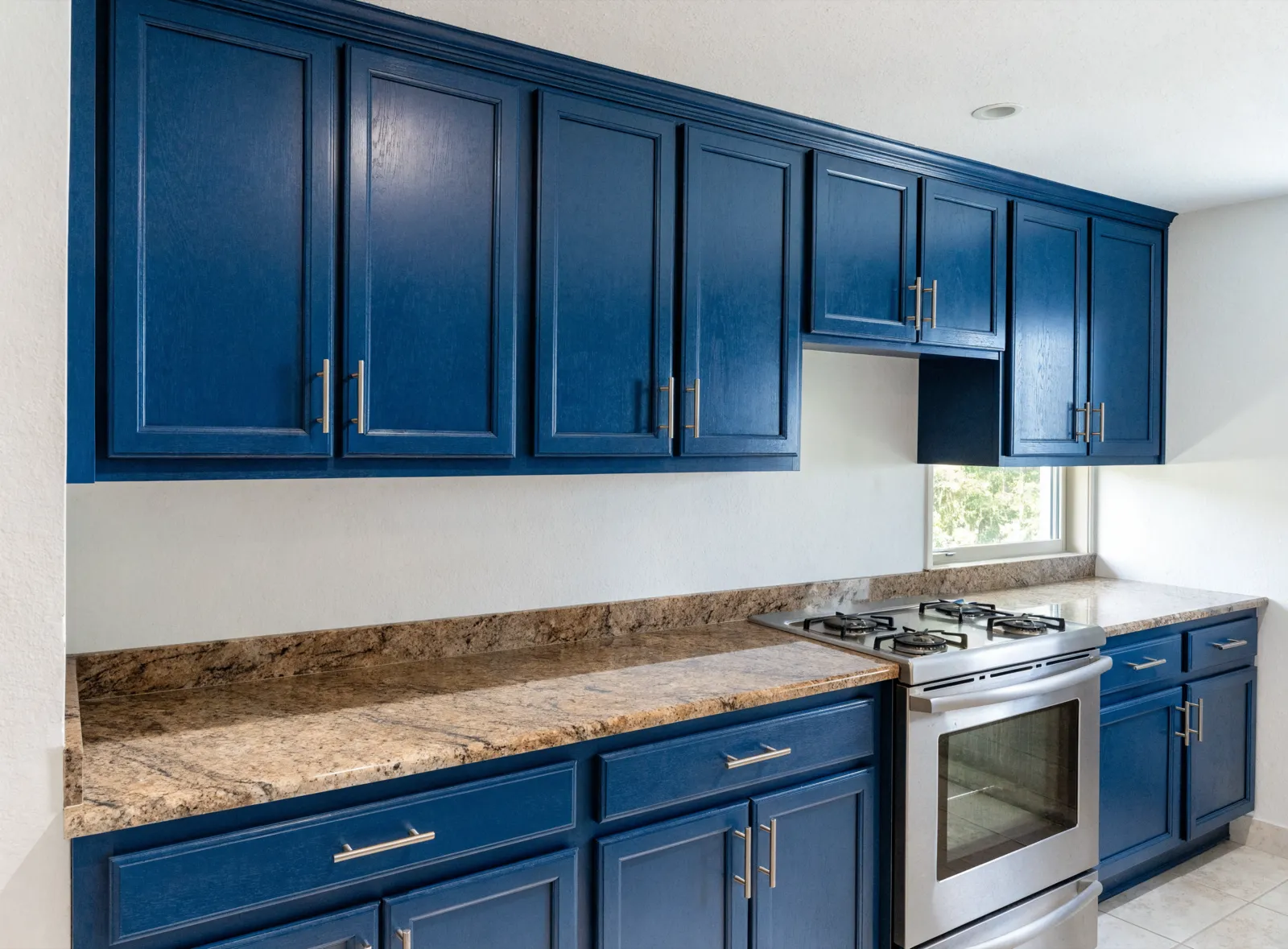
Cabinets refinished in navy under the existing granite Cabinet refinishing -
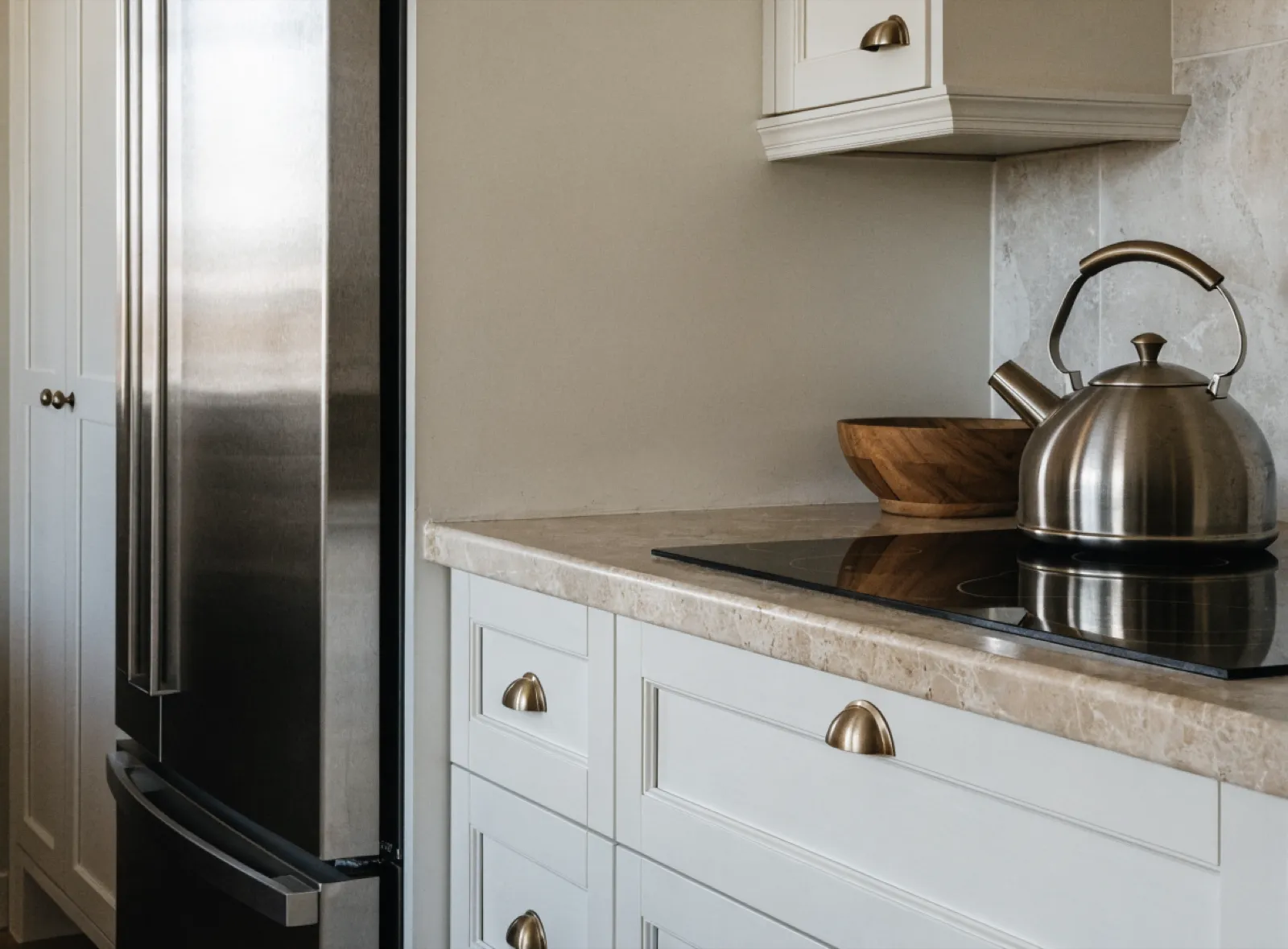
Drawer bank under the cooktop, pantry beside the fridge Custom kitchen cabinets -
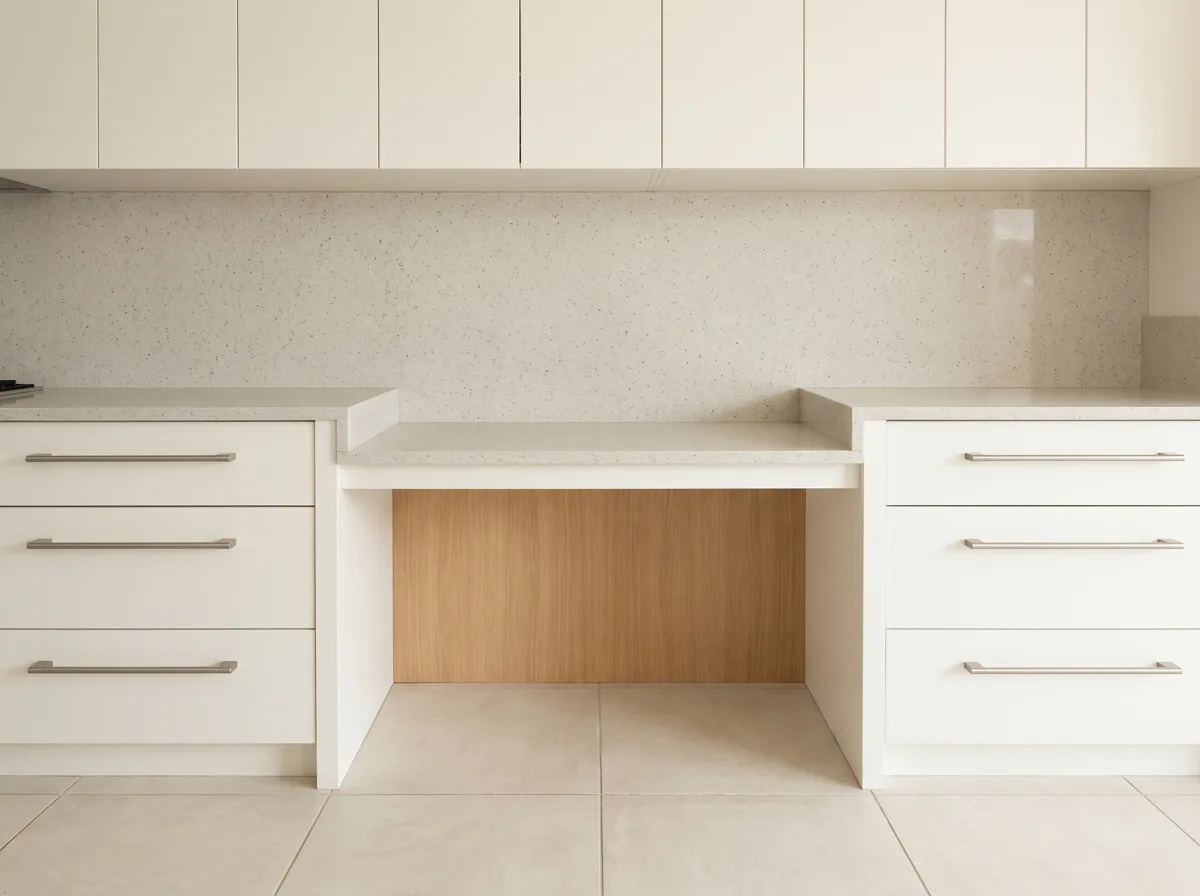
Counter at two heights, open underneath Accessible kitchen remodeling -
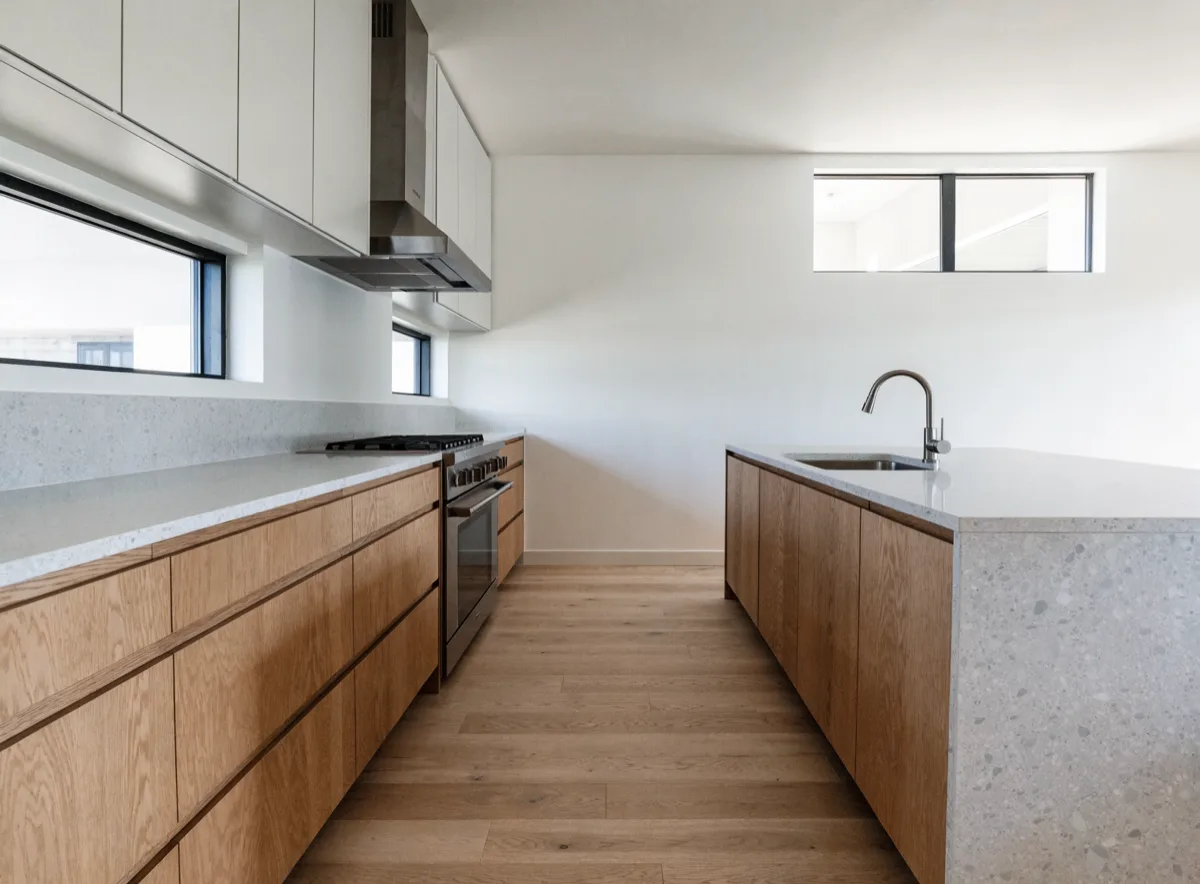
A wider walkway between the wall run and the island Kitchen layout redesign
Hardware is one of the smaller jobs on a kitchen that is staying. The rest of them, and which one your cabinets actually need, are laid out on cabinet maker.
Photograph one door and one drawer front, straight on, and count them.
Two pictures and a count of doors and drawer fronts tell us whether what you picked fits, whether the old holes are going to show, and whether this is a job you should buy on its own at all. If it belongs inside a bigger one, you will hear that before you hear a price.
Call (786) 780-2728