
Cabinet Refinishing Davie, FL
Cabinet refinishing Davie puts a new color on the doors, the drawer fronts and the visible surfaces of the boxes you already own. It is the cheapest of the three ways to change a kitchen here, and the only one that needs your doors to be solid wood before anybody can sell it to you.
- In your house
- 2–3 days
- Doors
- Solid wood only
- Warranty
- 2 years
- License
- CGC1524886
- Licensed & insured: CGC1524886
- 500+ kitchens completed
- 2-year workmanship warranty
- Answered 7 AM–10 PM, 7 days
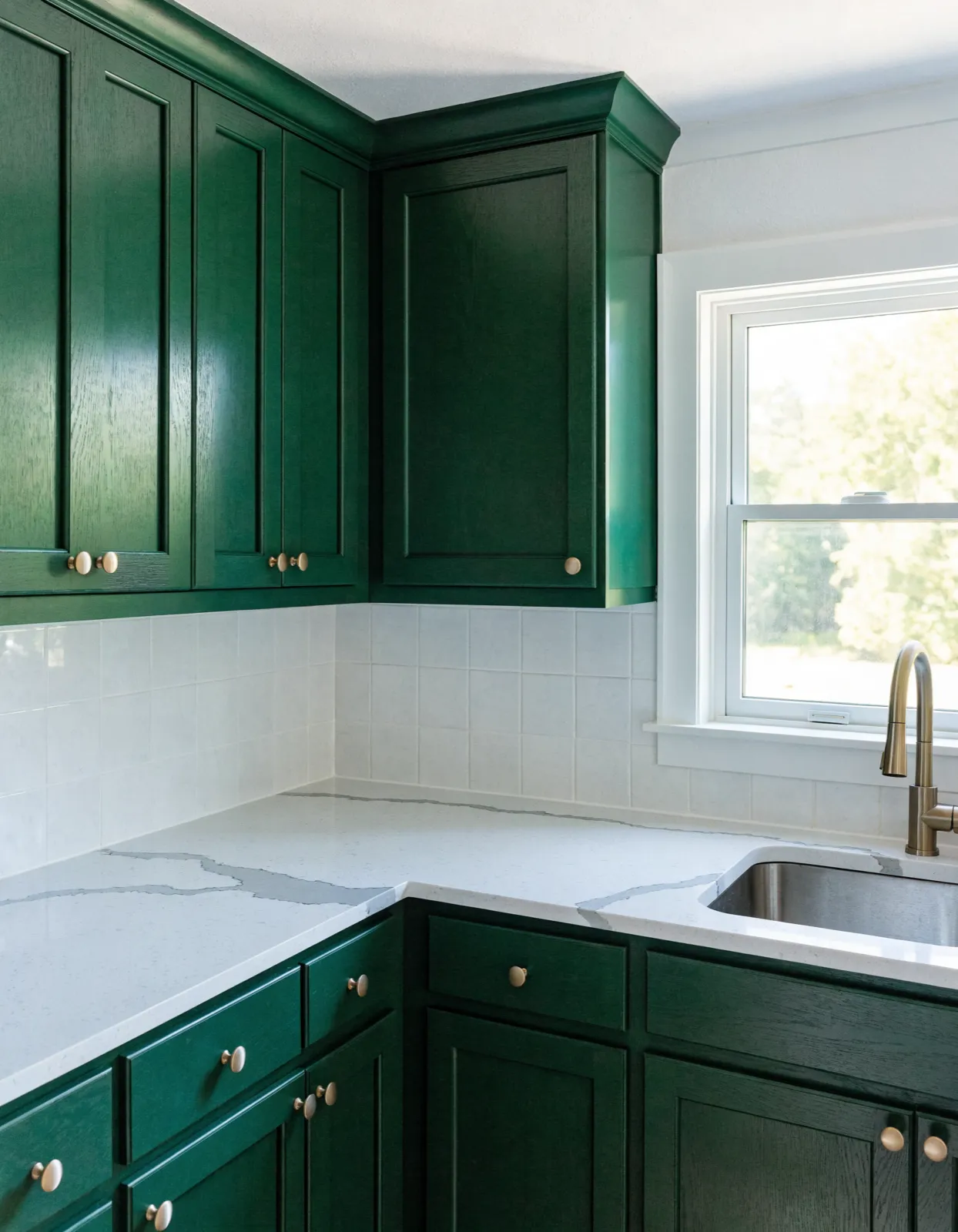
Cabinet refinishing changes one thing about your kitchen: the color. The doors stay, the drawer fronts stay, the boxes stay, and the shape of everything you are looking at stays exactly as it is.
What changes color is everything you can see, and that includes the face frames and the exposed sides of the boxes, not only the doors. New color on the doors over original orange frames is not a refinished kitchen, it is a half painted one, and you would spot it from the doorway.
That is a smaller promise than the other two ways of dealing with cabinets, and saying it plainly is the point. A raised panel oak door refinished in white is a white raised panel oak door. If the color is what aged in your kitchen, this is the cheapest fix there is. If the shape is what aged, no finish reaches it.
The Doors That Can Be Refinished, and the Ones That Cannot
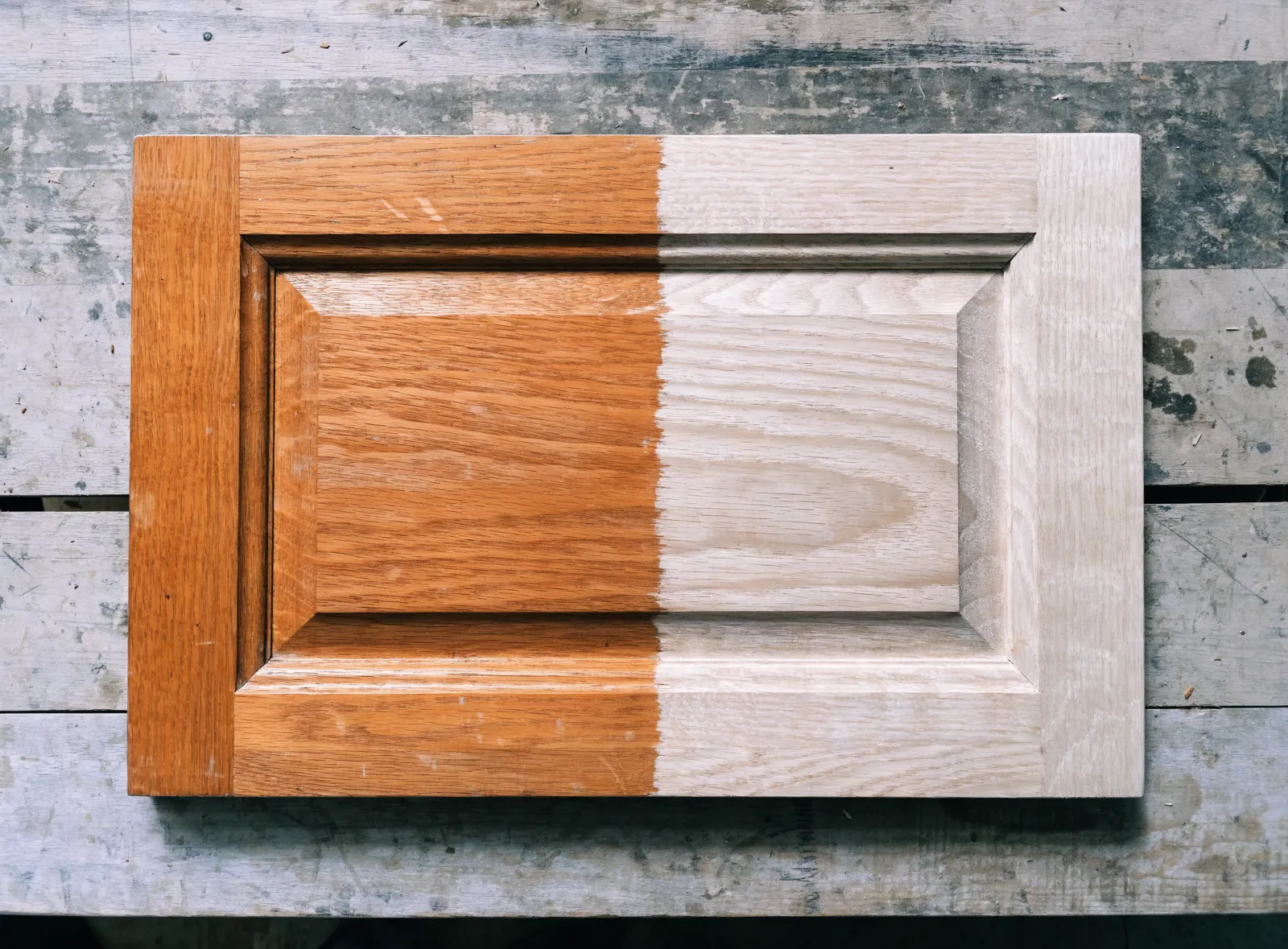
Refinishing has one condition and everything else is detail. The doors have to be solid wood. Not wood look, not wood grain printed on a film, not a veneer over a core. Solid stock running all the way through, because the whole job happens on the outer skin of the wood: it gets cleaned and degreased, prepared, sanded where the surface needs it, primed and coated. On a film bonded to a core there is nothing underneath to prepare.
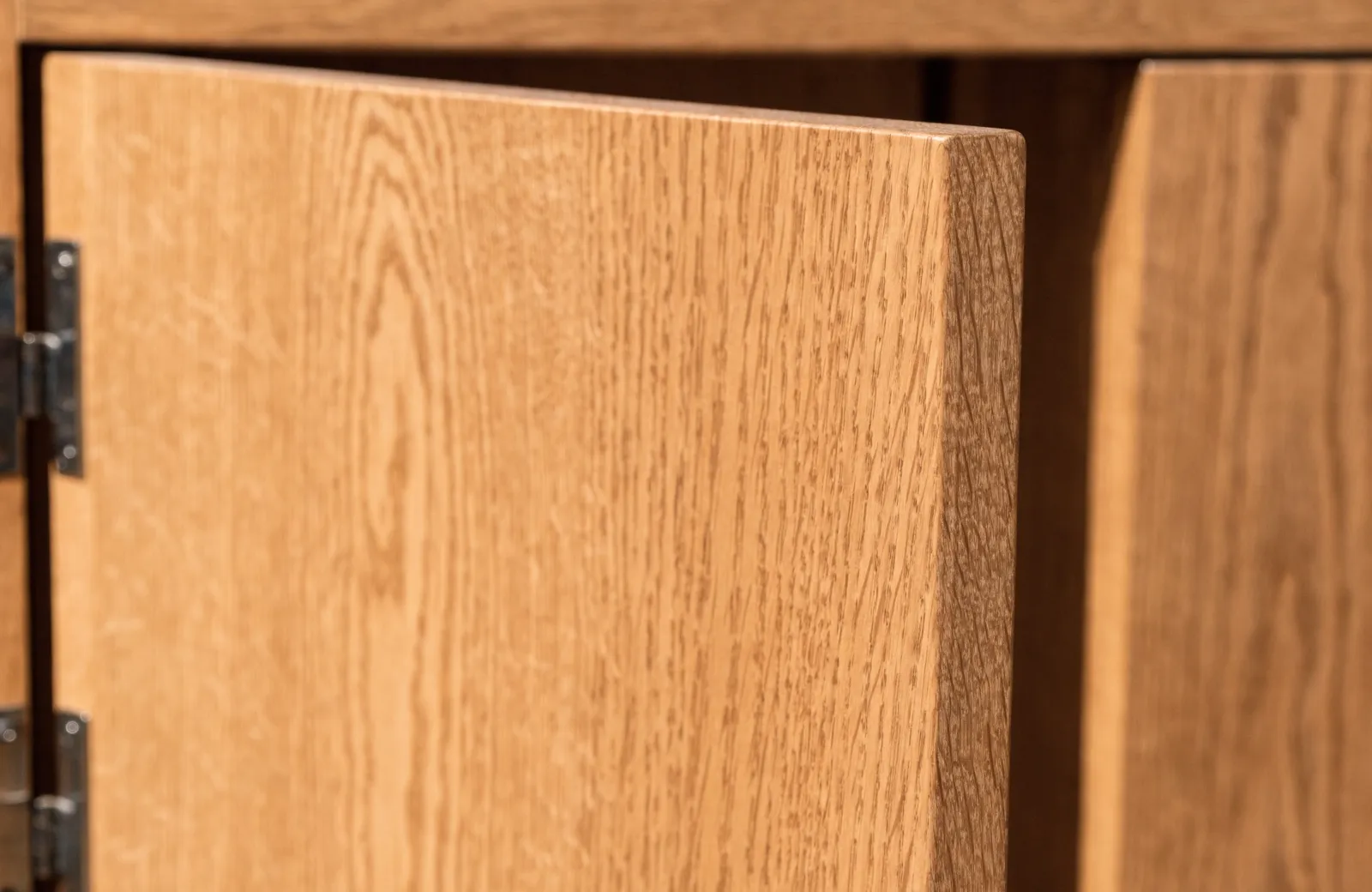
You can settle this yourself in about a minute. Open any door, look at it from the hinge side, and read the edge. On a solid wood door the grain of the face carries around the corner and continues through the thickness. On anything else the edge tells on itself: a seam, a band of a different color, a core that is obviously not the face. Do it on a door near the sink and one near the range, because kitchens get repaired one door at a time.
Where refinishing is clearly right. The doors are solid, square and closing, and what you cannot stand is the color: honey oak from the late eighties, an orange toned stain, a dark cherry that made the room feel closed in. That is a real case in Davie, where the median house went up in 1987 and its kitchen is very often still original. The narrower case is the kitchen where the wood is fine and only the finish failed, because a clear coat wears through at the two doors your hands touch long before it goes anywhere else.
And it is right when the door profile is one you actually like. Ask whether you dislike the color of your kitchen or the shape of it. If a visitor would still read the room as dated in a different color, the profile is the problem, and the honest answer is cabinet refacing or new cabinets, not a finish.
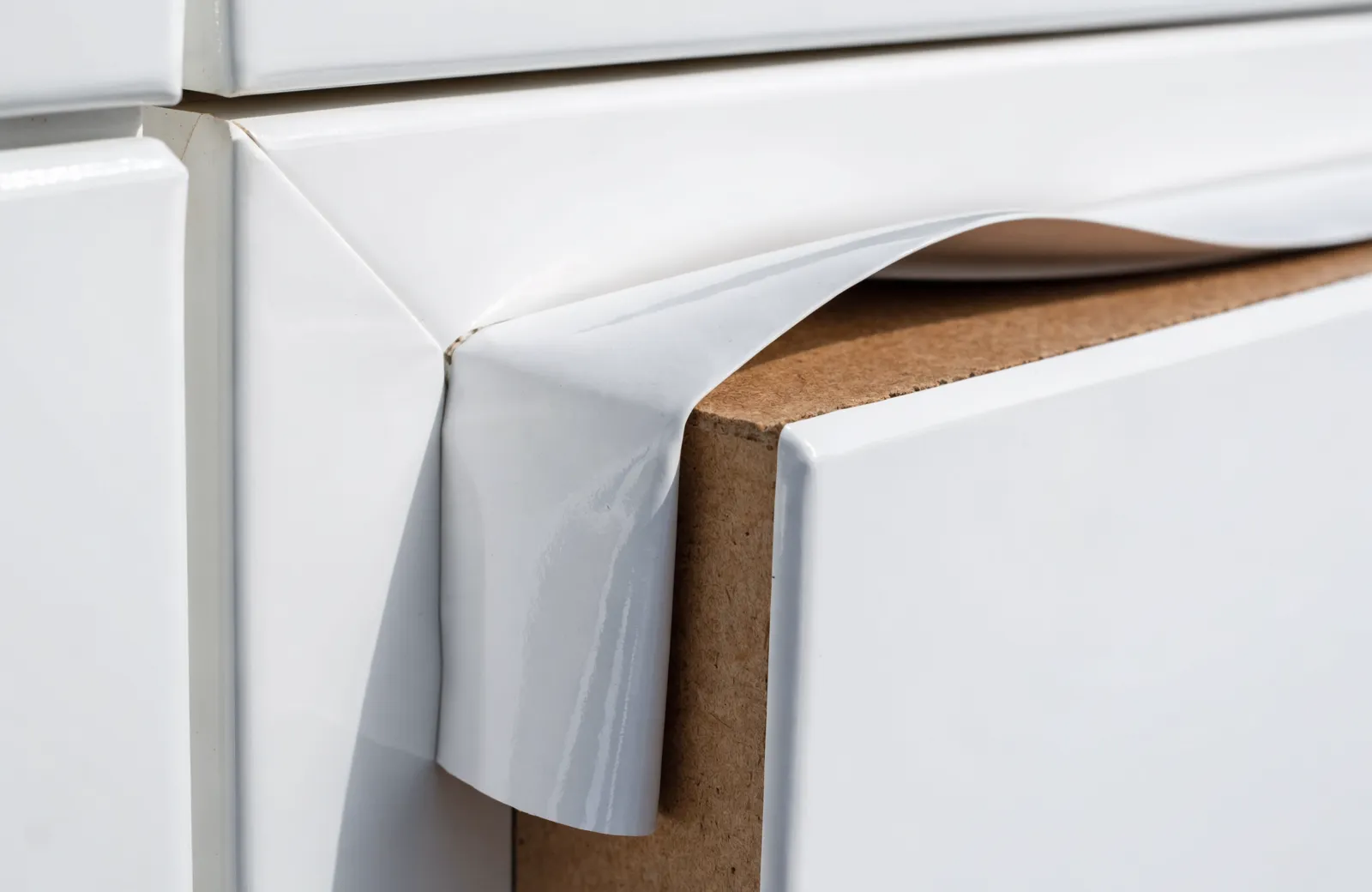
Where it is the wrong call, and we will say so before you pay us. First, and most often: the doors are not wood. Rigid thermofoil, melamine, laminate and printed foil doors are a surface bonded to a core, and there is nothing under that surface to strip back to. Sanding takes you into the core, so refinishing is not on the table at all.
Second: the doors have moved. One that has swelled at a joint, delaminated at a panel or gone soft along its bottom edge is not a candidate, because coatings do not hold on wood that is still moving and in a house this humid it will keep moving. Third, one level down: the boxes are going. Press the floor of the sink base, and if anything gives, the money belongs elsewhere.
Restained, Painted or Clear Coated
Three finishes come out of this work, and each asks something different of the wood underneath. One asks for a step most people are never told about.
Restained, and darker rather than lighter
The old finish comes off and a new stain goes on, with a clear coat over it. The grain stays visible, which is the reason to do it. The direction is the limit worth knowing: adding color is straightforward, and going lighter than you are now means getting the old color out of the wood itself and not just the film on top of it, which on a door that has been dark for thirty years is a longer job and not always achievable.
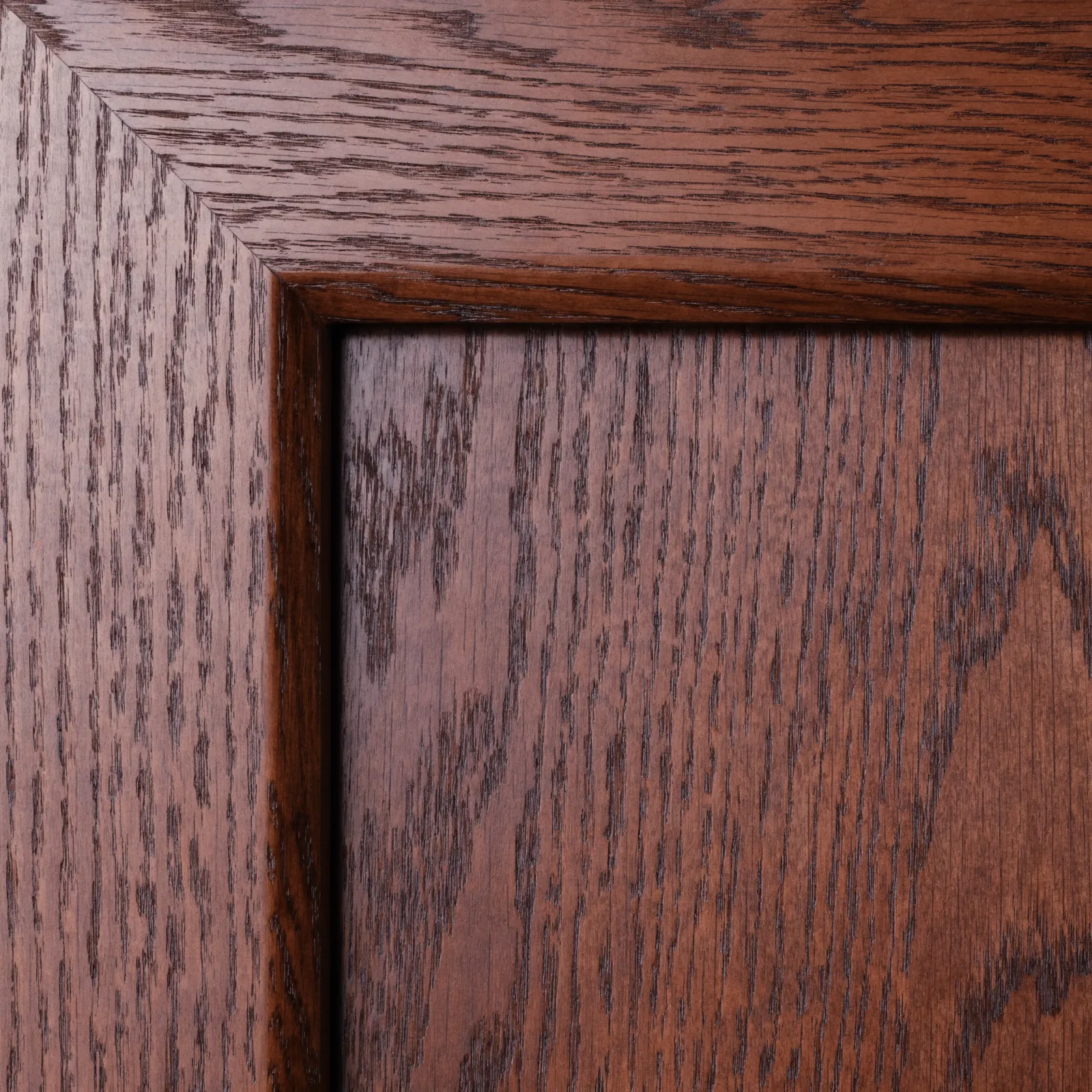
Stain also does not land evenly. It soaks into the soft early growth of each ring more than the hard late growth, so it deepens the pattern rather than covering it. On the oak in most 1980s Davie kitchens that effect is strong, and whether you like it is a decision to make on a sample of your own door.
Painted, and the pores are what decide the result
An opaque finish changes a kitchen the most, and it is the one with a hidden step in it. Oak is a ring porous hardwood: it has large open vessels running through it, and those vessels do not disappear under paint. They read through as a fine texture across the whole door. The Forest Products Laboratory's wood handbook names oak among the hardwoods whose vessels are large enough to need filling to obtain a smooth finished surface, and it singles out red oak as the harder one to finish, because those large vessels sit concentrated in a band and leave a variable surface.
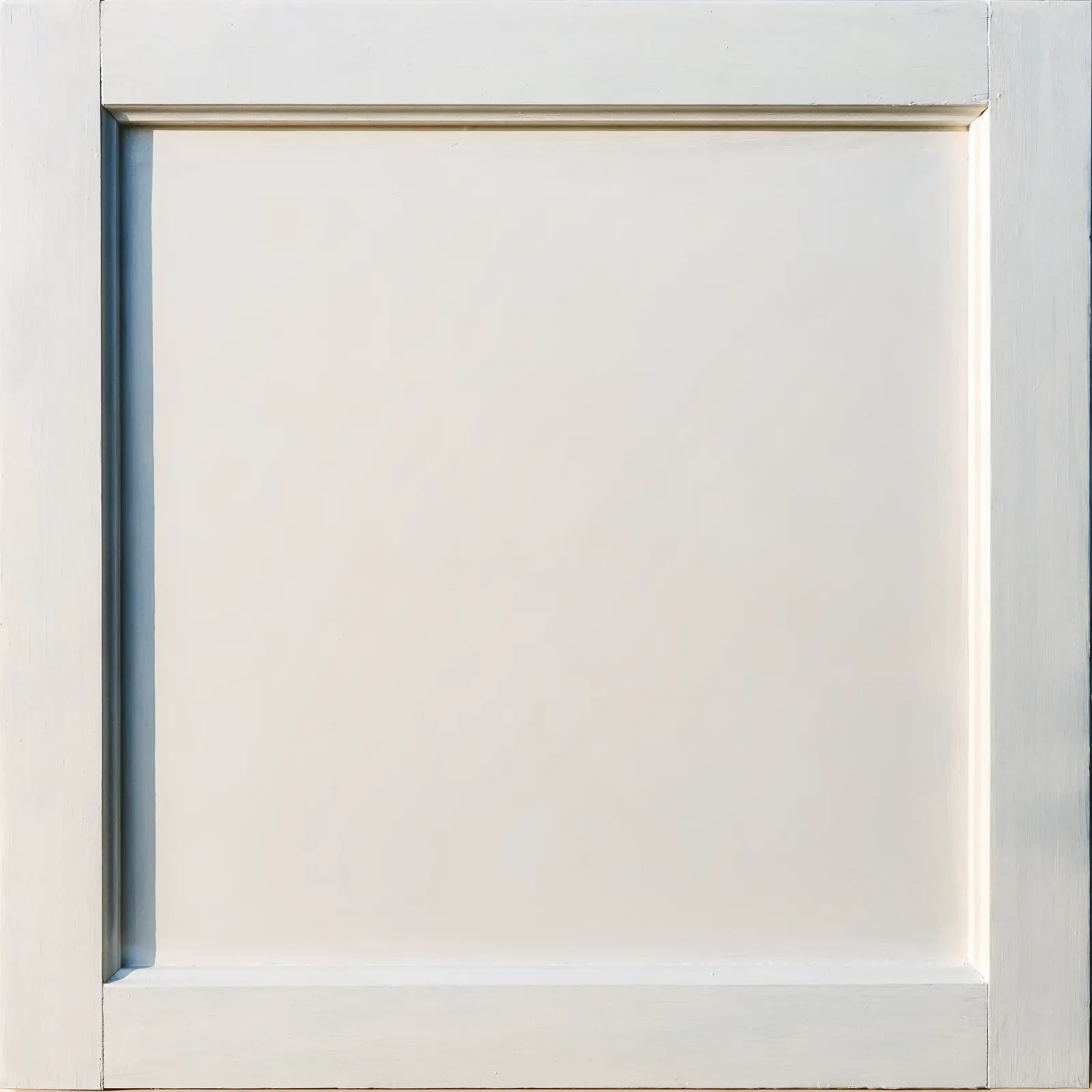
Filling is a separate operation before the primer and it takes real time. It is the biggest difference between two painted oak kitchens that cost different amounts, and almost nobody asks about it. A filled and painted oak door reads as a painted door. An unfilled one reads as painted oak from across the room and stays that way.
Clear coated, where the color was never the problem
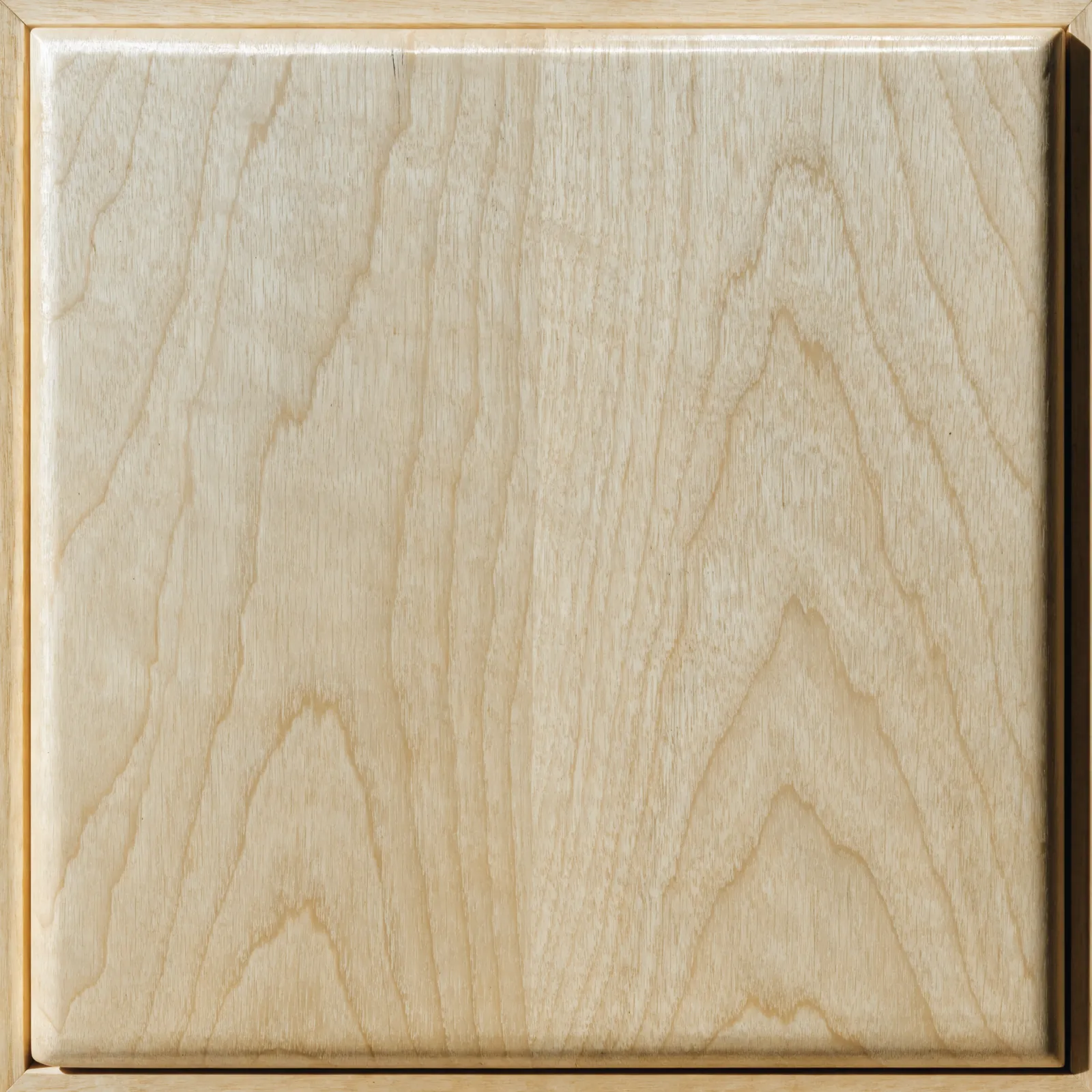
The narrowest version and the least sold, because it is the smallest sale. The existing color stays, the failed film comes off, and a new clear coat goes on. Worth asking about before you agree to change a color you were never unhappy with.
What Happens to Your Cabinets, Step by Step
- We read the edge of a door, at your house, free. Before a color comes up we open doors on more than one run, look at the edges and the joints, and press the floor of the sink base. Those five minutes decide whether refinishing is available to you at all.
- A written number before anything comes off. One price, itemized: the count of doors and drawer fronts, the face frames and exposed box sides that come with them, the preparation, repair to the wood, grain filler if the kitchen is going opaque, the coats, and the hardware, which goes back the way it came off unless you want new and we quote it. It does not move unless you approve a change of scope. Your color sample is made on the same wood, in your kitchen, under your light, because stain reads differently on oak than on maple. Once you approve it, getting on the calendar normally takes one to two weeks, depending on what is already booked ahead of you, and the work in your kitchen is two to three days after that.
- The doors and drawer fronts come off, labeled. Every door is numbered to its opening and its hinges bagged with it. Openings drift and hinge holes were drilled by hand, so a door in the wrong opening never hangs right again.
- Everything gets cleaned first, and stripping is not always part of the job. Thirty years of cooking oil comes off before anything else, because no coating bonds to grease. What follows depends on what is on the wood: sometimes the old finish only has to be sanded and keyed, and sometimes it has to come off entirely. When it does, the chemistry that used to make that the fast part of the job is no longer sold for it. The EPA prohibited methylene chloride for consumer paint and coating removal after November 22, 2019, and its 2024 rule prohibits most industrial and commercial uses of methylene chloride, paint and coating removers included. What replaced it works more slowly, which is a cost and not a corner to cut.
- The surface gets made ready, and this is where the job is won or lost. Open joints repaired, dents and burn marks dealt with, the face sanded flat, and on an opaque finish the vessels filled and sanded again. The face frames and the exposed sides of the boxes get the same preparation where they stand, masked off from your counters and your floor. A refinishing job that disappoints almost always disappointed here, under a coating applied correctly onto a surface that was not ready for it.
- Primer, coats, then cure time, which is not dry time. The doors and drawer fronts are coated off their openings and the frames are coated in your kitchen, because they are attached to your kitchen, and both get the same primer and the same coats. A coating is dry to the touch long before it is hard, and a door put back into service too early carries that mistake for the rest of its life. Ask where your doors are coated, how many coats they get and how many days they need before they hang, and get those dates in writing.
- The doors go back on and get adjusted. Every door is rehung and adjusted on all three axes until the gaps down the run are even. Then we go through the kitchen with you and write down anything that is not right before the last payment.
What Cabinet Refinishing Costs in Davie
We take cabinet refinishing from $2,500, and that figure is ours. It is a floor and not an estimate. It is not the cheapest coating job physically possible either: it is the smallest one that still leaves room for the cleaning, the preparation and the coats the finish depends on, which is the same reason our refacing work has a floor of its own. Where your kitchen lands above it comes out of the written estimate, after we have opened a door and read the edge of it.
From $2,500
There is also a published figure for this work, and it is worth having before you read three estimates: refinishing a kitchen's cabinets is published at $2,000 to $3,500. That band is not ours, it is the market's, and what it measures is labor on the cabinets you already own rather than anything new arriving at your house. It binds nobody, us included.
Refinishing is the cheaper of the two ways to keep your boxes, and by a wide margin. The two jobs reach the same surfaces: doors, drawer fronts, face frames and the exposed sides of the boxes. What separates them is the verb. Refacing replaces the doors and the drawer fronts and skins the frames with a new surface, made and delivered to your house. Refinishing keeps the doors and recoats what is already hanging in your kitchen. That is new material against labor, which is where the difference in price lives, and it is also why refacing can change the shape of a door and refinishing cannot. What refacing costs is set out on cabinet refacing, and the cheaper job is only the better buy when your doors qualify for it.
What actually moves the number
The count of doors and drawer fronts comes first, and the size of the room comes nowhere. The face frames and the exposed box sides are not on the list either, because they are inside the job rather than an option in it. After that, the three that matter: whether the finish is transparent or opaque, because opaque on a ring porous wood adds the filling step; how much repair the wood needs first; and how ornate the profile is, because every routed groove and raised panel edge is sanded by hand and a flat door is not. Your zip code is not on that list.
What has to be in a refinishing quote
| The line | What it covers | Who leaves it out |
|---|---|---|
| Boxes and face frames | the parts that stay on the wall, coated to match the doors | very often, and it is the line that shows |
| The exposed sides | the end of a run and the panel beside the range, in the same finish | until you are looking at them |
| Grain filler | what keeps oak pores from reading through an opaque finish | almost always, on a painted kitchen |
| Repair to the wood | open joints, dents, burns and worn edges, before any coating | assumed |
| Number of coats | how many go on, and what the sealer under them is | quoted as "refinish" |
| Hardware | whether the old hinges and pulls go back or new ones go on | quoted as an upgrade |
| Cure time | the days between the last coat and the doors going back up | not a line at all, until it is |
A quote that says "refinish kitchen cabinets" and gives one number is not a price, it is an opening position. Every one of those lines reappears later, at a worse rate.
And there are four things no refinishing quote can contain, ours included: a new box, a new door, a different door profile, and any change to how the cabinets are built. A finish reaches the surface and stops there. If one of those four is what your kitchen needs, you are shopping for a different job with a different name, and you should hear that at the estimate rather than after the doors are back up.
Permits and design. What a project needs is set by its scope, and we do not guess at yours. Whatever permitting, drawings, engineering or design services yours turns out to require is identified at the measurement and priced in the written estimate, before you approve anything.
Why Choose Us
We read the edge of a door before we quote, and a good share of the time we tell people this job is not available to them. Refinishing is the smallest sale on our list and we would still rather lose it than sand into the core of a thermofoil door and hand you a kitchen that cannot be fixed afterwards.
We will also tell you when the finish is not your problem. If the shape of the door is what dates your kitchen, a new color leaves you the same room in a different shade, and the disappointment arrives about a month after we leave. You hear that at the measurement, with what the alternatives cost, so you decide with both numbers instead of one.
On an opaque finish we fill the grain, or we tell you in writing that we are not and why. That one step is the difference between a painted kitchen and a painted oak kitchen, it is invisible in a quote, and it is where the spread between three refinishing estimates mostly lives.
Your doors come back to the openings they came off, labeled and adjusted, and they hang before we ask for the last payment. Gaven Constructions holds the license on the work, CGC1524886, insured, with a two-year workmanship warranty. Someone picks up this phone from 7 AM to 10 PM, every day.
Licensed, Insured, and Permitted in Davie
Refinishing touches nothing a building department regulates. No cabinet moves, no plumbing is opened, no circuit changes. If your project grows past the finish, you hear that in the estimate before you approve anything.
The rule that does reach this work is not about the kitchen at all. It is about the age of the house. Preparing an old coating means disturbing it, whether it comes off entirely or only gets sanded, and if that coating is paint in a house built before 1978, it is the exact activity the federal lead rule was written around. The EPA requires that firms disturbing lead-based paint in homes built before 1978 be certified and trained in lead-safe work practices, a requirement fully in force since April 22, 2010. Most Davie kitchens sit on the comfortable side of that line, since the median house here went up in 1987, but plenty of this town is older and the rule follows the house rather than the room. If yours predates 1978 and anyone proposes to sand painted surfaces in it, ask for the certification first. A certified firm will not mind the question.
- License
- CGC1524886 Certified General Contractor, verifiable in the Florida DBPR licensee search.
- Insurance
- Insured and bonded Certificates are available before any work is scheduled.
- Workmanship warranty
- 2 years On installation labor. Most of this market publishes one.
- Permits and design
- Priced before approval Requirements vary by project scope. Any required permitting, drawings, engineering, or design services are identified and priced before the project is approved.
- Who contracts the work
- Gaven Constructions Kitchen Remodeler Davie was acquired by Gaven Constructions, a licensed contractor since 2015. Every estimate and invoice is issued in that name, which is what puts the license behind the job.
Common Questions
How much does cabinet refinishing cost in Davie, FL?
We start at $2,500, and that one is ours. It is a floor rather than a quote: it is the smallest refinishing job we take on and still do the preparation the finish depends on, and where your kitchen lands above it comes out of the written estimate after we have looked at your doors. There is also a published figure for the work, roughly $2,000 to $3,500 for a kitchen's cabinets, and that one is not ours, it is the market's. What moves you inside a number like that is the count of doors and drawer fronts rather than the size of the room, whether the finish is transparent or opaque, how much repair the wood needs first, and how ornate the door profile is, because a routed profile is sanded by hand and a flat door is not. The face frames and the exposed sides of the boxes are not a variable, because they are coated along with the doors. Be careful comparing a refinishing number against a refacing number as though they were two prices for the same work. One changes the color of your kitchen and the other changes its style.
Is refinishing cheaper than refacing kitchen cabinets in Davie?
Yes, and by a wide margin, because the two jobs buy different things. Both of them treat the whole visible kitchen, doors and drawer fronts and face frames alike, so what separates them is not how much they cover but what they do to it. Refacing replaces the doors and the drawer fronts and skins the face frames with a new surface, manufactured and delivered to your house. Refinishing keeps the doors you already own, recoats them, and recoats the frames and exposed sides along with them, and nothing new arrives beyond the coating. That is why refacing can put a different door profile in your kitchen and refinishing cannot. The catch is that the saving is only real when refinishing can do what you want. It changes the color and nothing else, so a kitchen whose problem is an ornate door profile gets a different color and the same dated shape, at which point the cheaper job was not cheaper, it was wasted. When the doors are solid wood, square and in a shape you still like, refinishing is the honest answer. When any one of those three is false, refacing is.
Can you refinish kitchen cabinets that are not solid wood?
No, and this is the answer that surprises people most on the phone. Rigid thermofoil, melamine, laminate and printed foil doors are all a thin surface bonded to a core of MDF or particleboard. Refinishing works on the material underneath: it gets cleaned, prepared, sanded where it needs it and recoated, and on those doors the material underneath is the core, not wood. Sand through the film and you are into a substrate that will not take a finish and cannot be put back. Veneered doors fail for a related reason: the wood layer over the core is thin enough that a full sanding can go through it, and once it does the repair is a new door. The hinge side of any door settles it in a minute, and if the edge shows a seam or a band of different material, refacing or replacement is where your options are.
Will the grain still show if I have my oak cabinets painted white?
It will, unless somebody fills it, and this is the question nobody knows to ask. Oak is a ring porous hardwood: it has large open vessels running through it, and paint does not bridge them. The Forest Products Laboratory's wood handbook lists oak with the hardwoods known for large vessels, and says vessels that large have to be filled to get a smooth finished surface. It calls red oak the more challenging one to finish, because those vessels run concentrated in a band. Filling is a separate step before the primer, done with a paste or liquid filler packed across the grain and sanded back once it dries, and it takes real time. Skipped, the door still looks like oak from across the room, just white oak instead of honey oak, and no number of topcoats changes that later. So the useful thing to ask any company quoting you a white kitchen is not what paint they use. It is whether grain filler is inside the number.
How long does cabinet refinishing take in a Davie kitchen, and can I use my kitchen?
There are two numbers here and they answer different questions. Getting on the calendar normally takes one to two weeks from the day you approve the estimate. That is our usual scheduling window rather than a promise, because it moves with what is already booked ahead of you, so ask what it looks like the week you sign. The work in your kitchen is then two to three days, and that is the part that affects your life. The boxes stay on the wall and you keep using what is inside them, and what you lose is the doors and the drawer fronts while they are off. You cook the whole time. The part people underestimate is not the work, it is the wait afterwards. A coating is dry to the touch quickly and hard much later, and doors put back into service before the finish has cured carry the marks of it permanently. Ask for the cure dates in writing alongside the work dates.
How long will a refinished cabinet finish last in a Davie kitchen?
Nobody can give you an honest number for that, and the figures quoted online are not measurements. The lifespan is decided by things you can check before you sign. Preparation comes first by a distance: a coating on wood that was cleaned of thirty years of cooking oil, repaired, sanded flat and properly sealed lasts a different order of time than the same coating sprayed onto a surface that was only scuffed. After that it is the coating and how many coats went on, and then it is where the door lives: the two that go first are always the one under the sink and the one beside the range, because one gets water and hands and the other gets heat and grease. A company that gives you a confident number of years without asking what your doors are made of is quoting a brochure.
Do I have to leave my Davie home while my cabinets are being refinished?
That depends on what is being applied and where, which is why it is a question to ask before you sign rather than the morning the work starts. Part of the answer is fixed by the work itself: the face frames and the exposed sides of the boxes are attached to your kitchen, so they are prepared and coated in your kitchen no matter who does the job. The doors and the drawer fronts are the part that can be coated somewhere else, and where they go decides how much of the curing happens in the room your family eats in. Neither arrangement is wrong. What is wrong is finding out which one you bought by smell on day two. Ask three things and get them in writing: what product is going on your doors, where it is being applied, and how many days it needs before the doors hang. If someone in the house has asthma, or there is an infant, say so at the estimate rather than on the day.
Recent Kitchen Remodeling Projects in Davie
-
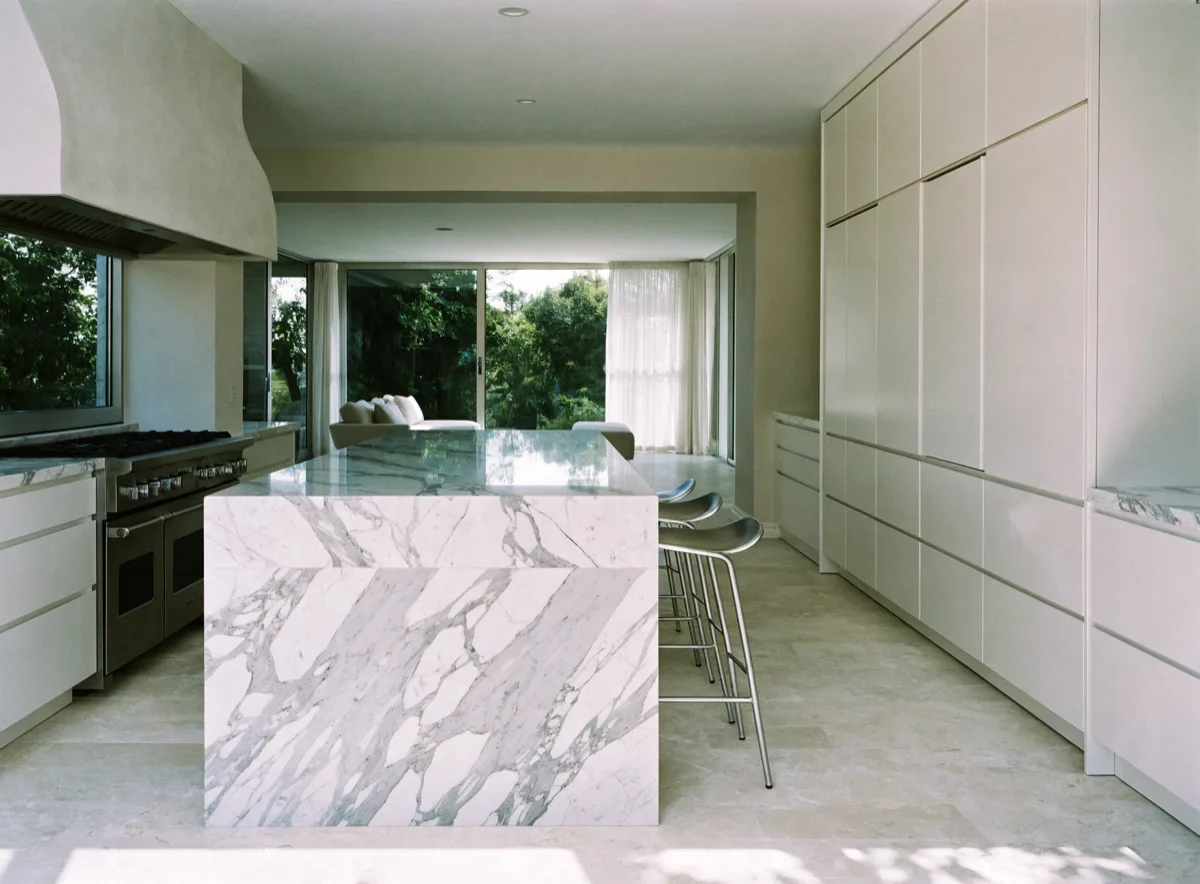
Kitchen opened to the living room, with a seated island Luxury kitchen remodeling -
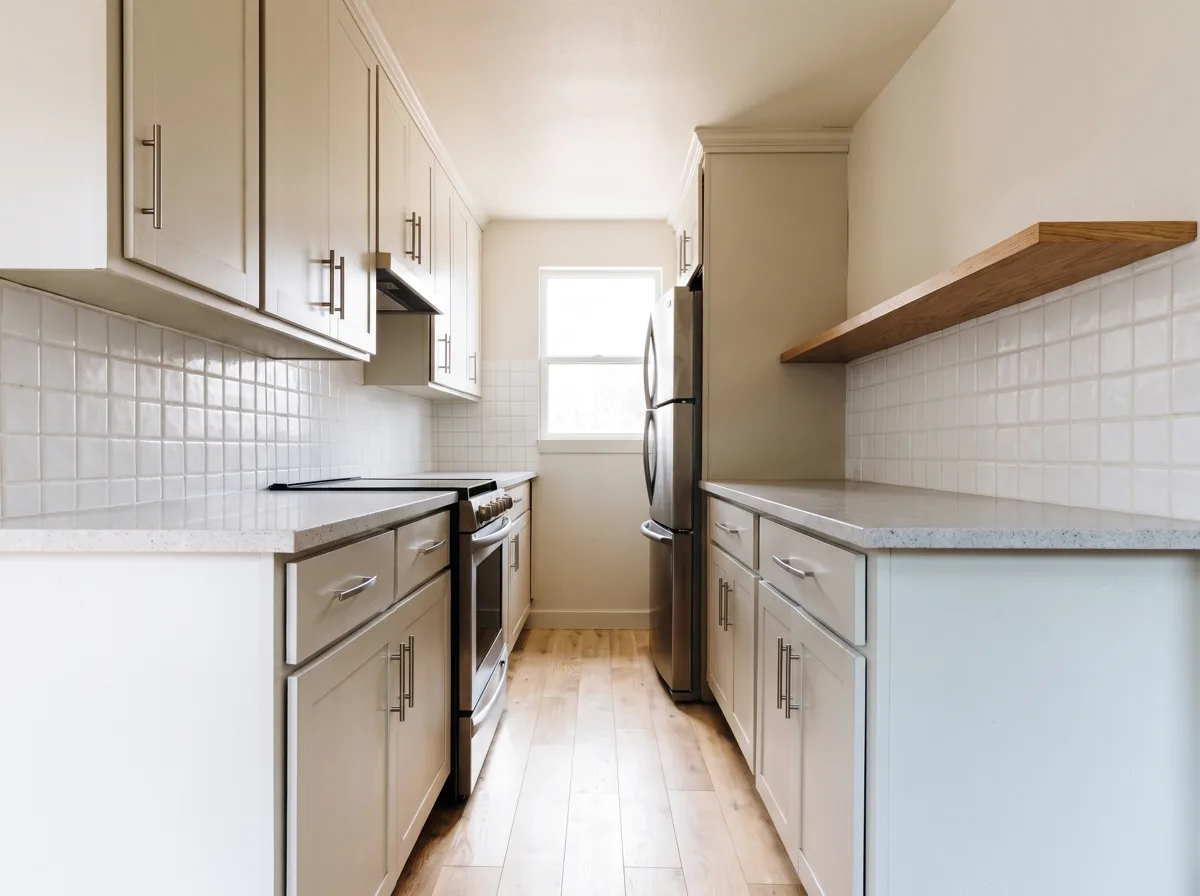
Galley kitchen opened up on one wall Galley kitchen remodeling -
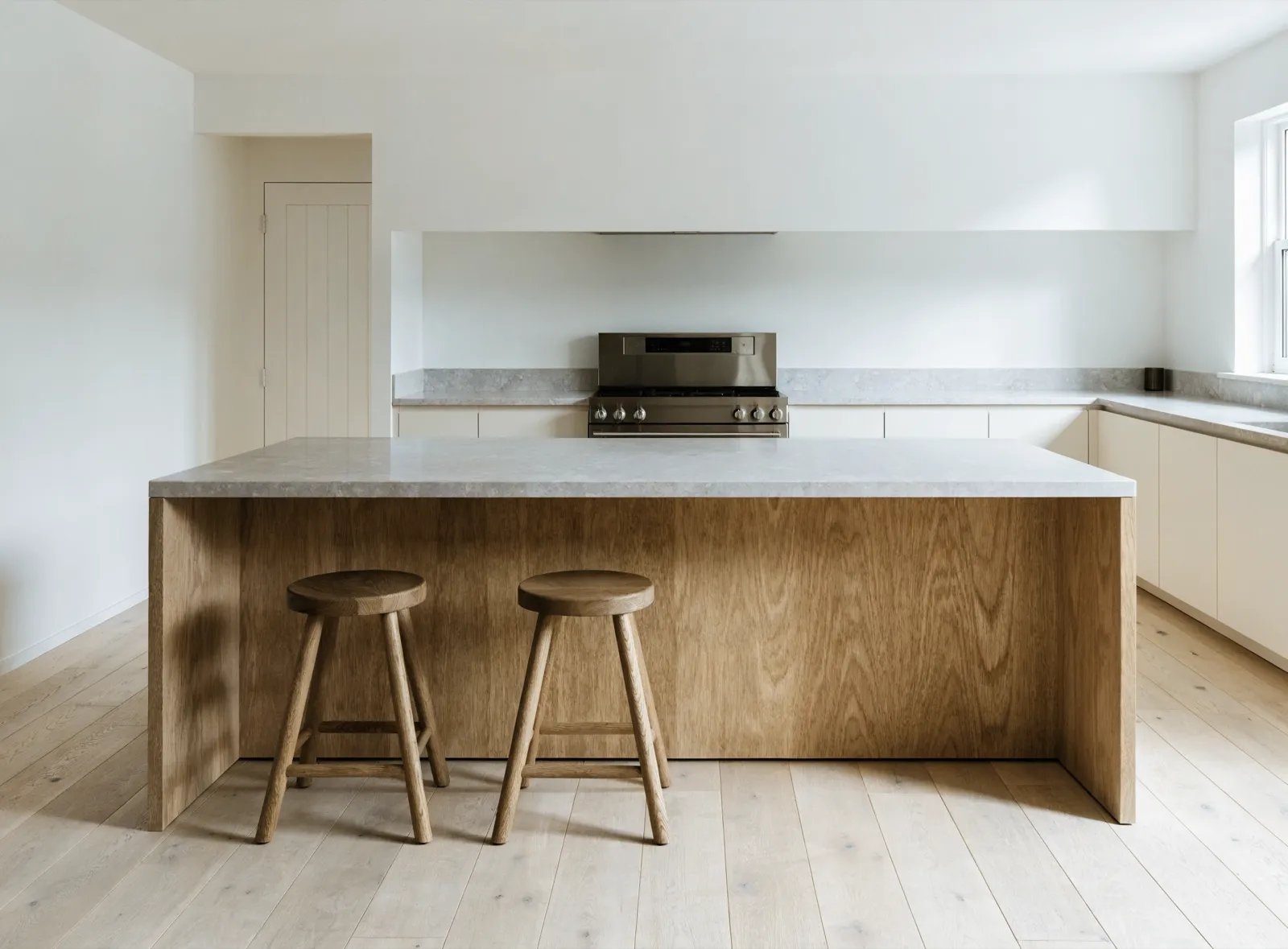
Island cabinetry with seating and a full perimeter run Kitchen island cabinetry -
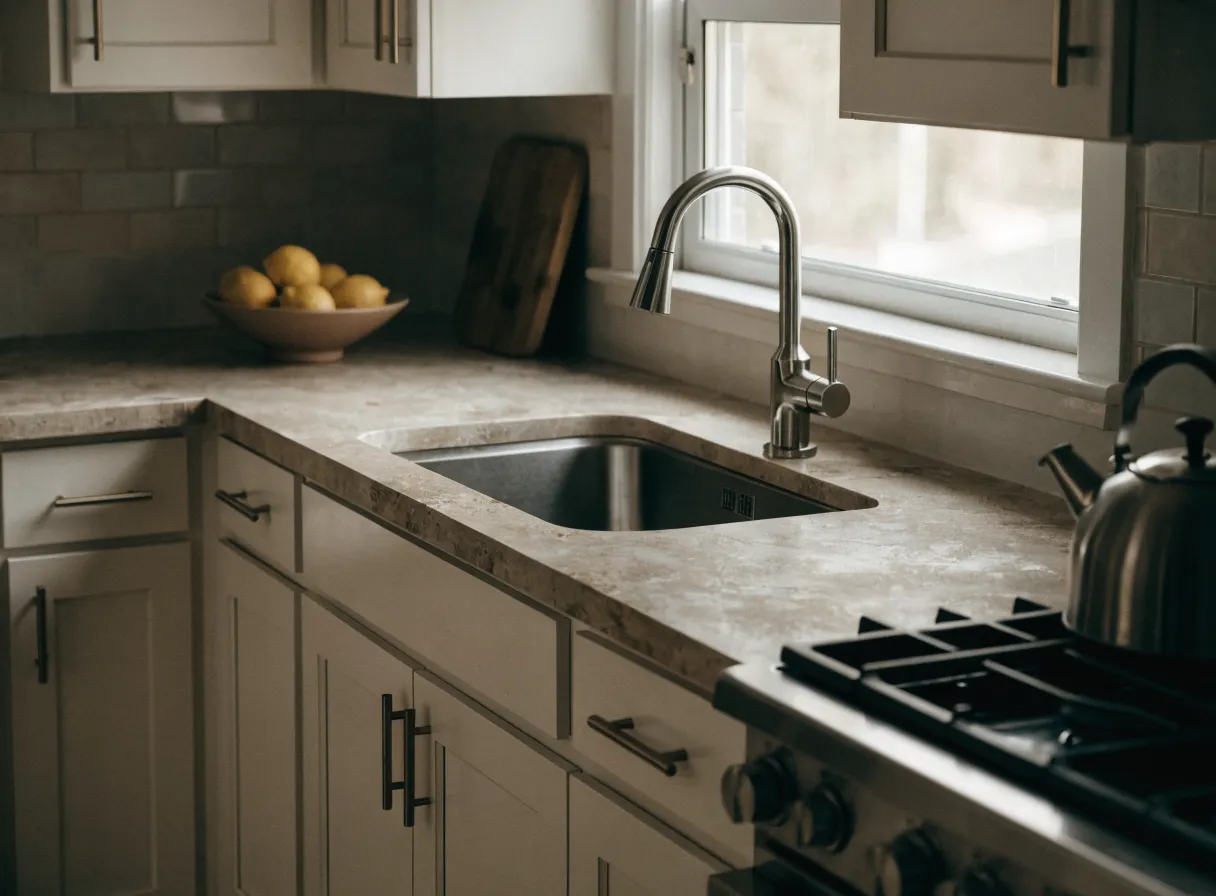
Refaced cabinets, shaker fronts and a tile backsplash Cabinet refacing
-
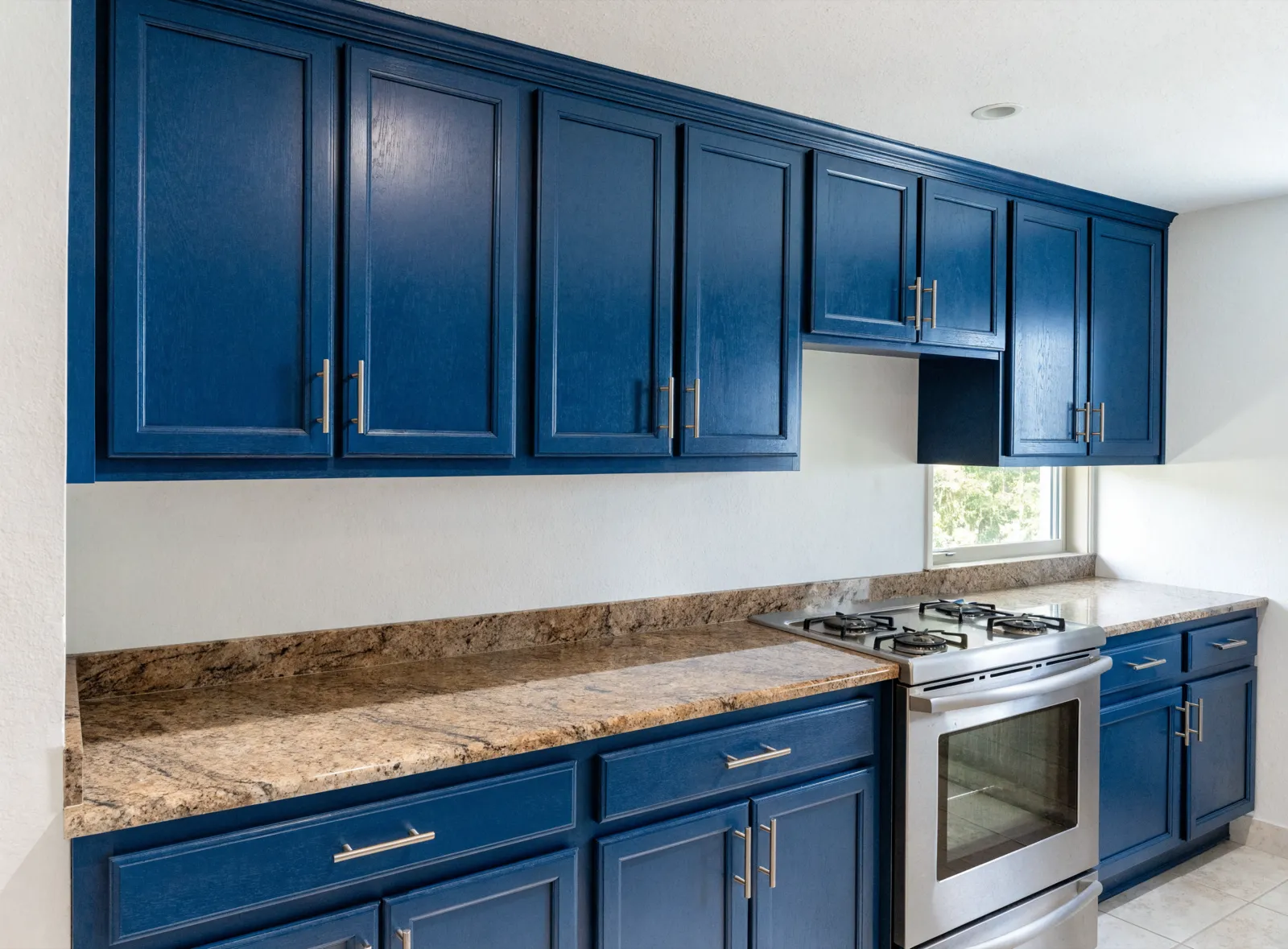
Cabinets refinished in navy under the existing granite Cabinet refinishing -
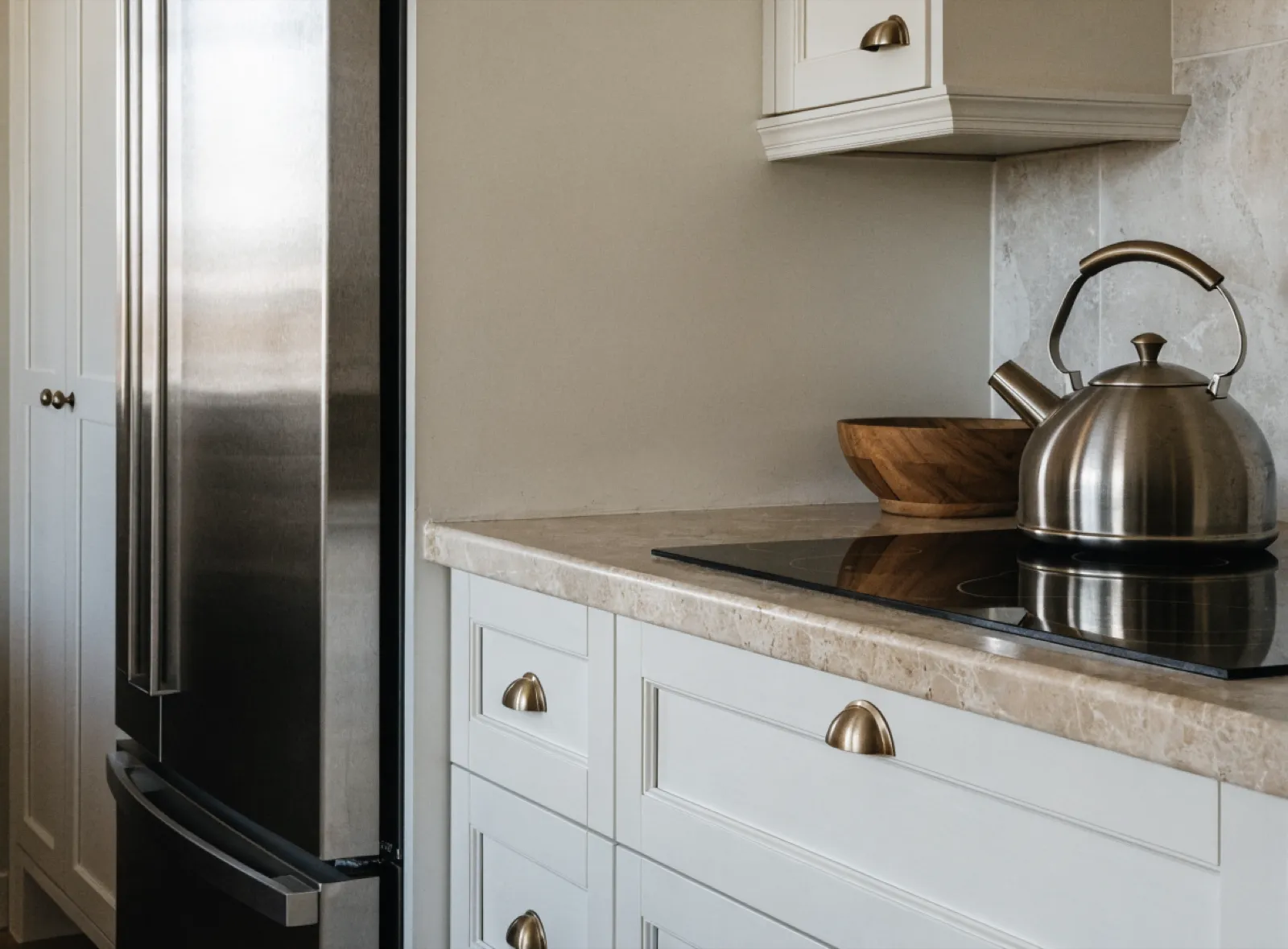
Drawer bank under the cooktop, pantry beside the fridge Custom kitchen cabinets -
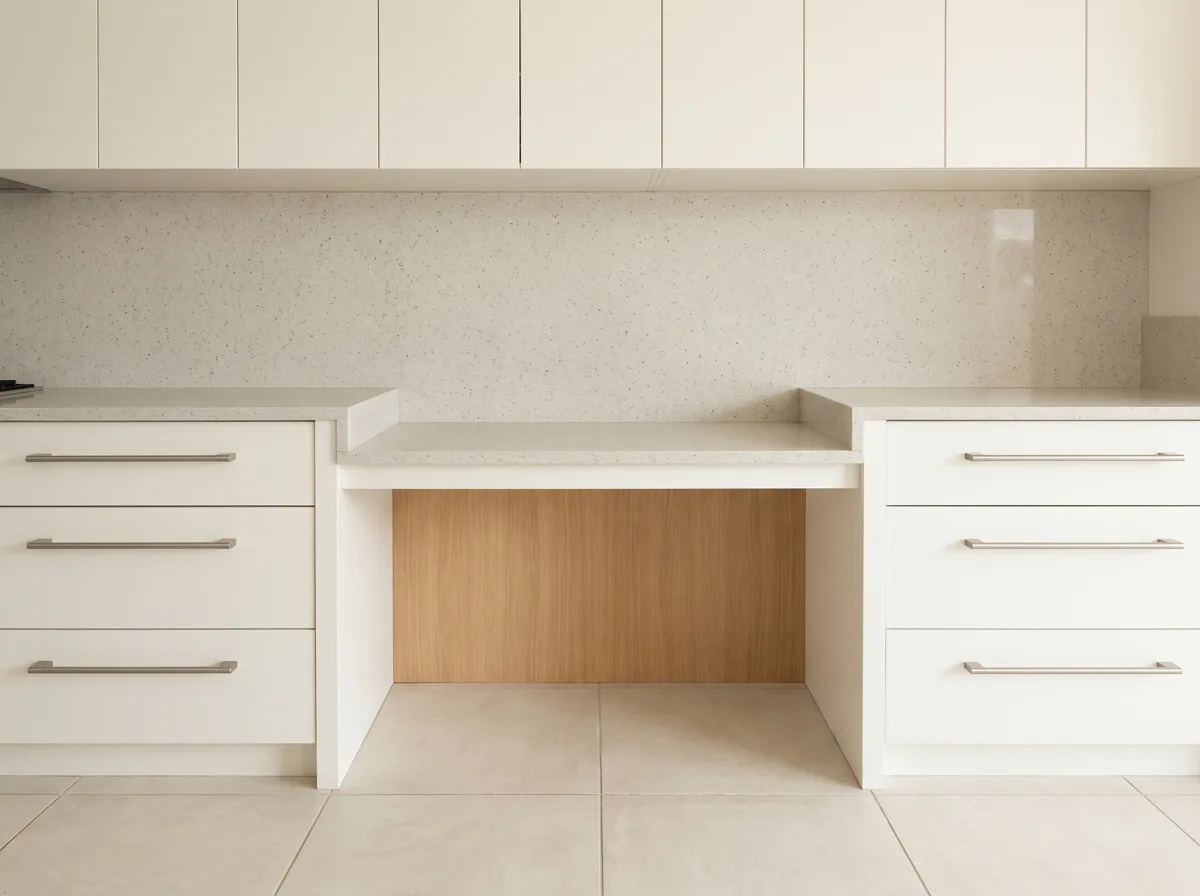
Counter at two heights, open underneath Accessible kitchen remodeling -
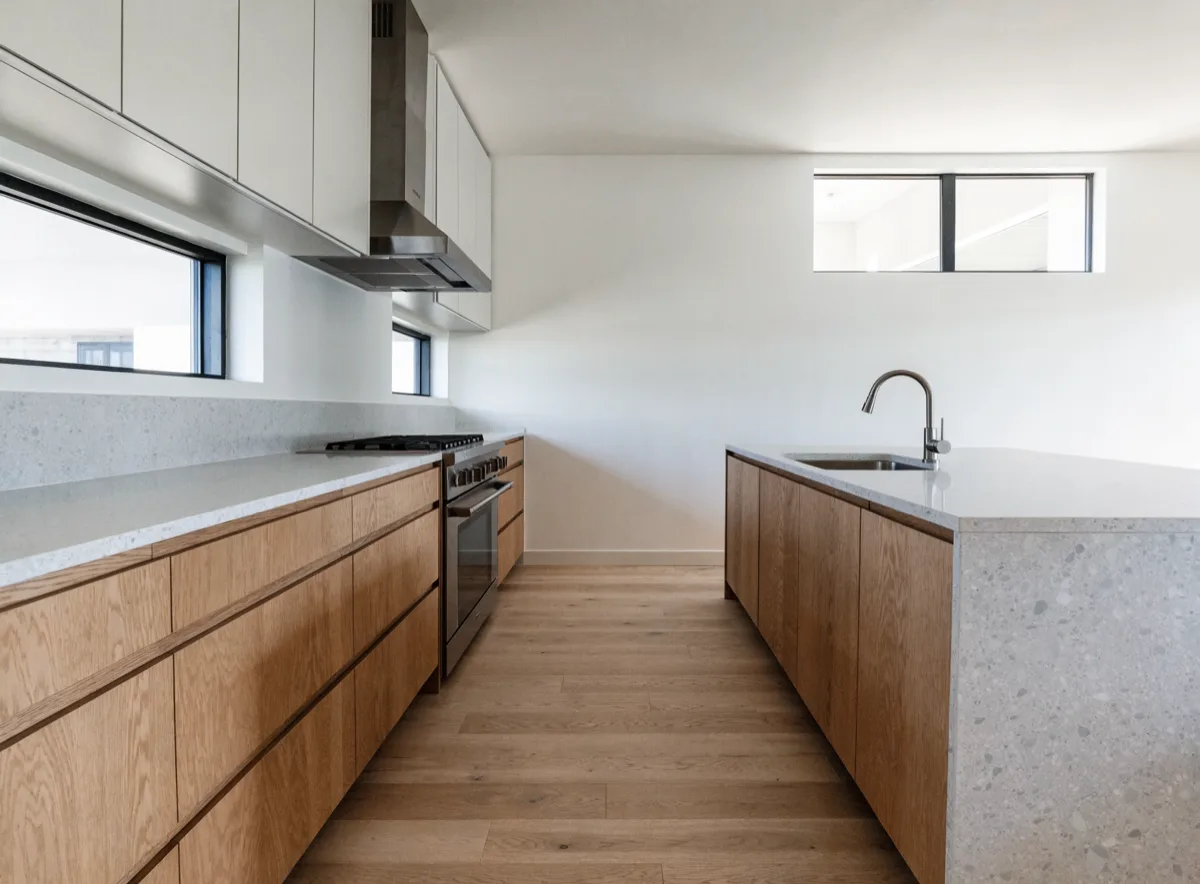
A wider walkway between the wall run and the island Kitchen layout redesign
Refinishing is the smallest of the three ways to deal with the cabinets you already own. Which one your kitchen actually needs is the question cabinet maker exists to answer.
Open any door, photograph the edge of it from the hinge side, and send us that.
The edge of a door tells us in one look whether refinishing is even available to you, and it takes fifteen seconds. If the wood runs through, we will price the work. If it is a film over a core, we will tell you that first and you will have saved yourself three estimates for a job nobody can do.
Call (786) 780-2728