
Concrete Countertop Installation Davie, FL
Concrete countertop installation Davie, the only counter on this site that does not exist until you order it: poured to your shape, in a color you pick, and honest about what age does to it.
- Thickness
- 1.5 in / 2 in
- Sealing
- Required
- In your house
- 1–2 days precast
- License
- CGC1524886
- Licensed & insured: CGC1524886
- 500+ kitchens completed
- 2-year workmanship warranty
- Answered 7 AM–10 PM, 7 days
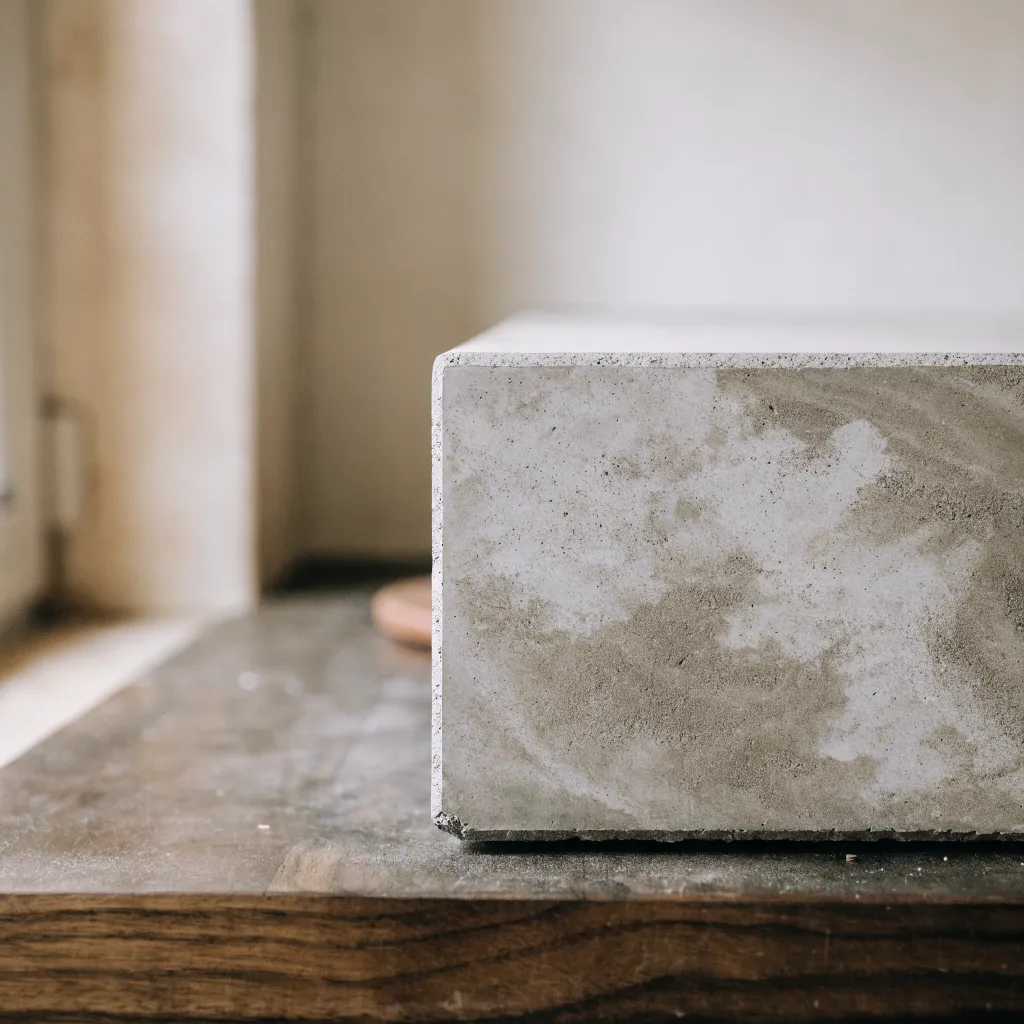
Every other counter on this site already exists. Somewhere there is a slab, quarried or pressed, and the job is to find the one you want and cut your kitchen out of it. Concrete is the exception: there is no slab until we make one, which is why you get to choose the shape, the color and the edge instead of choosing from what was available. That freedom is the whole argument for the material, and every drawback on this page is the same fact seen from the other side.
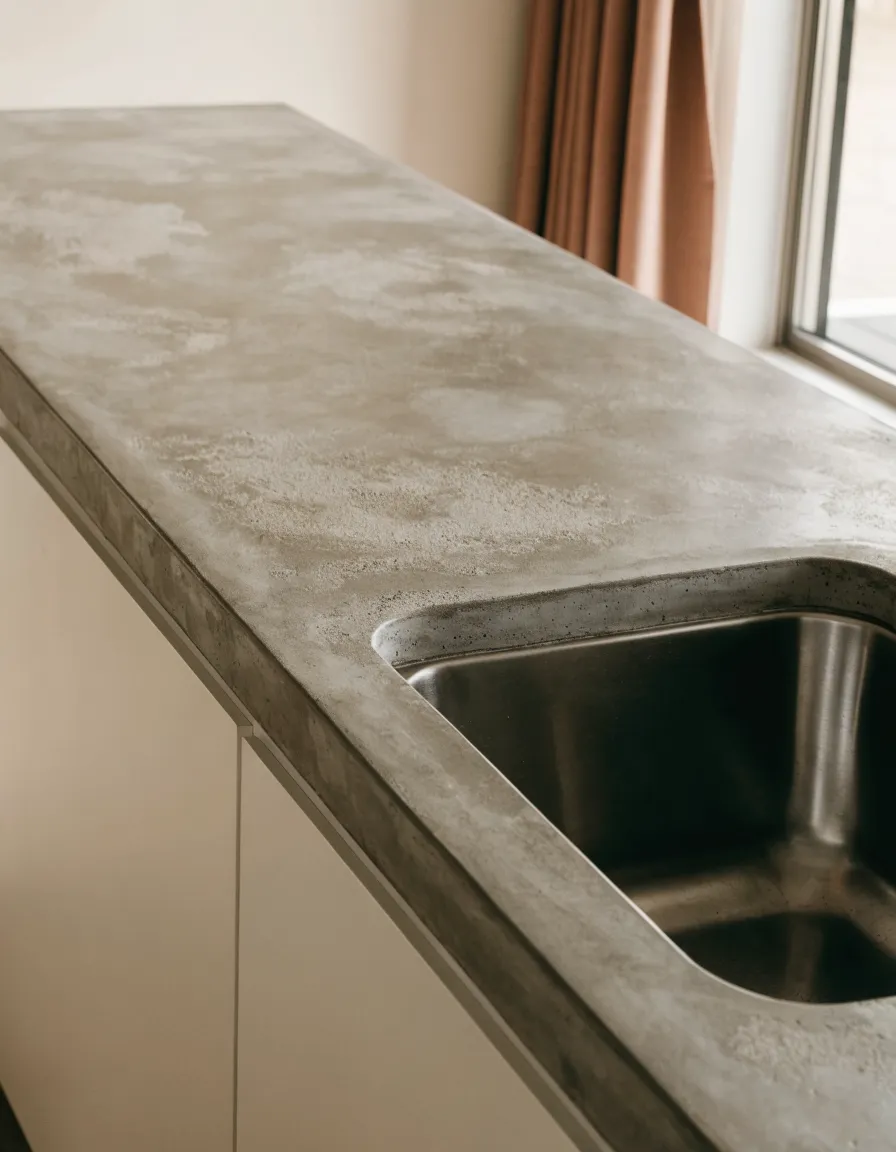
When Concrete Is the Right Counter for Your Kitchen
Concrete is the surface for a Davie kitchen that wants something a slab cannot do, and there are four versions of that.
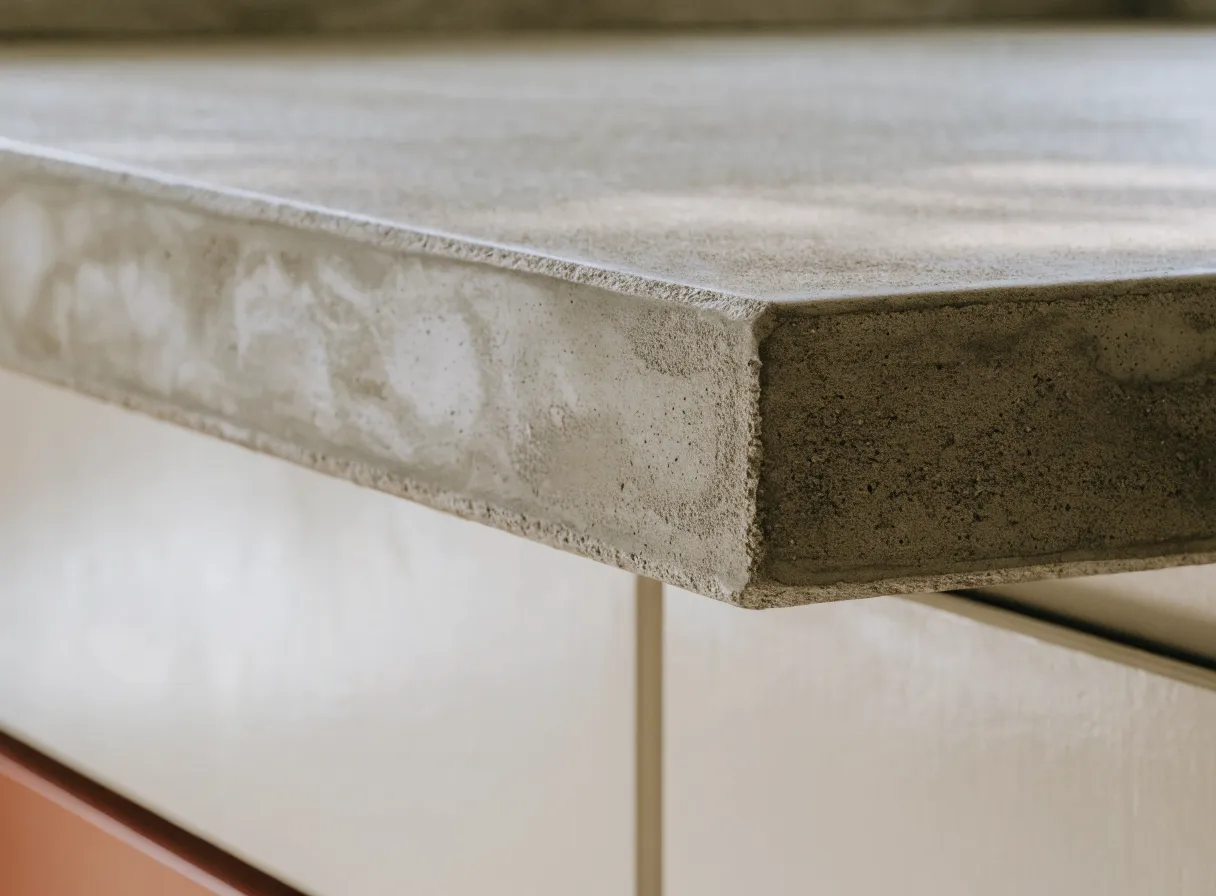
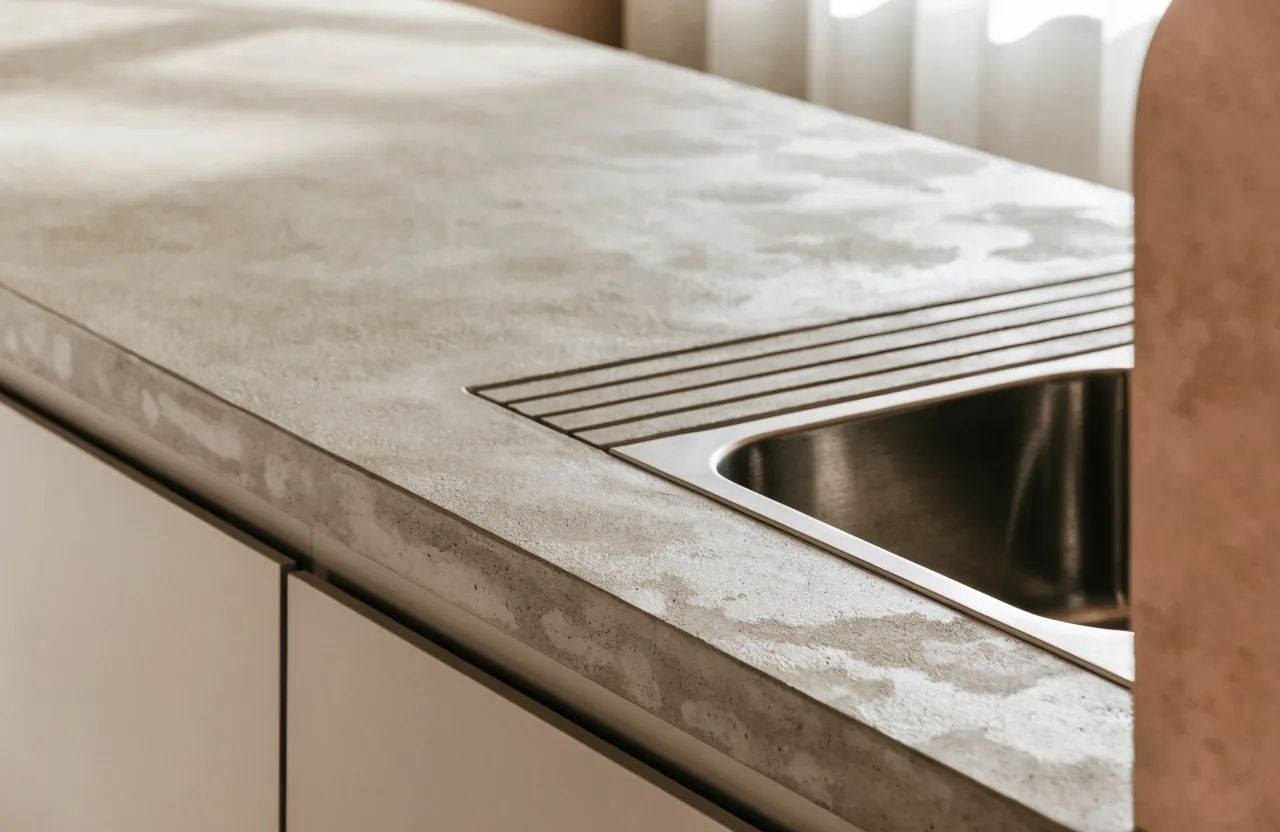
You want a shape nobody stocks. A drainboard cast into the counter beside the sink. A sink that is part of the top with no rim and no seam. A curve on the island, a trivet of brass rods set into the surface where the pan lands, an edge four inches thick on a top that is really an inch and a half. None of that is an upgrade on a stone job, because none of it is possible on a stone job. It is the reason people who want concrete usually want concrete specifically and not a category.
You want to choose the color instead of hunting for it. Pigment goes into the mix, so the counter comes out the color we agreed on rather than the closest thing the yard had that month. Warm gray, bone, charcoal, a soft tan that matches cabinet doors nobody makes a stone for. Those are decisions you make on a sample, before anything is poured.
You cook with real heat. Concrete is mineral all the way through and does not scorch. The honest qualifier, and you will not hear it from everyone selling it: what a hot pan can mark is the sealer on top, not the concrete underneath, so the trivets we hand you are protecting a coating and not the slab. Which sealer you get is therefore a real decision, and it is covered further down this page.
You want the counter to look made rather than bought. Concrete comes out variegated: slightly cloudy, slightly different across the run, with the record of the pour in it. Some people see that and want it immediately. Others see it and want quartz, and both reactions are correct.
Where concrete is the wrong call: when you want uniformity, and when hairline cracks would bother you. This is not a workmanship question and no fabricator can promise it away. Concrete shrinks as it dries, and the tension that produces is what causes drying shrinkage stresses and the consequent cracking in concrete as a material. Reinforcement does not prevent hairlines; it holds them tight and hair thin instead of letting them open. On a well-built top they read as part of the surface within a couple of years, and on the day they appear some people love them and some people call us. We would rather you know which one you are before we pour.
Precast, Cast in Place, or GFRC
The same material gets made three ways, and the method is the decision underneath the price. It changes the weight, the seams, the thickness you can have and how long your kitchen is without a counter.
Precast
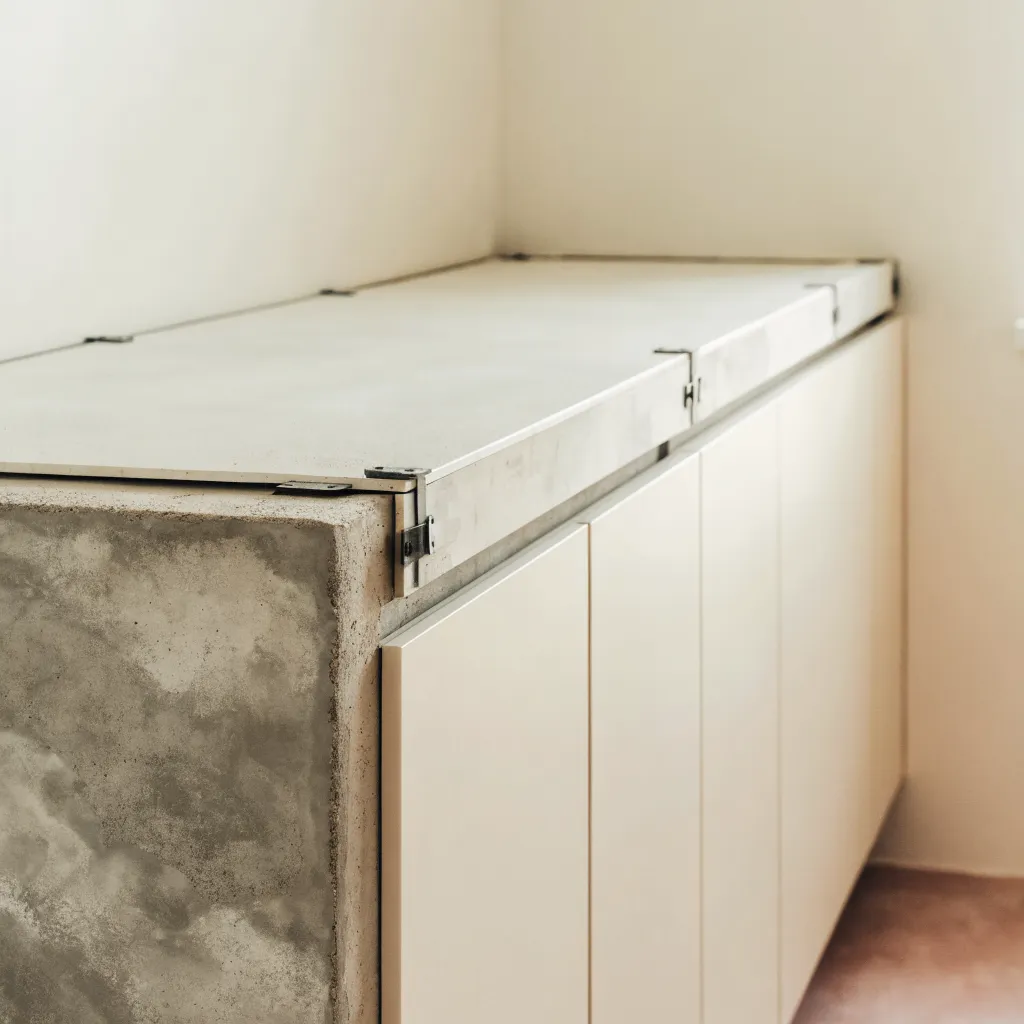
Poured face down into a mold in the shop, cured there, then delivered and set on your cabinets. It is the method most concrete counters are made with, and it is the one we default to. Casting against a mold gives the flattest, tightest face, the cure happens somewhere that is not your kitchen, and if a piece comes out wrong it gets recast without anybody living through it. The trade is that a big kitchen arrives in more than one piece, and the joints between them are filled and color matched but they are findable if you go looking.
Cast in place
Formed and poured on top of your installed cabinets, then ground and sealed where it sits. This is the one that buys a genuinely continuous run with no joints at all, wraps a curve, and carries an integral backsplash out of the same pour. What it costs you is the mess and the calendar: the forming, the pour, the grinding and the cure all happen in your kitchen, the water and dust are real, and it is the most expensive method on the page. We quote it when the shape justifies it and we say so plainly when it does not.
GFRC
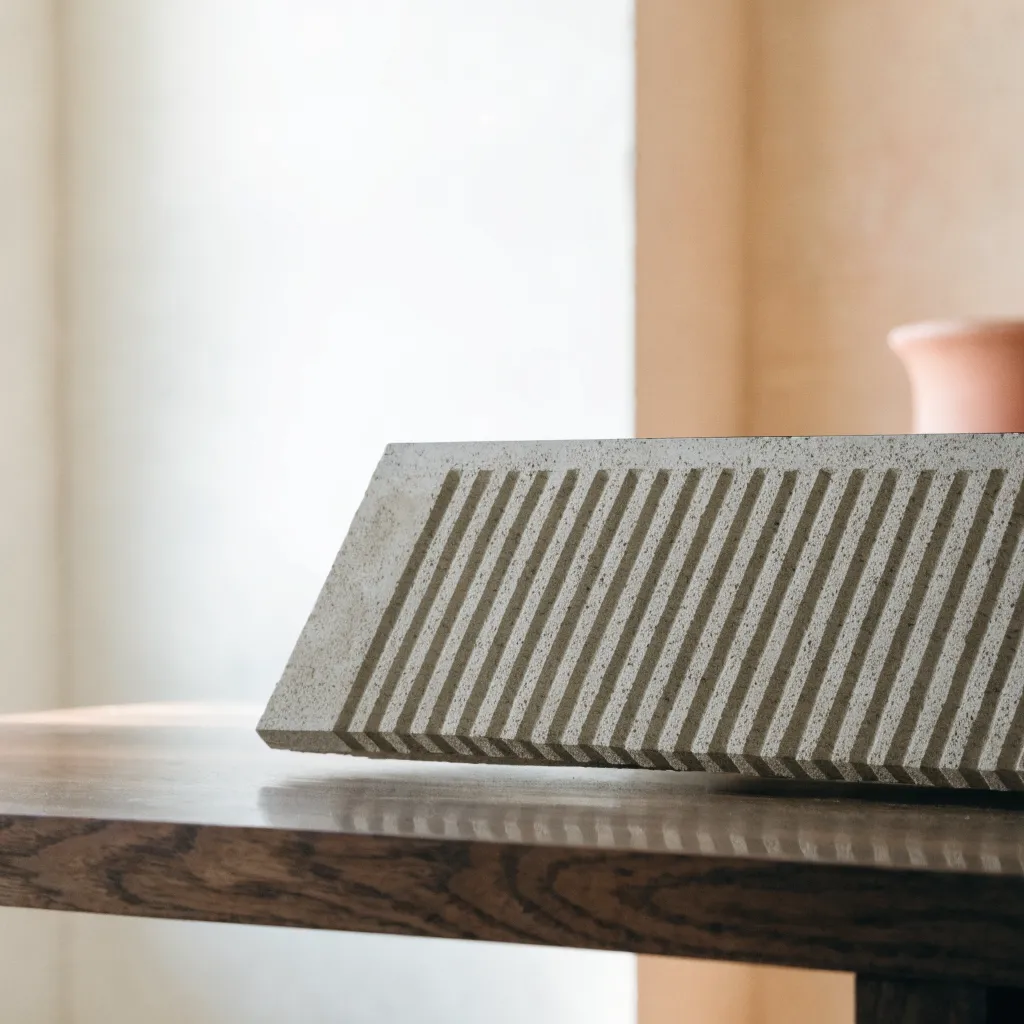
Glass fiber reinforced concrete: the same cement and sand with alkali-resistant glass fiber in the mix, cast thin over a ribbed backing. It weighs roughly half of what a solid pour of the same look weighs, which is the point: it is what makes a long unsupported overhang, a waterfall side or a thick-looking edge possible on cabinet boxes that were never built to carry stone. In a 1980s Davie kitchen where the existing boxes are staying, GFRC is often the difference between the top you want and a structural conversation you did not want to have.
How a Concrete Countertop Installation Runs, Step by Step
- Measure and scope, at your house, free. We measure the run, look at the sink and cooktop you have or want, check what the cabinet boxes can carry, and write down the shape you want: the drainboard, the integral sink, the edge thickness, all of it, because on concrete those are material decisions and not finishing touches.
- A written number before anything is ordered. One price, itemized: forming, casting, finish, edge, cutouts, integral features, sealing and installation. It does not move unless you approve a change in scope.
- Color and finish approved on a sample we pour, not on a chip. You get physical samples in the mix we intend to use, and the one you sign off on is the reference the job is built to. This step is not optional and it is not a formality: concrete varies batch to batch, a printed color card would be a promise the material cannot keep, and the approved sample is what "it came out different" gets measured against.
- Templating, on the installed cabinets and not before. A digital template is taken off the real boxes once they are set and level. Overhang, seam placement, sink position and the clearances around the range come out of that measurement, not out of a drawing.
- Casting and cure. Your top is formed and poured to the template, then left to cure. This is the step that makes concrete slower than stone, figure three to four weeks against two to three for a slab, and it is not a step that can be compressed. A counter installed before it has cured is a counter that will move.
- Grinding, filling and sealing. The face is ground to the finish you approved, pinholes are filled, and the sealer goes on. We tell you in writing which sealer you are getting and what it asks of you, and if you want the low-odor water-based system you should say so here. The EPA's own position is that VOC concentrations are consistently higher indoors than outdoors, up to ten times higher, and solvent-based coatings are on that list.
- Installation, plumbing reconnect and walkthrough. The top is set and leveled, joints are filled and color matched, the sink is attached and supported from below. Faucet, disposal and drain go back, we run water, and we go through the whole run with you and write down anything that is not right before we ask for the last payment.
What Concrete Countertop Installation Costs in Davie
We do not publish our own price for concrete, and the reason is the one that applies to every number on this site: a rate per square foot without a kitchen attached to it is a guess. On concrete it is worse than usual, because the same square footage can be a simple rectangular precast run or a poured top with an integral sink, and those are not the same job. What we can do is show you the bands this market publishes and tell you what each one is measuring.
| Range | Method | What it measures |
|---|---|---|
| $65 – $95 / sq ft | precast, standard | integral color, ground finish, simple edge, installed |
| $95 – $135 / sq ft | precast, custom | where most Davie concrete kitchens land, installed |
| $135 – $200+ / sq ft | cast in place or integral features | integral sink or drainboard, curves, thick edges |
Those are installed figures, which is the only kind worth quoting on a material that is mostly labor: the cement and sand in a concrete countertop cost almost nothing, and essentially the entire number is forming, casting, finishing and setting it. That is the structural difference between concrete and every stone on this site, and it explains the thing people find strange: that the cheapest raw material on the list does not produce the cheapest counter.
What actually moves the number
The method first, then the shape. After that: square footage, the number of pieces, whether the edge is a simple square or built up to read thick, how many cutouts, and whether there is an integral sink or drainboard in the pour. Complexity costs more here than area does, which is the opposite of how stone prices, and it is why two Davie kitchens with the same linear feet can come back with numbers that are not close to each other.
Your zip code is not on that list. We charge the same in Davie, Weston and Fort Lauderdale.
One thing worth knowing before you compare quotes
Ask what sealer is in the number, by name, and ask what re-coating it costs. On concrete this is not a detail: the sealer is what decides whether your counter stains, whether wine and lemon etch it, and whether a hot pan leaves a mark, and the spread between a basic penetrating sealer and a high-performance topical system is real money on the estimate and much more than that in how the counter lives. A quote that does not name the sealer is not comparable to one that does. Ask the same question of everyone you are talking to; it costs you nothing and it sorts most of the spread.
Why Choose Us
The counter is templated on your installed cabinets and cast before anything comes out, which is the operating rule behind the two numbers that matter here: three to four weeks from template to installation, and one to two days without a kitchen. On concrete it matters more than on stone, because the cure alone is three to four weeks, and the only reason that does not become three to four weeks without a kitchen is that it happens on a shop bench and not on your cabinets. Cast in place is the exception and we quote it as one: the forming, the pour, the grinding and the cure all happen in your kitchen, so it carries its own calendar and we give you that calendar before you choose it.
You get a written number before anything is ordered, itemized down to the integral features, and it holds. If the cabinet boxes turn out not to carry the thickness you asked for, and in a 1980s Davie kitchen that happens, you see it, you get the options priced, and you decide before we form anything. GFRC is usually one of those options, and it usually costs less than reinforcing the boxes.
You get told which sealer is on your counter and what it wants, in writing, at handover. Nobody in this trade volunteers that, and it is the single piece of information that decides whether you like a concrete counter in year five.
And we will talk you out of it. If what you actually want is a uniform surface that never changes, concrete is the wrong material and no amount of good workmanship will fix that. We install seven other surfaces and we would rather sell you one of them than get the call about a hairline in eighteen months.
The crews work under Gaven Constructions, license CGC1524886, insured, with a two-year workmanship warranty on the installation. And someone answers this phone from 7 AM to 10 PM every day, which is the part most people end up caring about while they are collecting three estimates.
Licensed, Insured, and Permitted in Davie
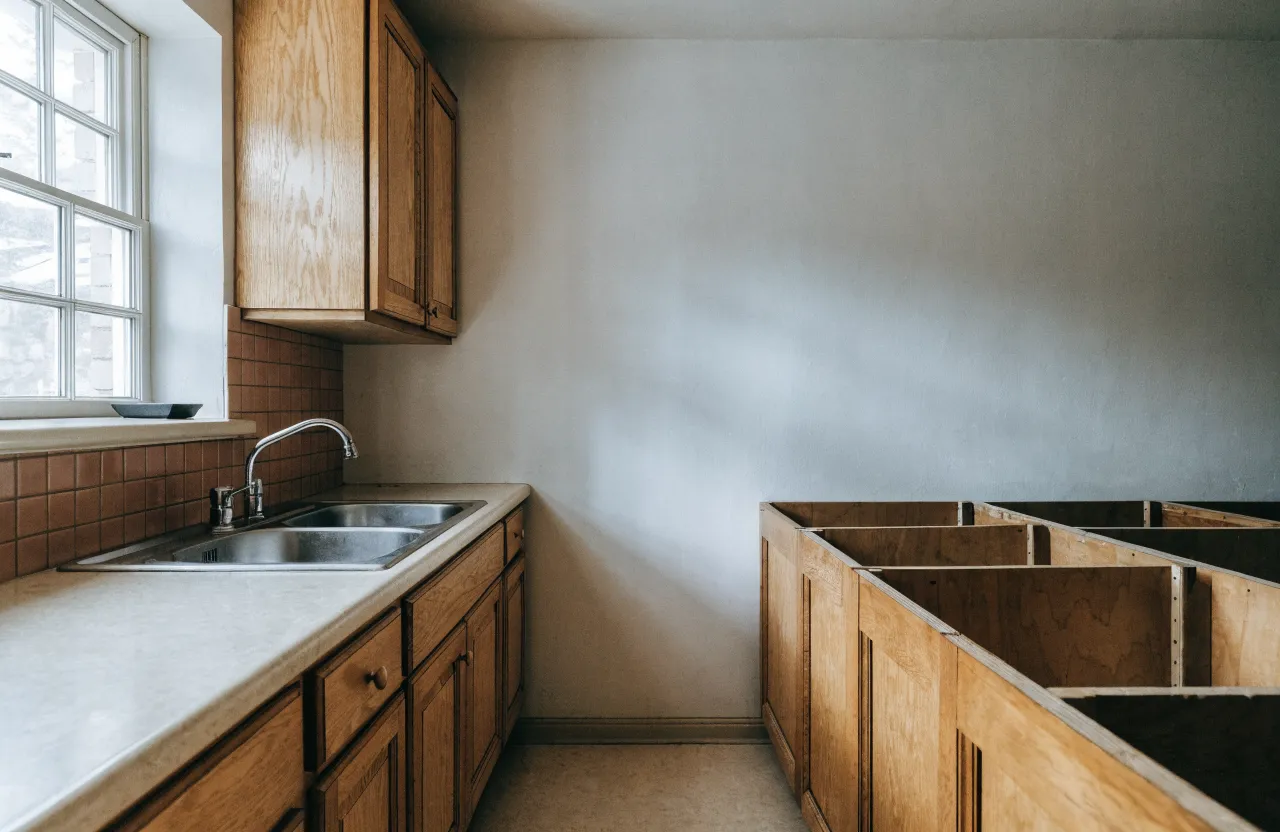
A countertop swap on its own is usually the least regulated part of a kitchen: nothing structural moves and the top sits on cabinets that are already there. Two things pull concrete further into review than a slab. The first is the plumbing, which is the same for every material: disconnecting and reconnecting a sink is one thing, relocating it or moving a drain or a supply line is another, and so is electrical that has to move for a new cooktop cutout. The second is weight, and it is concrete's own: a two-inch solid pour is meaningfully heavier per square foot than a 3 cm stone top, and an unsupported overhang or a cabinet run that was never built to carry it is a structural question, not a preference. That is also why cast in place gets looked at differently from precast: the forming and the pour happen inside the house. The determination on your particular scope belongs to the Town of Davie Building Division, which keeps structural and plumbing on separate inspections with separate inspectors, and not to us. We do not publish a table telling you which side of that line your job falls on, because following a contractor's table is your exposure and not ours. What we publish is when you find out: in the written estimate, priced, before you approve the project.
- License
- CGC1524886 Certified General Contractor, verifiable in the Florida DBPR licensee search.
- Insurance
- Insured and bonded Certificates are available before any work is scheduled.
- Workmanship warranty
- 2 years On installation labor. Most of this market publishes one.
- Permits and design
- Priced before approval Requirements vary by project scope. Any required permitting, drawings, engineering, or design services are identified and priced before the project is approved.
- Who contracts the work
- Gaven Constructions Kitchen Remodeler Davie was acquired by Gaven Constructions, a licensed contractor since 2015. Every estimate and invoice is issued in that name, which is what puts the license behind the job.
Common Questions
What does concrete countertop installation cost in Davie, FL?
Installed, most Davie concrete kitchens land between $95 and $135 per square foot, with a simple precast run in a standard color starting around $65 and cast-in-place work with an integral sink or drainboard running past $200. Those are installed numbers, which is the only kind that means anything on this material: the cement and sand cost almost nothing and nearly the whole price is labor. It is forming, casting, grinding, sealing and setting. What moves your number is the method first and the shape second, then square footage, the number of pieces, the edge and the cutouts. That ordering is the opposite of how stone prices, and it is why two kitchens with the same linear feet can come back thousands apart. We will put a written, itemized figure in front of you before anything is formed, with the sealer named in it, and it holds unless you approve a change in scope.
What is the downside of concrete countertops in a Davie kitchen?
Four, and they are all the same fact from different sides. It is porous, so it has to be sealed and the sealer is a real maintenance item rather than a formality. It hairlines as it cures and ages, and that is inherent to the material rather than a defect anyone can fix. It varies from batch to batch, from piece to piece, and across a single run, so if you want a surface that matches itself exactly you want something else. And it is slow, three to four weeks of cure against two to three for a slab, and that time cannot be compressed. The counterweight is that it is the only surface here that can be made in a shape nobody stocks, in a color you chose, with the sink cast into it. If none of those matter to you, you are buying the drawbacks without the reason for them.
Do concrete countertops crack in Davie, and is that a defect?
Hairline cracks are normal on concrete and are not a structural failure. Concrete shrinks as it dries, and that shrinkage creates internal tension the material relieves by cracking. It is a property of cement, not a sign that somebody did it wrong. What good fabrication controls is the width: reinforcement and a correctly proportioned mix keep the cracks hair thin and tight rather than letting one open into a visible line. In practice they show up in the first year or two, they are most likely near a cutout or a narrow section beside the sink where the slab is weakest, and once sealed they read as part of the surface. What is not normal is a crack that moves, opens, telegraphs across the whole width or lets water through, and that is either a mix, a reinforcement or a support problem. Ours is covered by the two-year workmanship warranty; the hairlines that are the material behaving like itself are not a warranty item anywhere, and any company that tells you their concrete will not hairline is telling you something they cannot deliver.
Is a concrete countertop cheaper than granite in a Davie kitchen?
Usually not, and people find that genuinely surprising because concrete is the cheaper raw material by an enormous margin. Bagged cement and sand cost a fraction of a quarried slab. But a granite top is a stone that already exists, so you are paying for the slab plus fabrication and installation, while a concrete top does not exist yet, so you are paying for someone to build it: forming, casting, curing, grinding, filling, sealing and setting. That is all labor, and labor is what is expensive here. In Davie a common stock granite installed starts around $40 a square foot and a straightforward precast concrete starts around $65, and at the custom end the gap widens rather than closes. Choose concrete because you want what only concrete can do. If the driver is budget, granite in a common series is the better answer and we will say so.
Can you use Clorox wipes on concrete countertops in a Davie kitchen?
Not as your everyday cleaner. Disinfecting wipes are either bleach-based or acidic, and both attack the sealer rather than the concrete. On this material the sealer is the entire defense, because the slab under it is porous and cement is alkaline enough that acid marks it. Vinegar, lemon, ammonia and generic bathroom sprays fall in the same category, and so does anything abrasive if your counter has a wax topcoat over the sealer. What concrete wants is warm water with a few drops of dish soap and a soft cloth, or a cleaner labeled pH-neutral. If you need to disinfect after raw chicken, wash with soap and water first, then use a wipe on that spot and rinse it off. Occasional targeted use is not what wears a sealer out. Daily habit is, and on concrete a worn sealer shows up as a stain you cannot wipe away rather than as a dull patch you can live with.
How do you maintain a concrete countertop in Davie's humidity?
Day to day it is soap and water, and that is most of the program. The part that is specific to this material is the sealer, and it depends on which one you have, which is why we hand it to you in writing. A penetrating sealer keeps the counter looking and feeling like raw concrete and gives the least stain protection, so it usually wants a wax on top that gets renewed every few months. A high-performance topical system is a film across the surface: far more resistant to wine, oil and citrus, and re-coatable every few years rather than every few months, at the cost of a slightly less raw look and less tolerance for a pan straight off the burner. Humidity here matters less than it does for wood, because concrete does not swell. What South Florida actually contributes is hard water, which leaves mineral marks on any sealer that has worn through. Wipe standing water around the sink, use trivets, and re-coat on the schedule you were given rather than when you notice a problem.
What are the different types of concrete countertops in Davie, precast or poured in place?
There are three, and the choice is made before anything is formed. Precast is poured in a shop mold and delivered finished, so the cure happens somewhere that is not your kitchen; it is the default. Cast in place is poured on top of the installed cabinets and is the only one that gives a run with no joints at all, at the cost of the forming, grinding and dust happening in your kitchen. GFRC is cast thin over a ribbed backing and weighs roughly half as much. What decides it is the shape you want and what your existing boxes can carry: in a Davie kitchen where the boxes are staying, GFRC is the one that most often turns a no into a yes.
Recent Kitchen Remodeling Projects in Davie
-
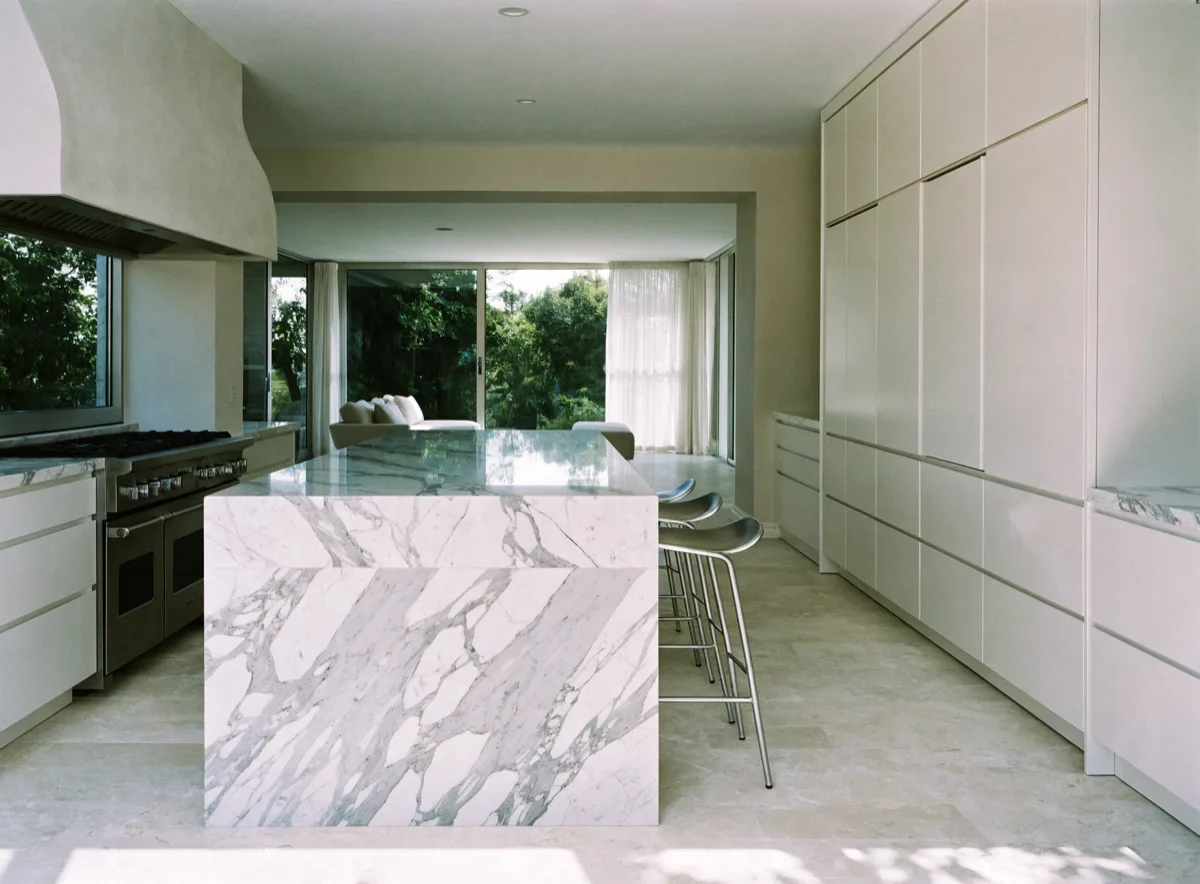
Kitchen opened to the living room, with a seated island Luxury kitchen remodeling -
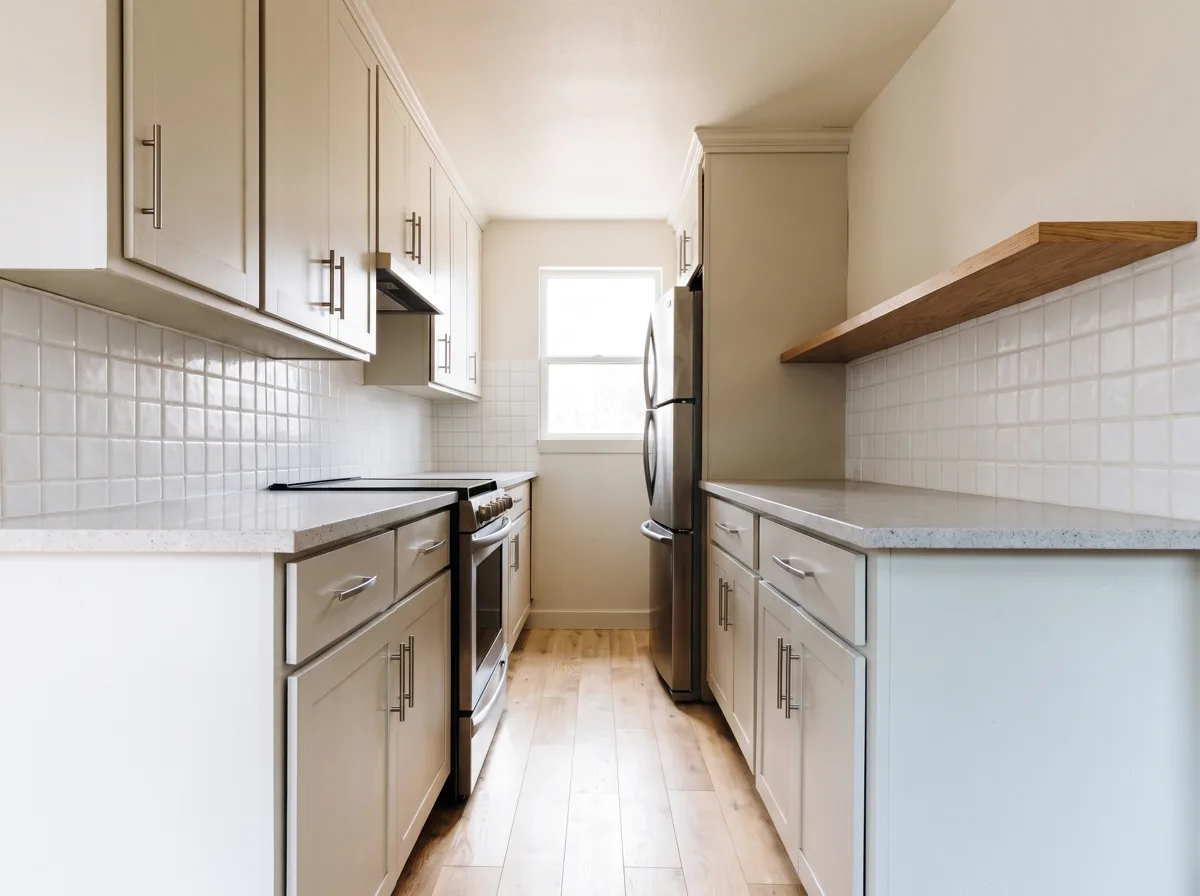
Galley kitchen opened up on one wall Galley kitchen remodeling -
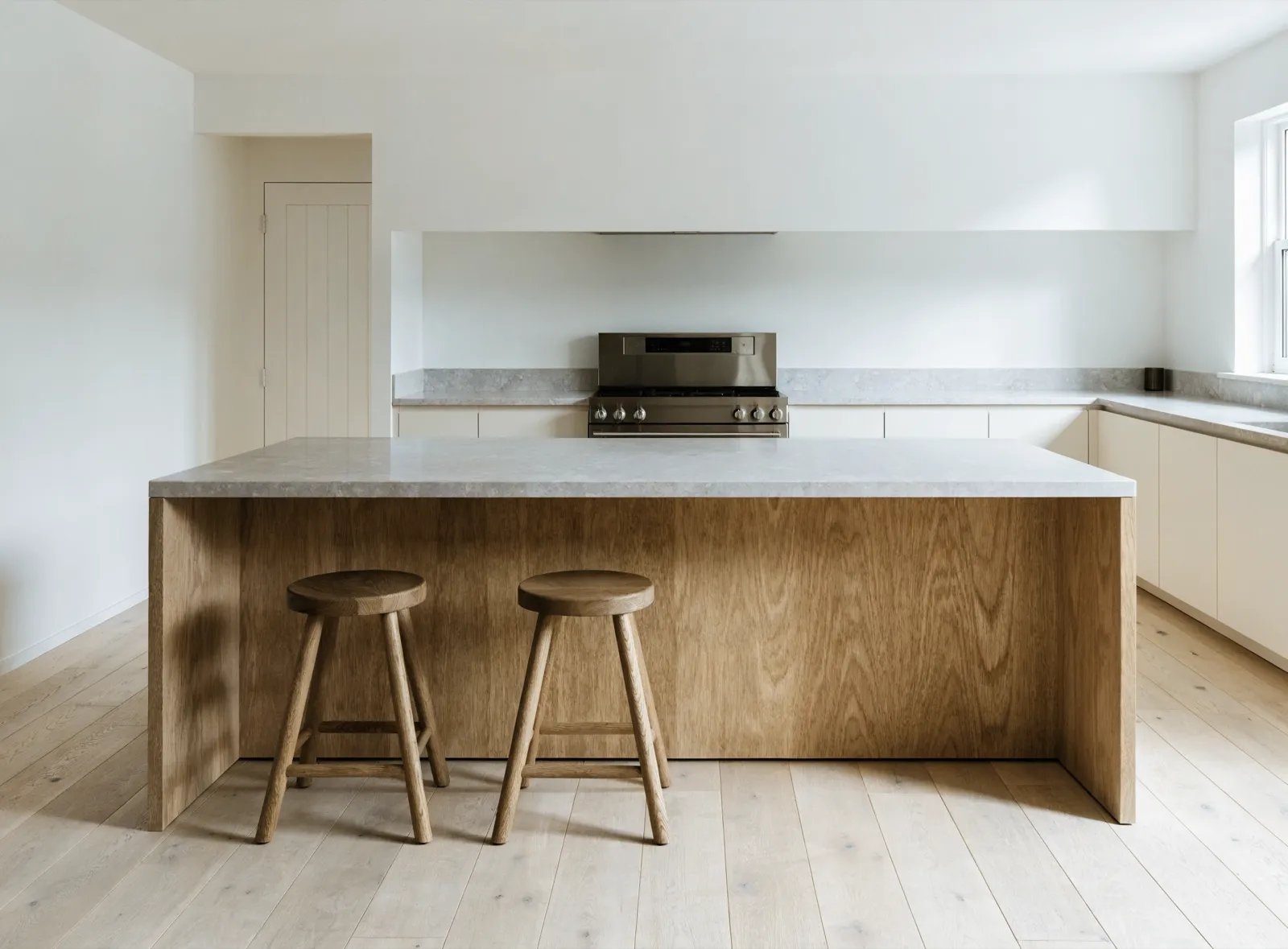
Island cabinetry with seating and a full perimeter run Kitchen island cabinetry -
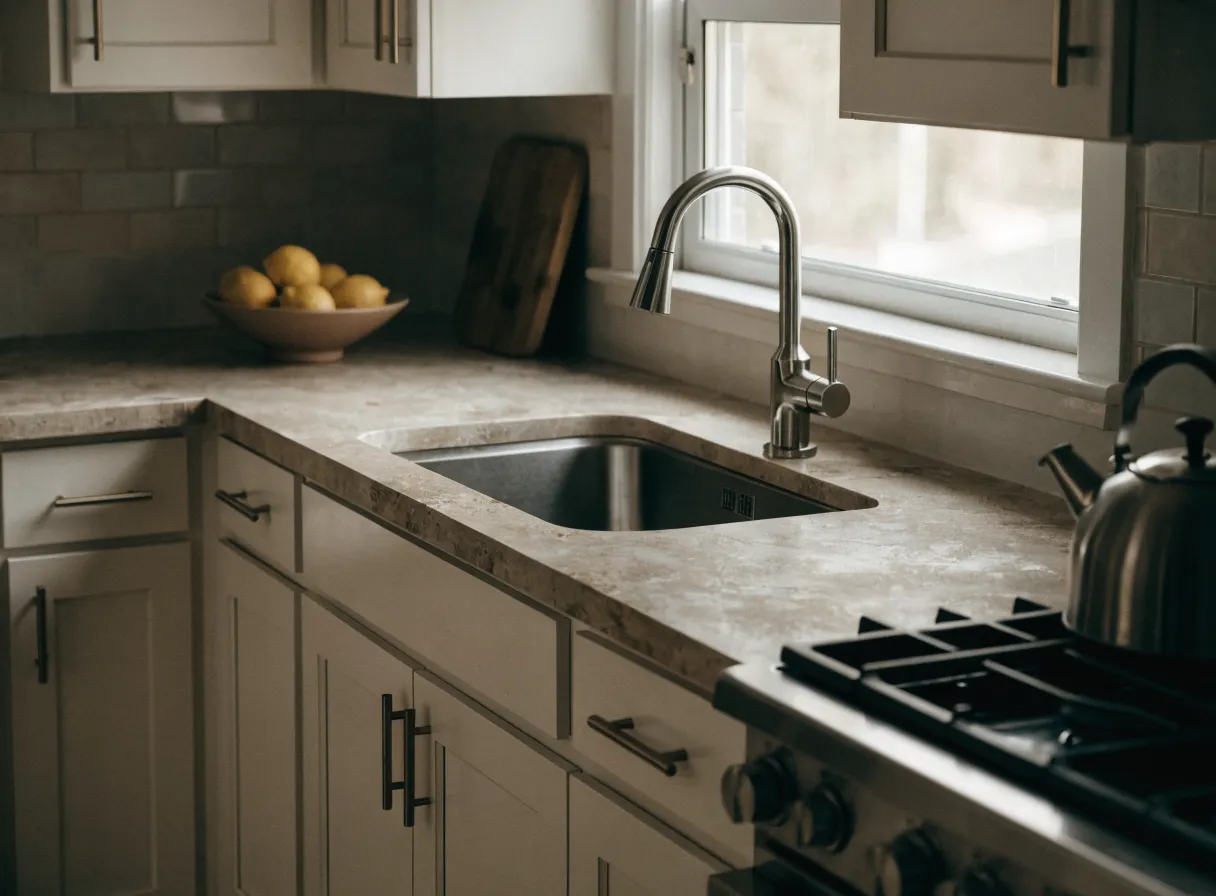
Refaced cabinets, shaker fronts and a tile backsplash Cabinet refacing
-
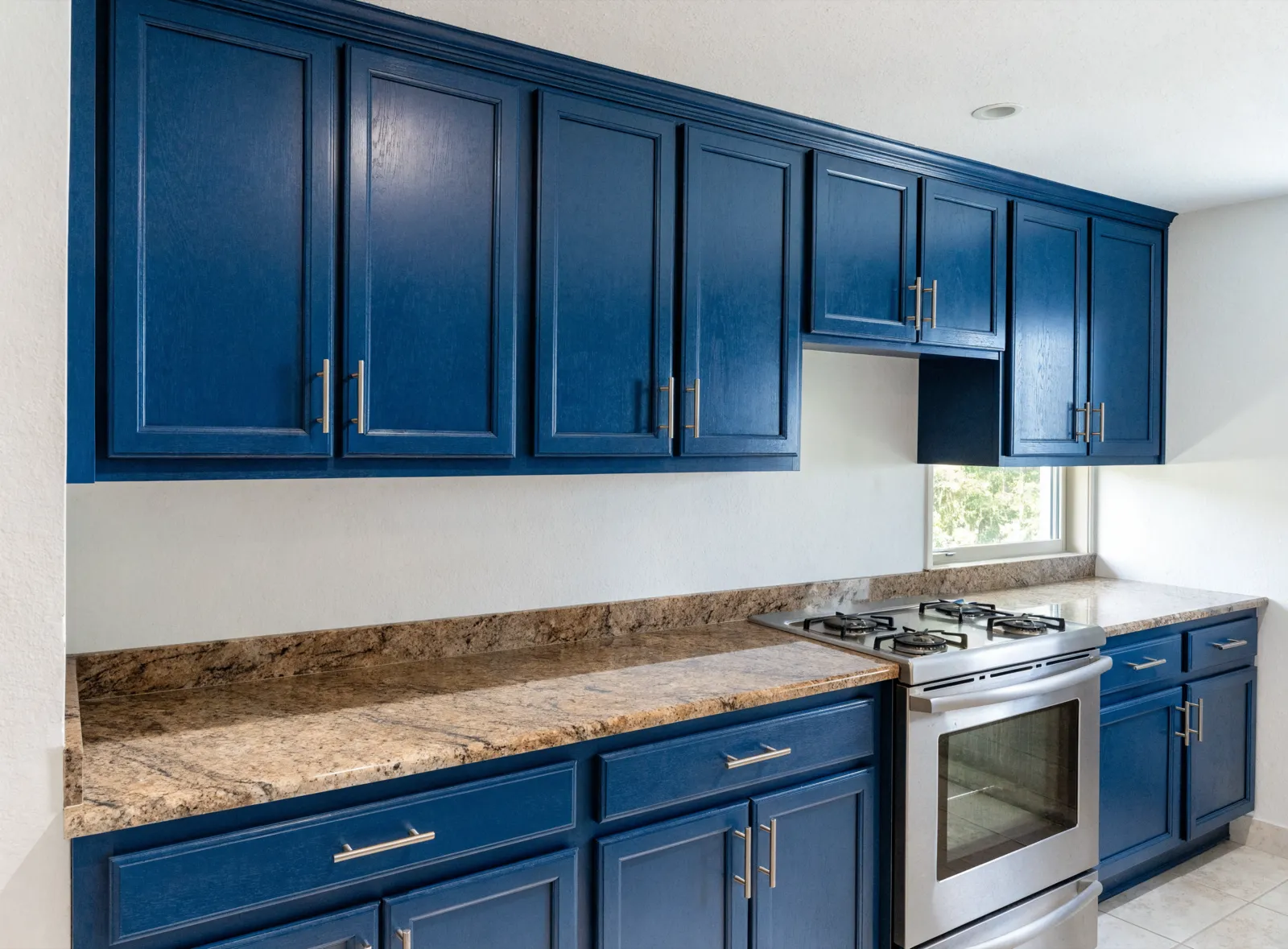
Cabinets refinished in navy under the existing granite Cabinet refinishing -
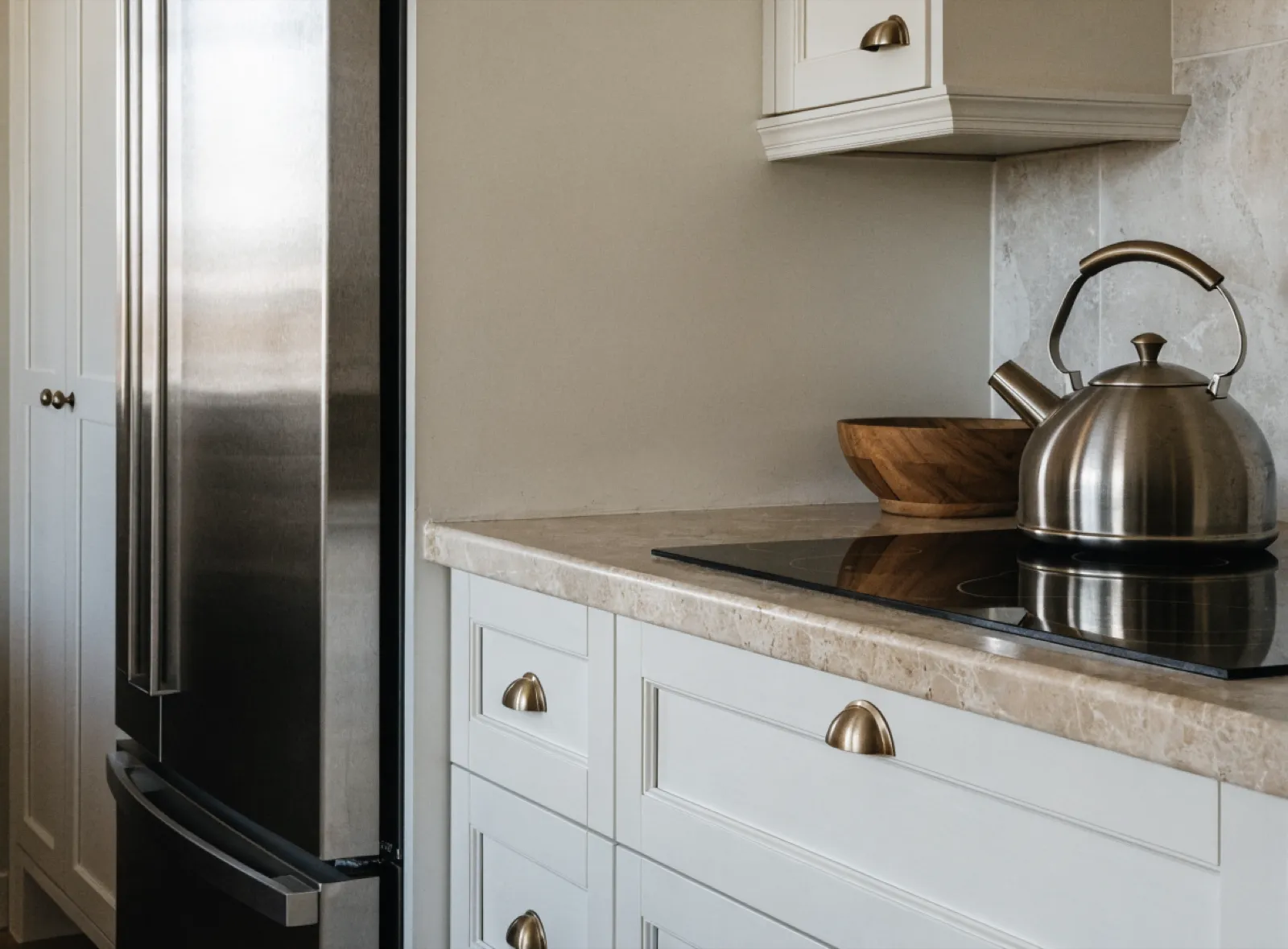
Drawer bank under the cooktop, pantry beside the fridge Custom kitchen cabinets -
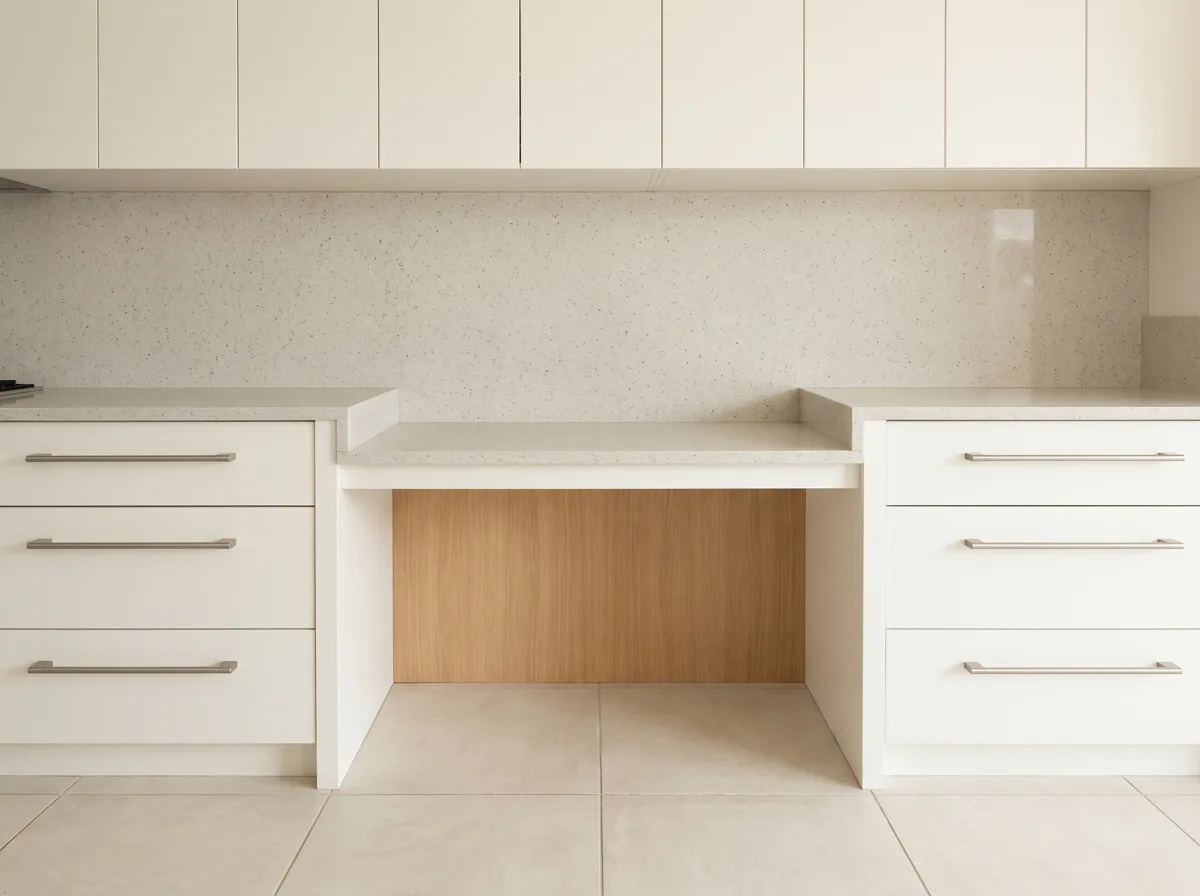
Counter at two heights, open underneath Accessible kitchen remodeling -
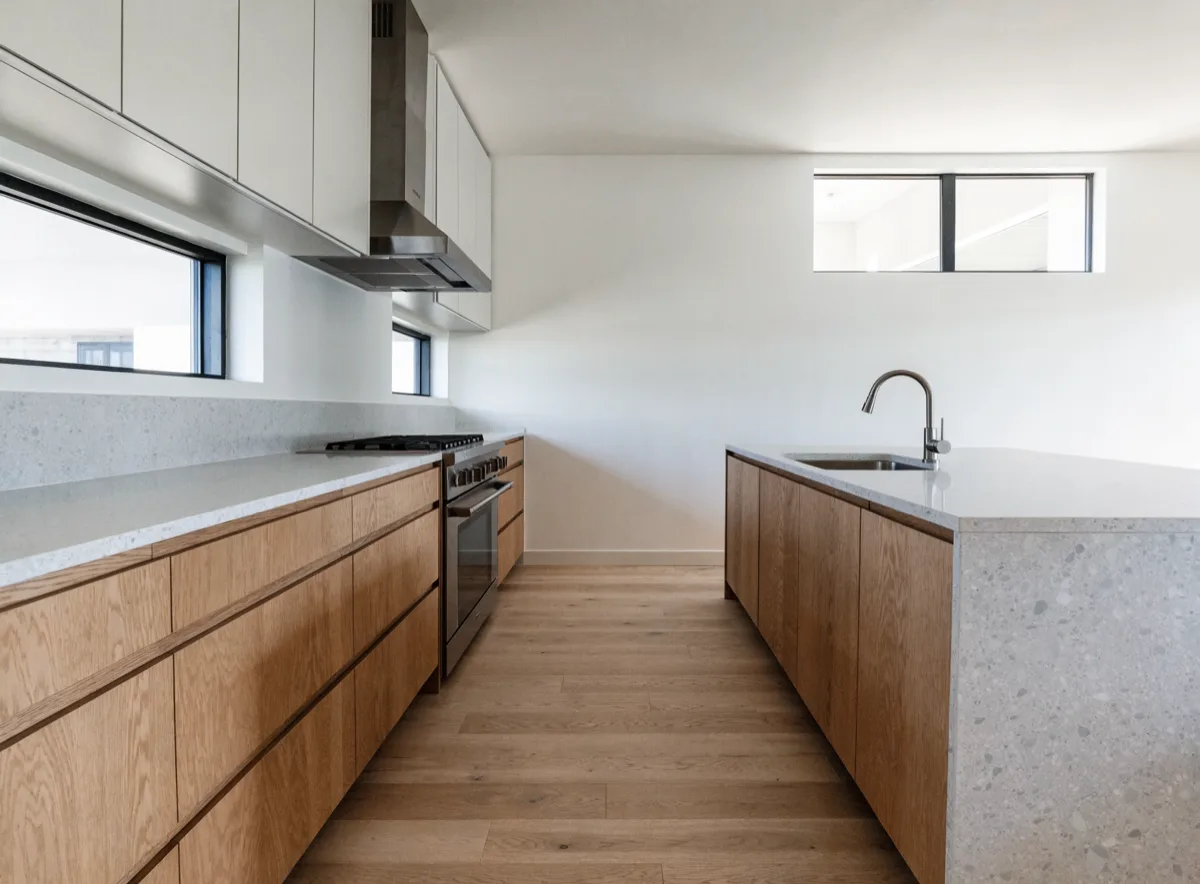
A wider walkway between the wall run and the island Kitchen layout redesign
Concrete is one of several surfaces we install. See how it compares against the others on the countertop contractor page, or start from what Kitchen Remodeler Davie does.
Tell us the shape you want and we will tell you whether it has to be poured in place.
Measure the run of counter along each wall, tell us the sink and the cooktop, and say whether you want a drainboard, an integral sink or an edge thicker than two inches. That is what decides the method, and the method decides the number.
Call (786) 780-2728