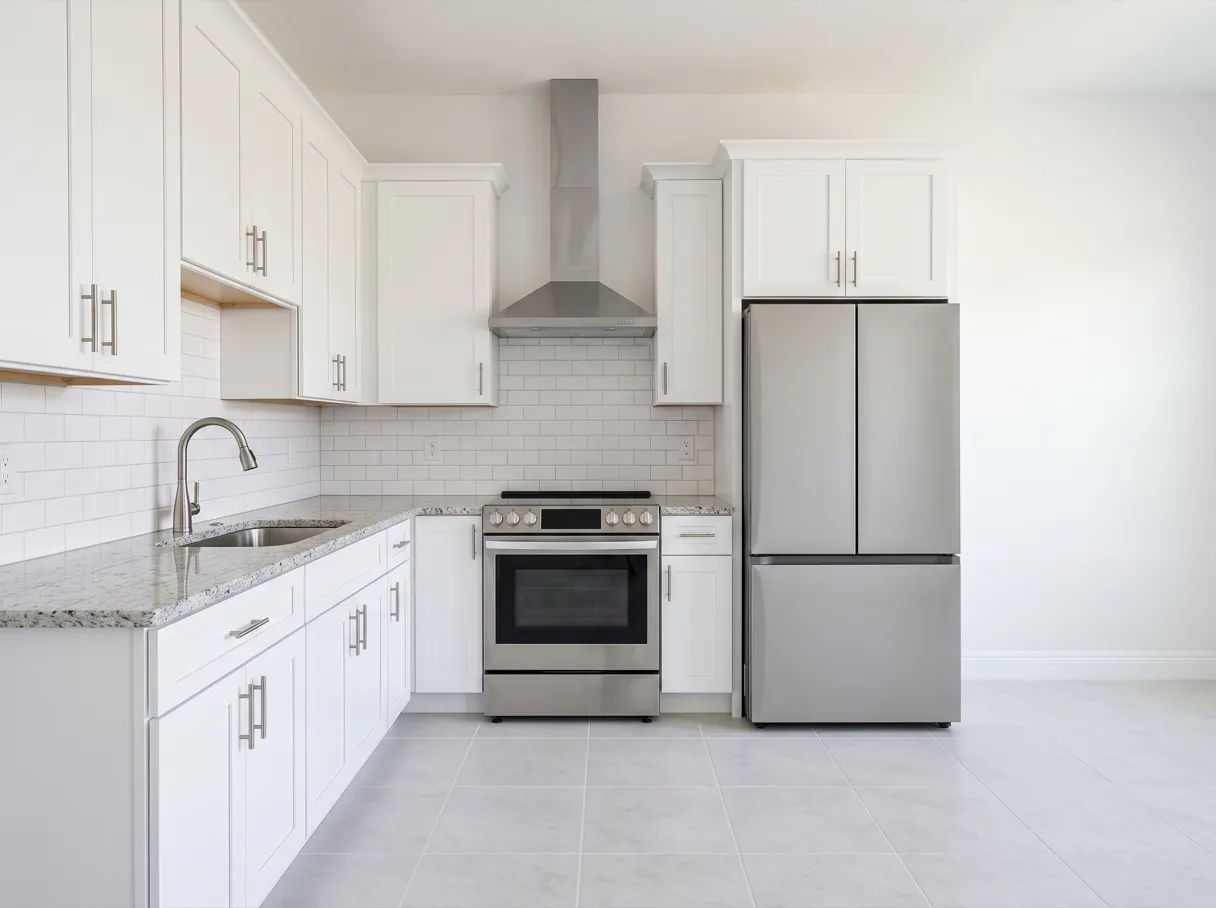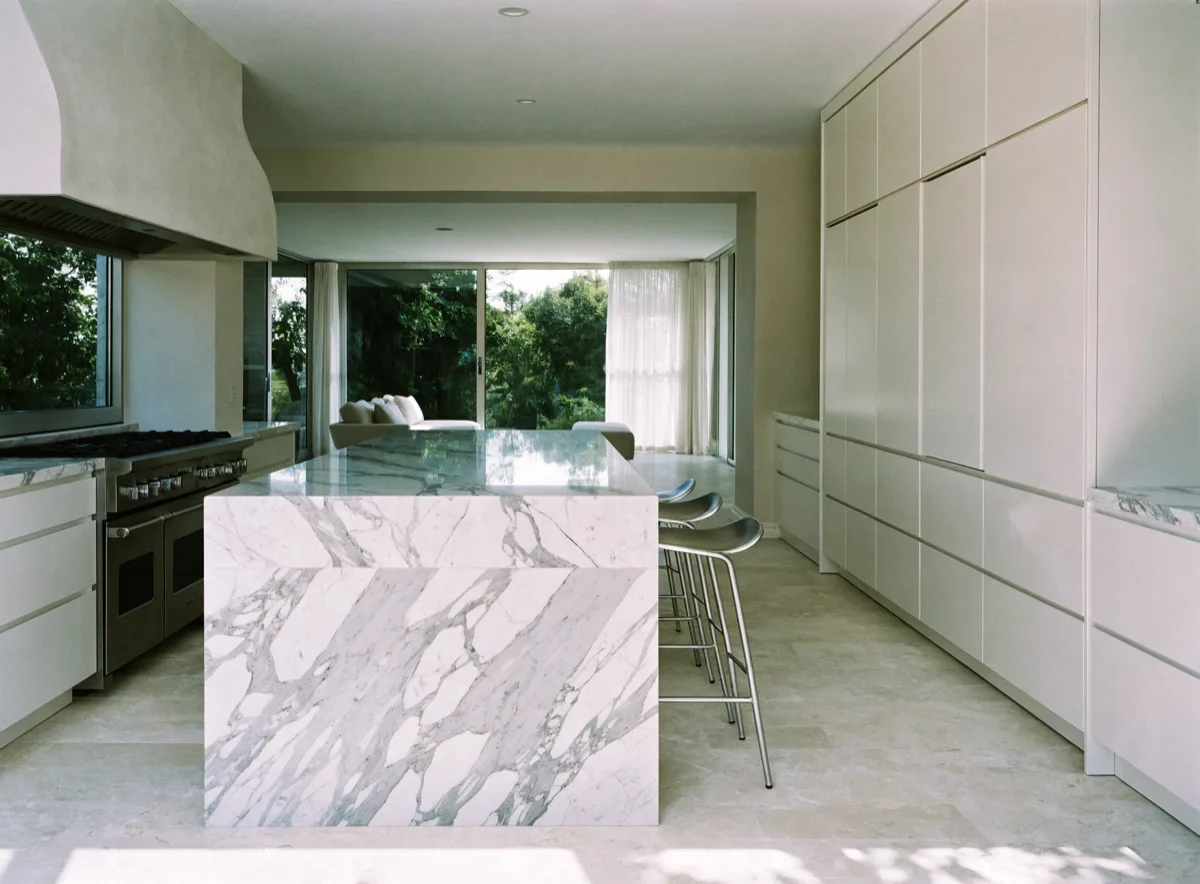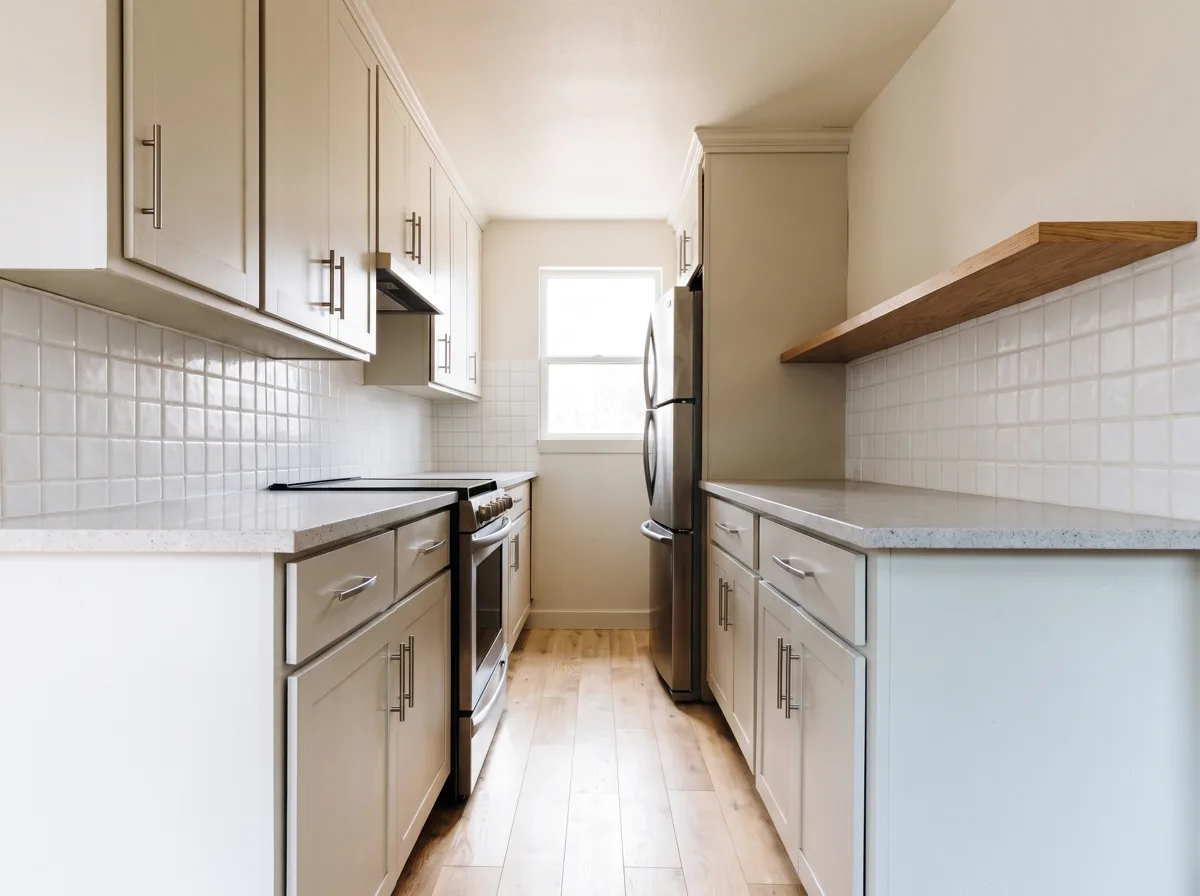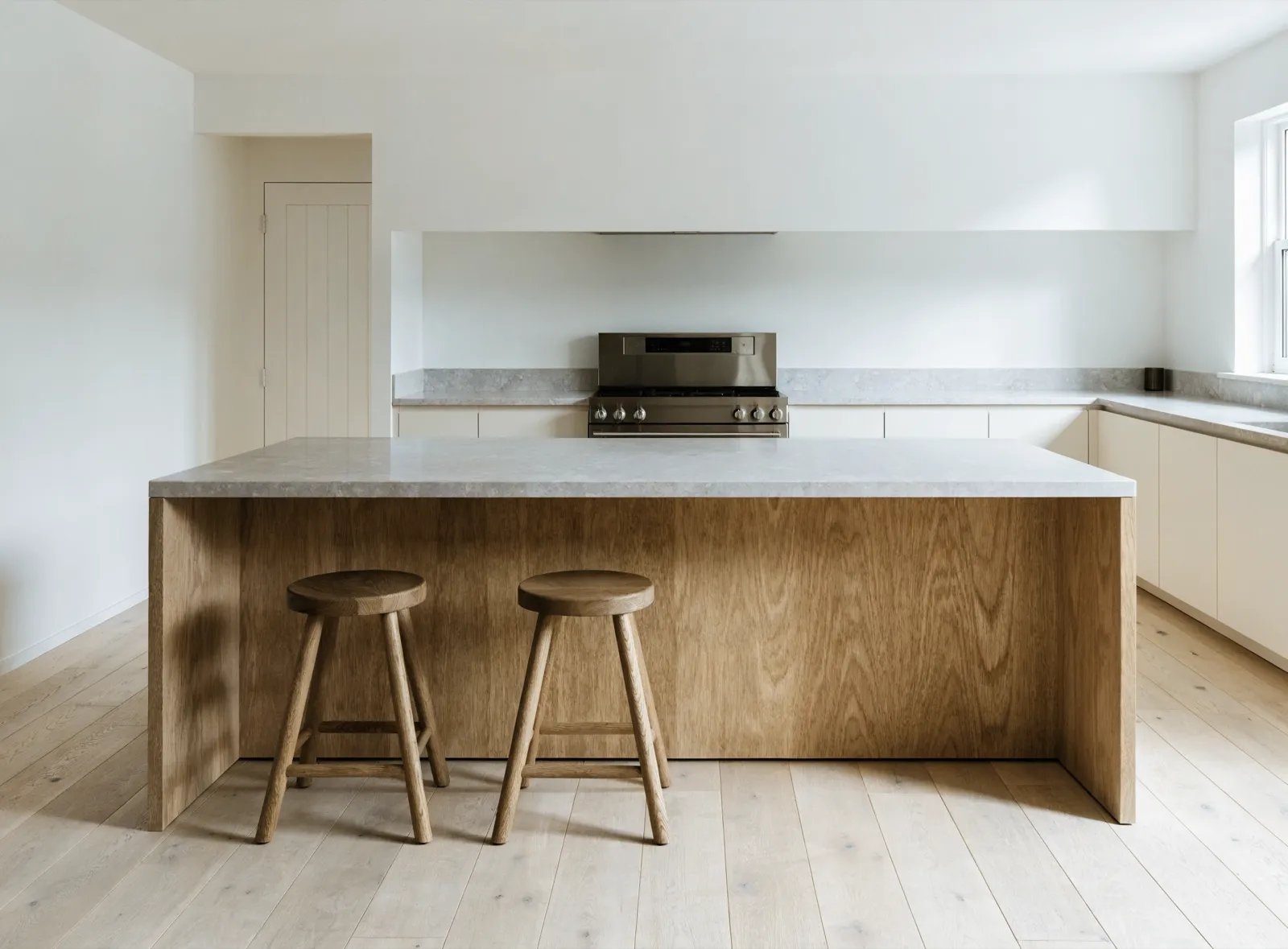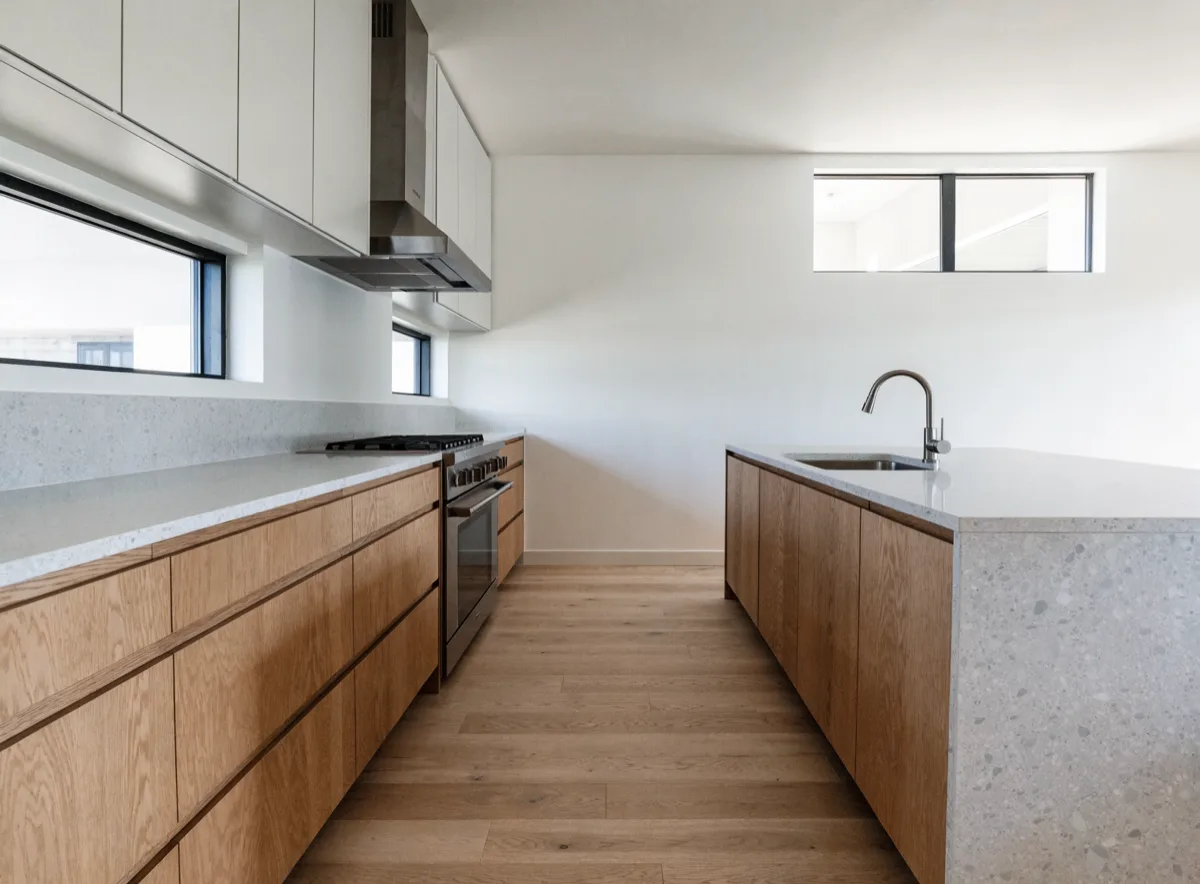
Countertop edges · Davie, FL
How to Choose a Countertop Edge Profile in Davie
How to choose a countertop edge profile in Davie comes down to three questions, asked in this order. Who bumps into this counter every day? What does your slab allow at its thickness? And what does each edge add to the price? The first is about safety, the second about fit, and the third about money. Settle them in that order, then get the edge named in writing before anything is cut.
- Edges that come standard
- Eased and square
- · ogee, bullnose and mitered cost extra
- When the edge is settled
- Before ordering
- · its own line on the written price
- Licensed & insured: CGC1524886
- 500+ kitchens completed
- 2-year workmanship warranty
- Answered 7 AM–10 PM, 7 days
Start With Who Bumps Into It
An edge is the part of the counter your body meets. Hips, elbows, a child's forehead and a falling pot all land there first, so the first question is about people, not style.
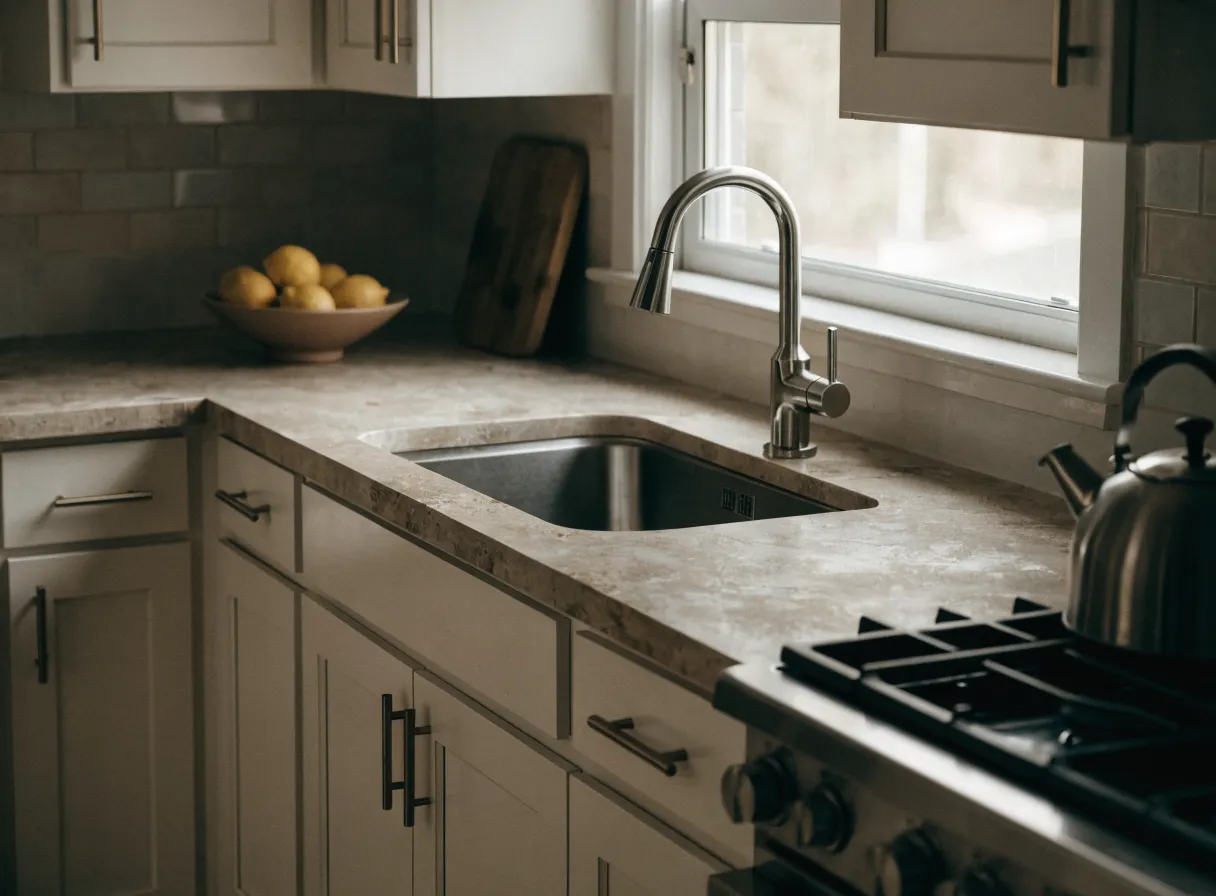
A square edge ends in a sharp corner. An eased edge is the same shape with the corner rounded off. Consumer Reports' countertop buying guide says rounded edges are safer than squared ones and may not cost extra, and it warns that edges and corners can chip on both quartz and granite. Only a pro can repair a chip, and for quartz the guide adds that rounded edges help.
Put that next to how your kitchen runs. A busy walkway, an island with stools or children in the house all point toward the rounded end of the list. A counter against a wall that nobody brushes past gives you more room to choose on looks.
Answer this one before you open a catalog. It is the only question about the edge that depends on your household and not on the stone.
Check What Your Slab Allows
Your favorite edge may not suit the stone you picked. Caesarstone's own edge guide names the material as one of the primary factors in the edge you choose. It says quartz takes all of the popular profiles, and that laminate is more limited.
Thickness decides it too. A 2 cm quartz slab gets a strip laminated under the front so the edge reads thicker. A thin porcelain panel can be cut at 45 degrees and folded down to read as a thick slab. A good one hides the joint. A rushed one shows it from across the room.
None of that shows on a screen. Ask the shop for an offcut with the edge you are considering, in the thickness you are buying. Hold it. Run your thumb along the corner, then stand it on the counter you have now and look at it from the doorway.
If the shop cannot tell you which profiles your slab takes at that thickness, that is worth knowing before you order.
Then Match the Look and the Price
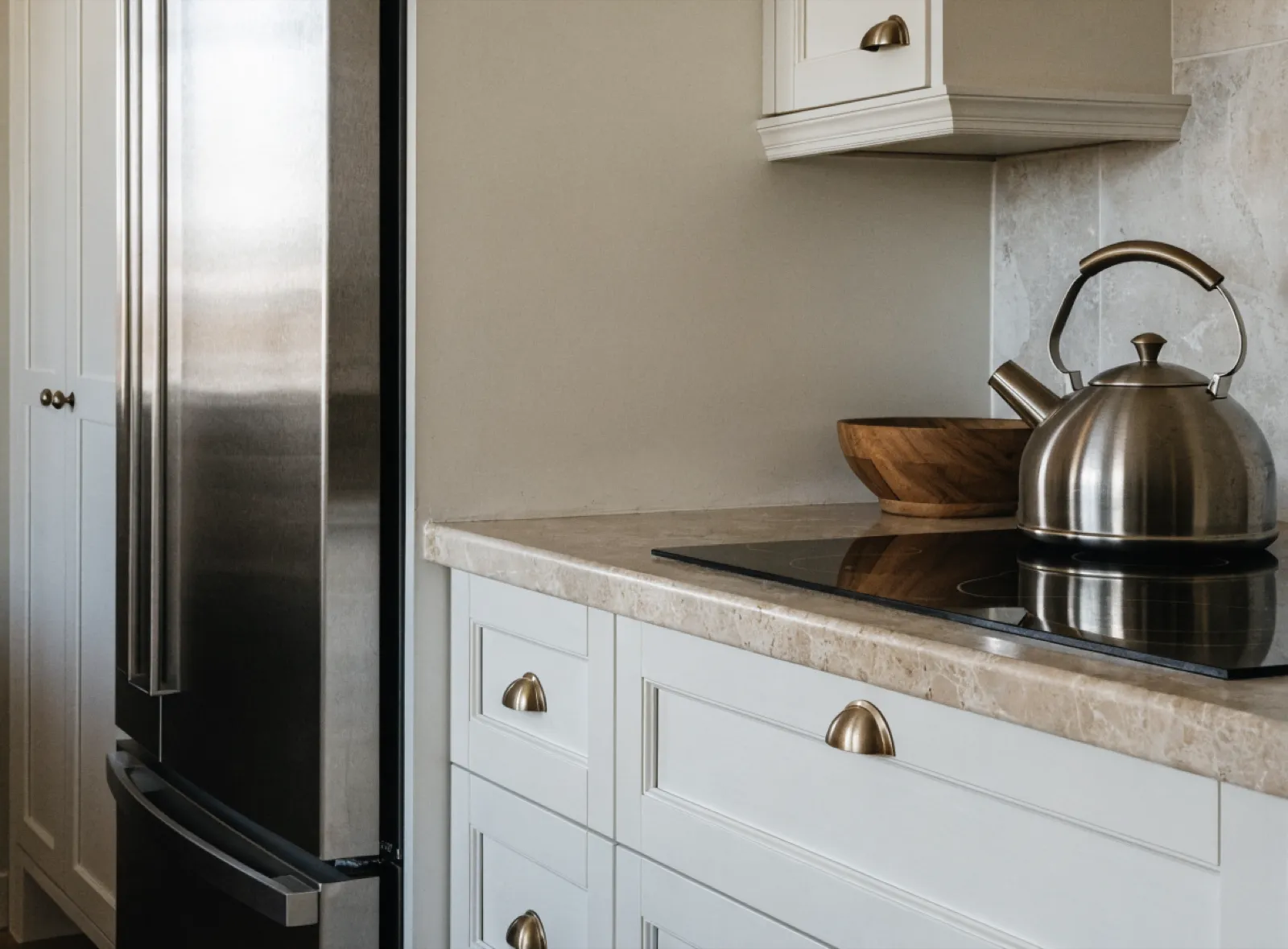
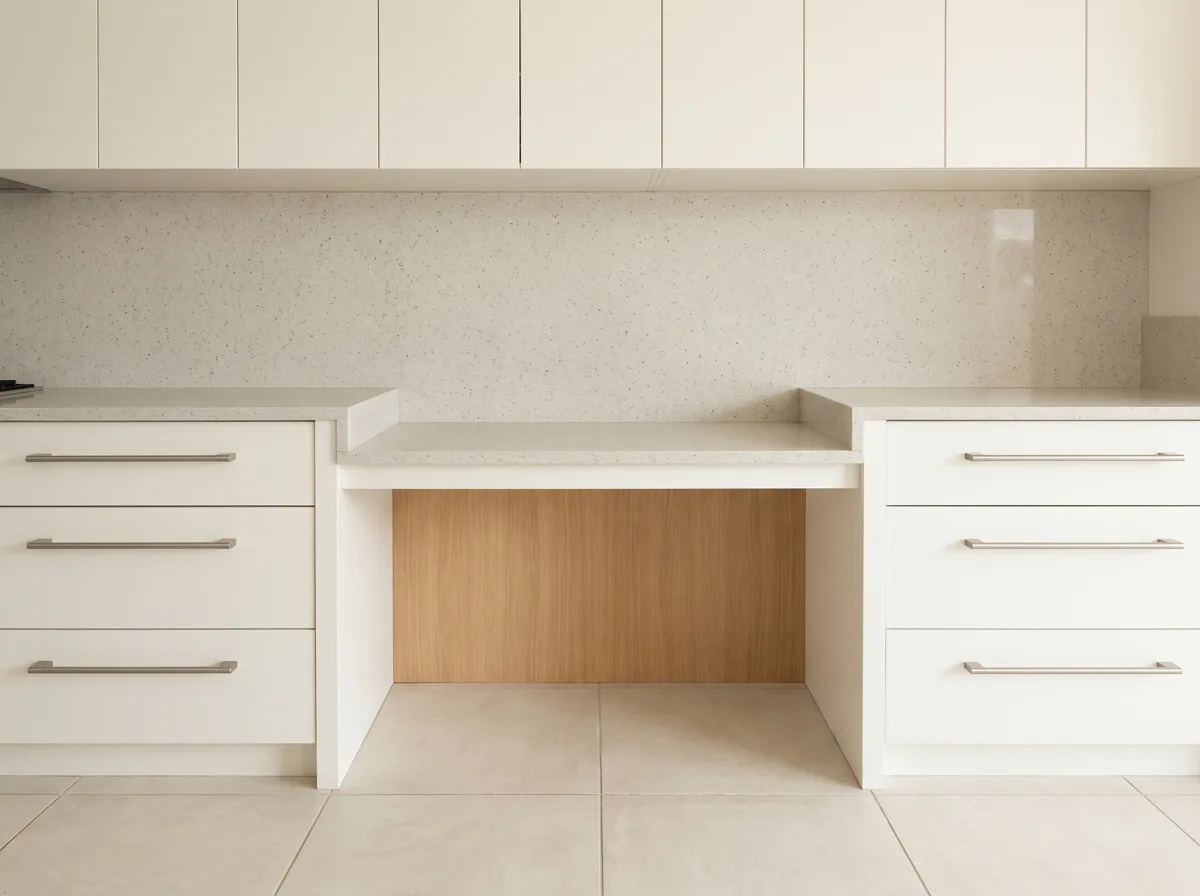
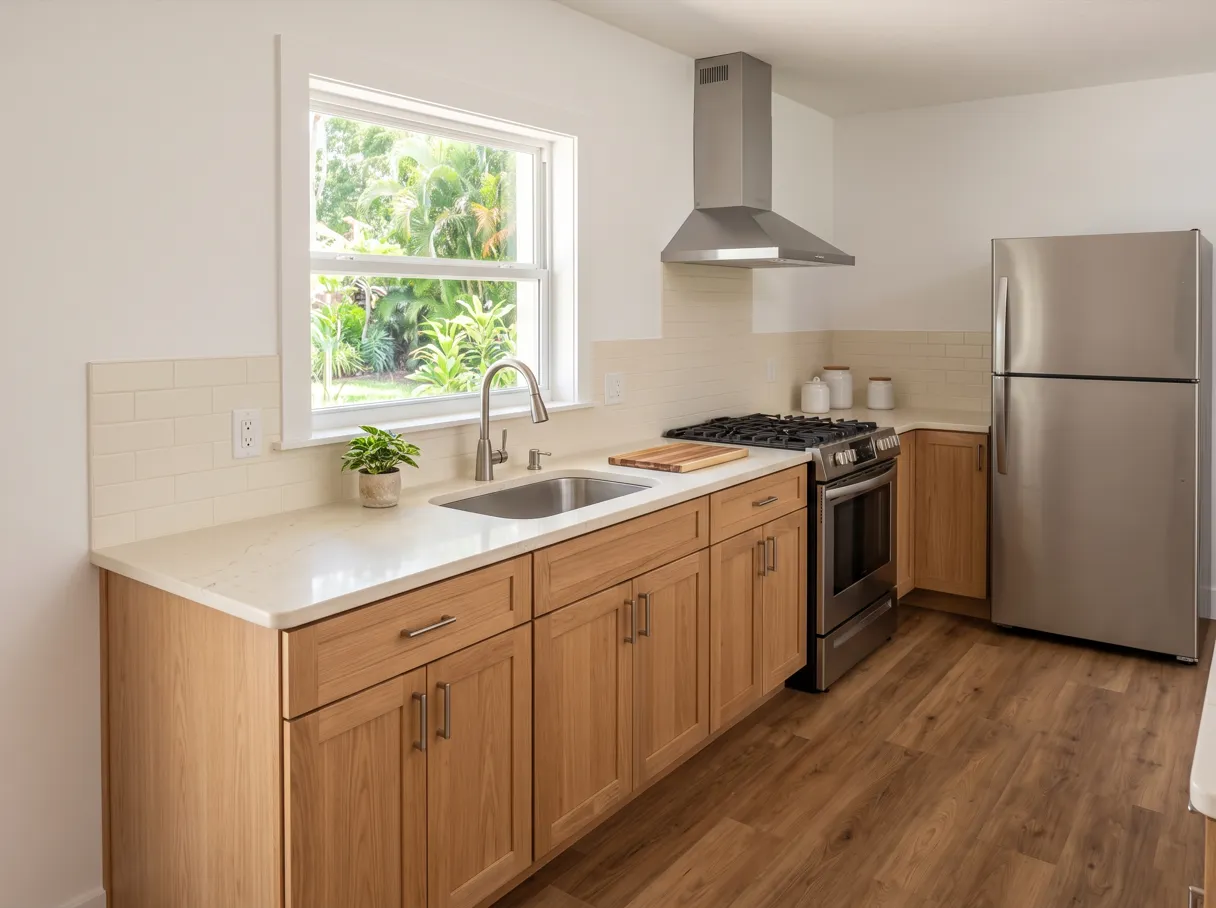
With use and fit settled, style is the easy part. Caesarstone's guide ties the ogee to traditional kitchens and says it may look out of place in a contemporary one. It calls the square edge a good match for contemporary design, and the waterfall, where the stone runs down the end of the counter, a modern choice.
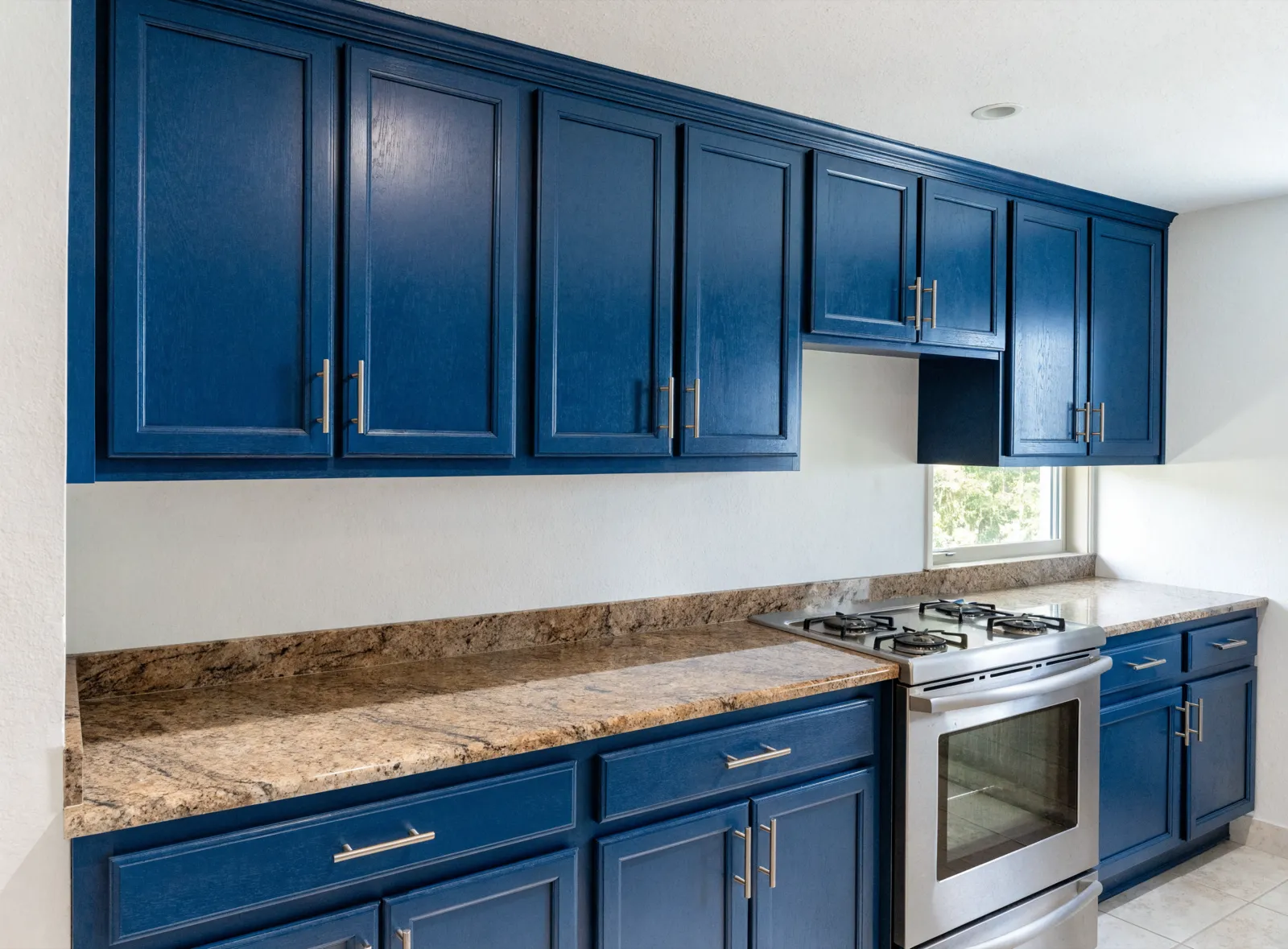
Price follows shop time. Eased and square are the standard cuts and usually sit inside the base price. Ogee, bullnose and mitered edges are extra labor on top of it, and a waterfall adds stone as well as labor. A mitered island edge changes the room the most and adds the most.
Then get it in writing. Consumer Reports tells buyers to make sure the estimate and contract spell out the thickness, the finish, the cutout fees and the edge treatment. On our written price the edge is its own line, next to material, cutouts, seams and installation. If a quote does not name the edge, ask which one it priced.