
Kitchen Lighting Installation Davie, FL
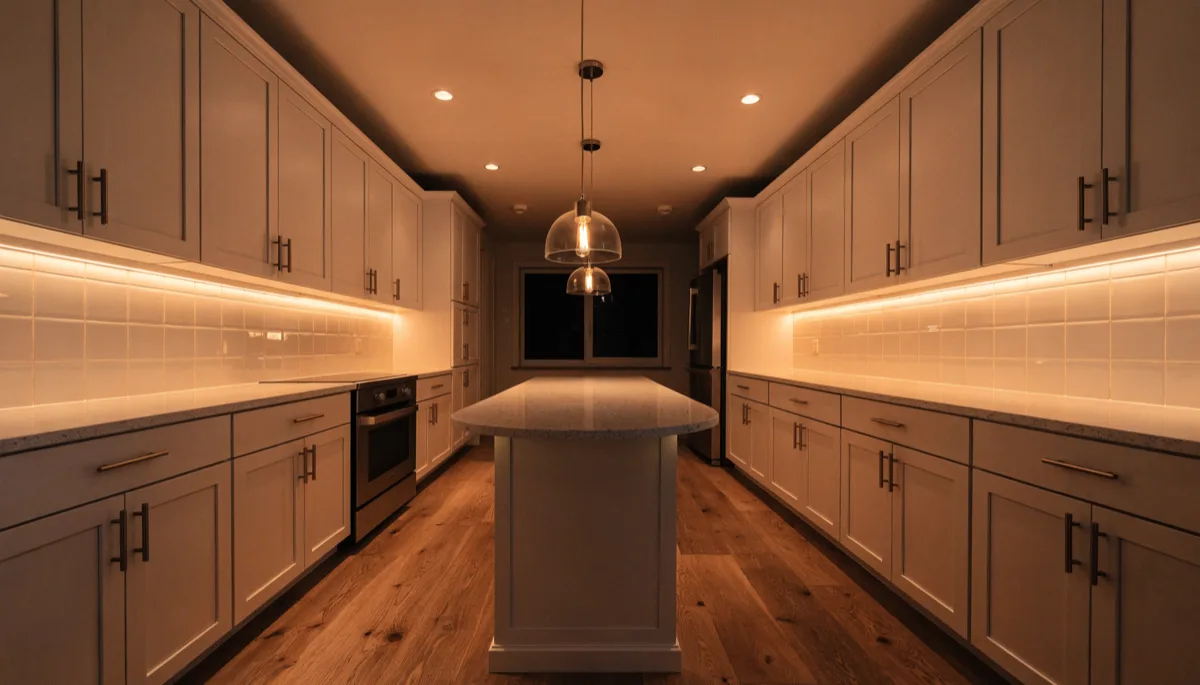
Kitchen lighting installation Davie is three separate jobs that most kitchens try to do with one fixture: the light that fills the room, the light that lands on the counter where you are standing, and the light you actually look at. The second one is the cheapest thing you can change in a kitchen and the one people notice first.
- Cabinets
- Stay in place
- Ceiling
- Patched and painted
- Warranty
- 2 years
- License
- CGC1524886
- Licensed & insured: CGC1524886
- 500+ kitchens completed
- 2-year workmanship warranty
- Answered 7 AM–10 PM, 7 days
A kitchen needs three kinds of light, and they are not three versions of the same thing.
The first fills the room. It lets you walk through without hitting the corner of the island and see into a cabinet when the door is open. The second lands on the work surface, which is the one place in the kitchen where you are holding a knife, and it has to arrive from a direction your own shoulders are not blocking. The third is the light you look at rather than the light you see by: the pendants over the island, the glow inside a glass door, the fixture over the table.
Most kitchens here have exactly one of the three. A single fixture in the middle of the ceiling, often a fluorescent box behind a plastic lens, pushing light down onto the middle of the floor. Then you stand at the counter to chop something and put your own body between that fixture and the cutting board. The square foot of the room that needs light the most is the one that reliably gets the least, and it has been like that for so long in most of these houses that people stopped noticing and quietly moved the chopping to the island instead.
That is the whole thing, and it is why this is the least expensive change available in a kitchen with the largest visible result. Nothing has to come out. The cabinets stay, the counters stay, the floor stays, and the room reads as though somebody spent a great deal more than they did.
When New Kitchen Lighting Is Worth Doing in a Davie Kitchen, and When a Bulb Will Do
Three situations in a Davie house where new lighting is clearly worth doing, and two where it is a project looking for a reason.
The counter is dark and you have already changed how you use the room. This is the one people describe without knowing they are describing it. You prep on the island because the island is under the only fixture. You open the blinds during the day and cook badly at night. You bought a lamp and put it on the counter, which is a thing nobody plans and plenty of people do. Every one of those is a workaround for a missing task layer, and the task layer is the cheapest of the three to add.
Something else is already open. If the wall cabinets are coming off, if the ceiling is getting patched, if a wall is going, or if the kitchen is being rebuilt anyway, this is when the wire is cheap to run. The cost of a light is mostly the cost of getting a cable from the switch to the fixture, and that number changes by a large factor depending on whether there is an open cavity to run it through. Folding the lighting into another project is often the difference between a job that pencils and one that does not.
Everything in the room is on one switch. A kitchen with a single switch by the door cannot turn on less than all of it, which means it has one setting and that setting is either too much or not enough. Splitting the layers onto separate controls changes how the room feels at ten at night more than any fixture does.
Now the two where we talk people out of it. The first is when the real complaint is one bulb. If what bothers you is the flickering tube behind the plastic lens, the fix is the tube, and it is not ours. The American Council for an Energy-Efficient Economy studied exactly this question and found that mercury-free LED replacements now exist for all common linear fluorescent tubes, giving the same or better light, longer product life and a much lower total cost than the fluorescents they replace. That is an afternoon and a trip to a store, not a contractor. What it does not change is where the light comes from. The fixture is still one box in the middle of the ceiling, your counter is still behind you, and the shadow you have been working in is still there, only brighter.
The second is when the kitchen is about to change shape. If the cabinets are being replaced within the year, or a wall is coming out, lighting drawn now gets drawn again, because where a downlight goes is decided by where the counter edge ends up and not by the ceiling. We would rather do it once and do it with the rest of the work. The one exception is the plug-in strip you can put under a cabinet yourself this weekend, which buys you the year for very little.
The Three Layers, What Each One Is For, and the Number on the Box
The layer that fills the room
This is the one people mean when they say recessed lighting, and it is the layer that gets planned worst. A grid of downlights centered on the ceiling looks orderly on a drawing and puts your own shadow on the counter in real life, because the light is arriving from behind you. The fix is not more of them. It is moving the row so it runs parallel to the counter and sits out past the front edge of it, which puts the beam over your shoulder and lands it behind your hands rather than in front of them. In an eight foot ceiling that difference is the whole difference. The other half of this layer is the ability to turn it down. A kitchen at full output is a room you leave; the same kitchen on a dimmer at night is a room people sit in.
The layer that lights the counter
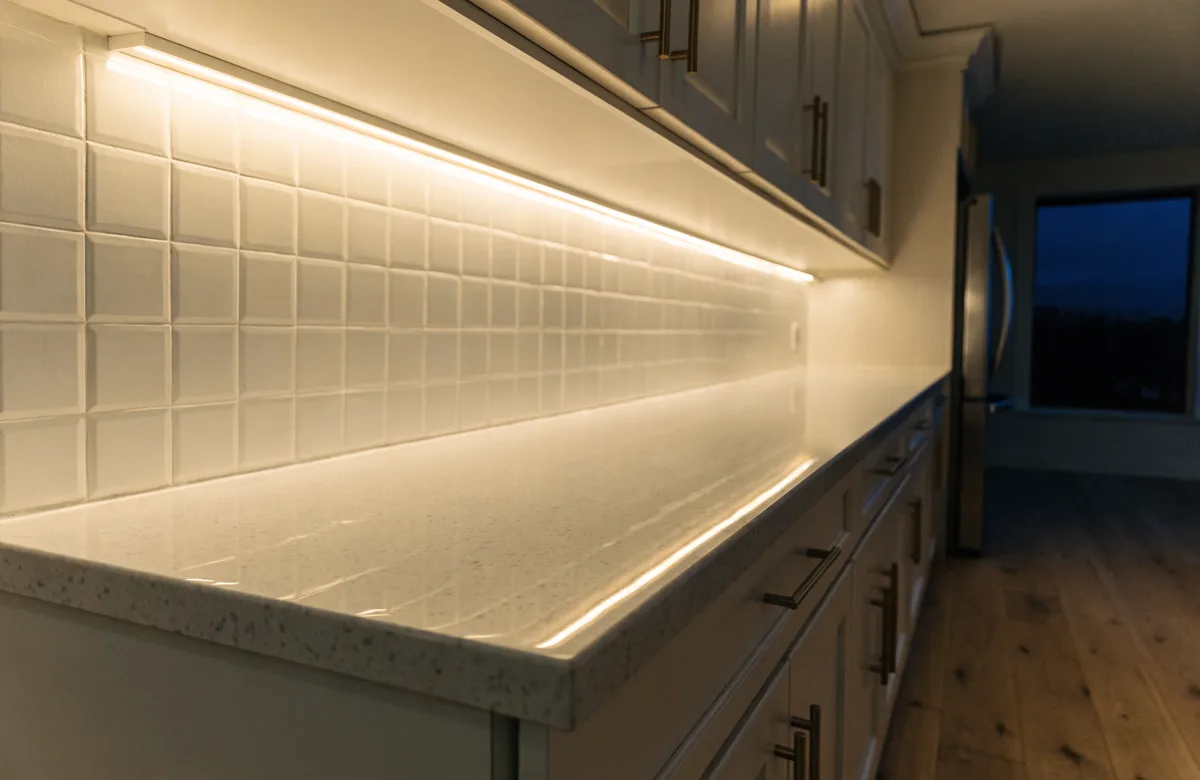
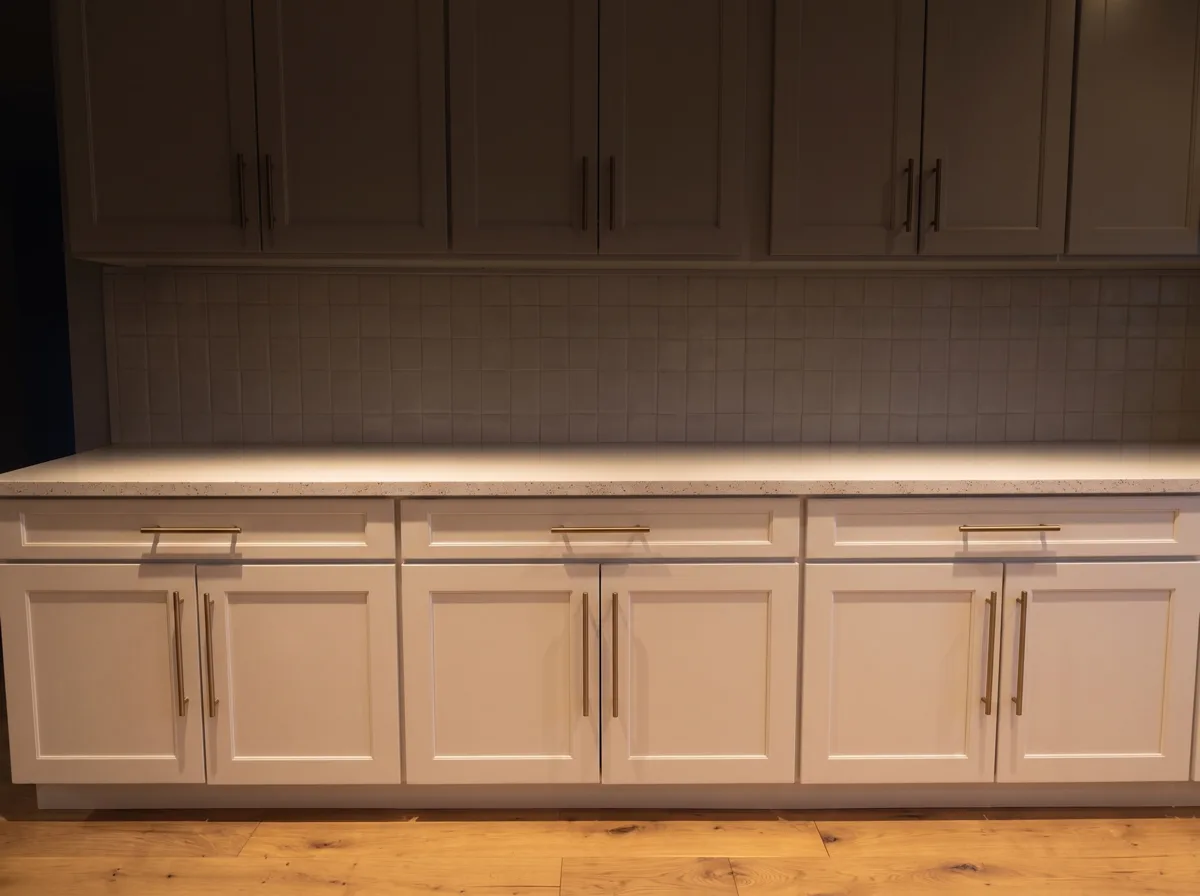
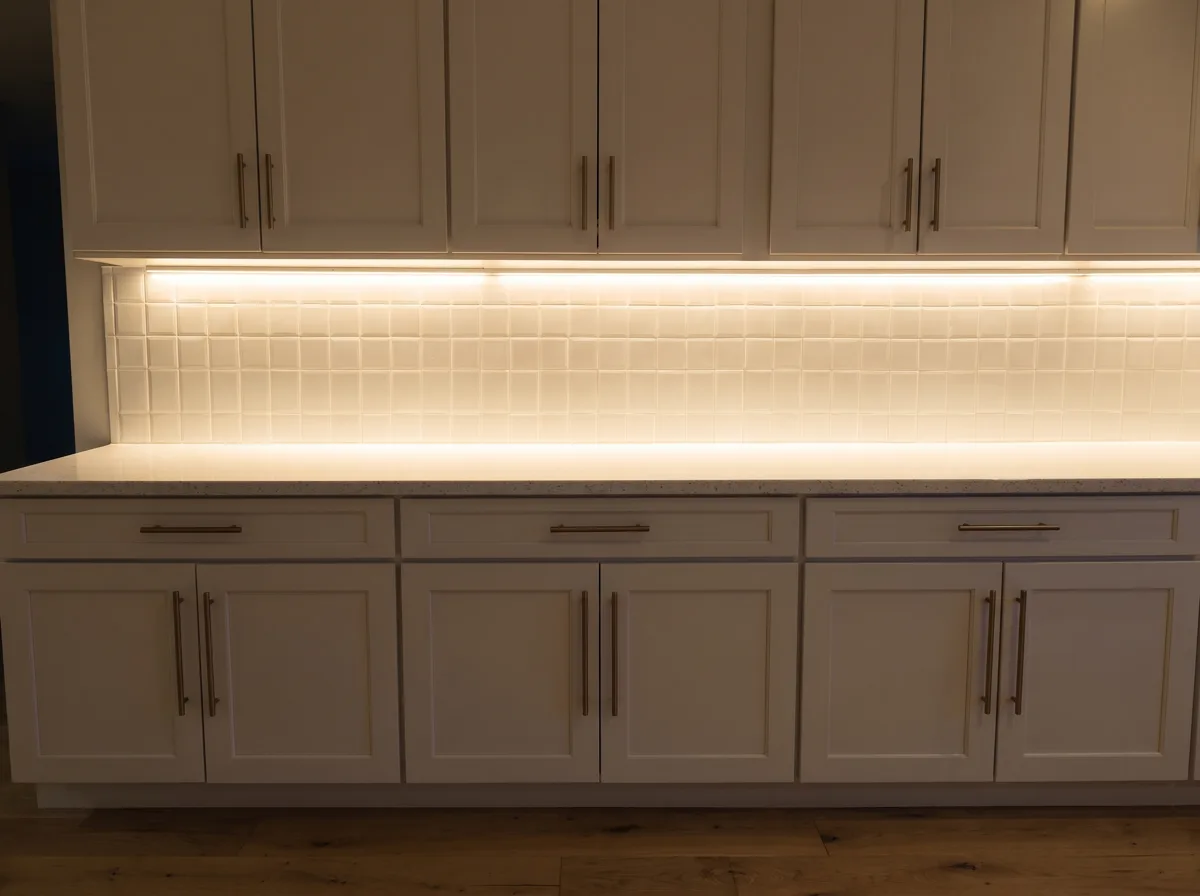
The one that does the work, and the one that is missing from almost every kitchen we measure. An LED is a directional source: it emits light in the direction it is pointed rather than in every direction at once, the way an incandescent bulb or a fluorescent tube does. That is exactly why a strip barely thicker than a pencil, tucked up behind the front rail of a wall cabinet, puts more usable light on a countertop than a much larger fixture on the ceiling ever will. It is also why it is worth caring where it gets mounted. At the front of the cabinet bottom it washes the whole depth of the counter and stays out of your eye; pushed to the back it lights the backsplash, bounces off a glossy tile straight back at you, and leaves the front half of the counter dim. The second thing that matters, and it only shows up over time, is heat: how well a fixture sheds it decides how the light holds up across its life, and the hotter one runs the faster its output falls off. A fixture with somewhere for that heat to go outlives a cheaper one by a margin that has nothing to do with the brand on it.
The layer you look at
Pendants over the island, a fixture over the table, a light inside a glass-front cabinet, a strip in the toe kick. This is the layer everybody buys first and the one that does the least work, which is fine as long as nobody is expecting it to light anything. Its job is to give the room a focal point after dark. The rule worth knowing is about height rather than style: a pendant hung so the bottom of the shade sits below your eye level when you are standing keeps the bare lamp out of the sightline of whoever is sitting across the island from you. Hung too high, a beautiful fixture becomes a bulb you have to look at all evening.
What color the light is, and why mixing it reads as a mistake
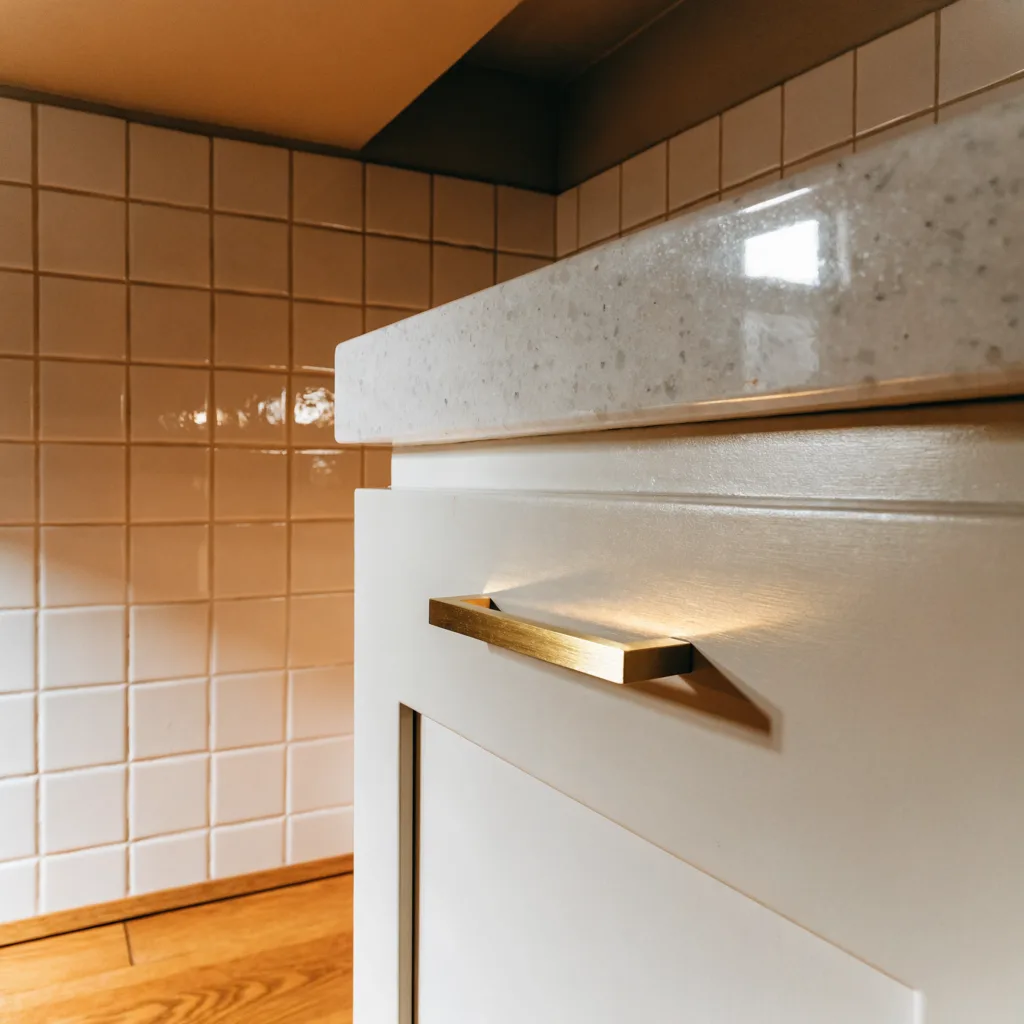
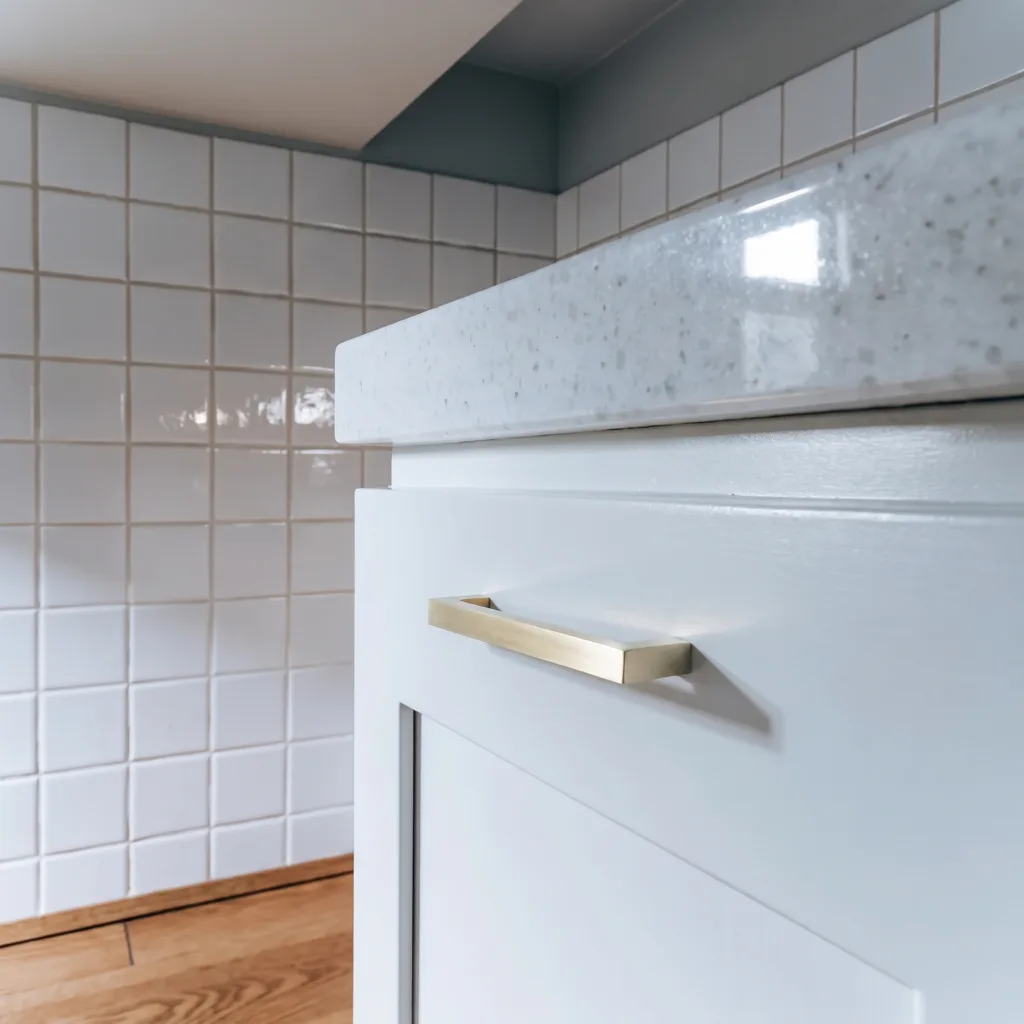
Every lamp and fixture prints a number in kelvin on the box, and it decides more about how the room looks than the fixture does. Low numbers around 2700K are the warm, slightly amber light of the bulbs most people grew up with. Around 3000K the light is still warm but cleaner. By 4000K it is a neutral white that reads crisp on a counter and cold on a wood floor, and at 5000K it is the light of a parking garage and does not belong in a room anyone eats in.
There is no single right answer, but there is one hard rule: pick a number and use it everywhere. Every downlight, every under-cabinet fixture, the lamp in the range hood, the bulbs in the pendants. A ceiling at 4000K over a counter lit at 2700K puts two whites on one stone surface, and the eye reads that as dirt rather than as light. It is the most common reason a kitchen with genuinely good fixtures still looks wrong at night.
How a Kitchen Lighting Installation Runs, Step by Step
- Measure and scope, at your house, free. We count what is there, look in the panel to see what is left in it, and find out what sits above your ceiling: an attic you can crawl, a second floor, or a flat concrete deck with nothing between it and the drywall. That last answer changes the job more than anything you will tell us on the phone.
- A written number before anything is ordered. One price, itemized, with what is included and what is not. It does not move unless you approve a change in scope, and if drawings are needed they are on that sheet with a price rather than described as still to be determined.
- The switching gets decided before the fixtures do. Which layer goes on which control, where the controls live, and what happens when you walk in with both hands full. Choosing beautiful fixtures first and discovering afterwards that they all land on one switch is the most common way this job disappoints somebody who paid for it.
- Permits and drawings, if the scope needs them. Requirements vary by project scope. Any required permitting, drawings, engineering or design services are identified and priced before the project is approved.
- Everything is here before anything opens. Fixtures, trims, drivers, dimmers and the strip material land first. Opening a ceiling and then waiting three weeks for a part is how a two day job becomes a month of dust.
- Rough electrical. Cables run, boxes set, the openings cut where the plan puts them, and the work looked at where the permit calls for it before anything gets closed up.
- Patch, paint, then set and aim. The ceiling gets repaired and painted before the trims go in, never after. Then fixtures in, drivers hidden inside the cabinets, under-cabinet runs mounted at the front rail, and every adjustable head aimed at the surface it is meant to hit.
- The walkthrough happens after dark. A lighting job cannot be judged at two in the afternoon with the blinds open, and looking at it in daylight is how a scallop on a wall or a pendant hung too high survives to become the thing you notice for ten years.
What Actually Sets the Cost of Lighting a Davie Kitchen
We do not publish a price for lighting a kitchen, because almost none of what sets it is visible in a photograph of the room. It is decided by the house.
What sits above the ceiling is first and it is not close. A cable that can be pulled through an open attic is a completely different piece of work from the same cable in a ceiling with a floor above it or a concrete deck behind it, where the route has to be found, cut and then repaired. Second is how many new points you want and how far each one is from a place a wire can already get to. Third is the switching: every layer you want to control separately is another leg of cable back to the wall, and deciding that after the drywall is closed costs several times what deciding it before does. Fourth is the panel, because a kitchen that is having circuits added rather than fixtures swapped needs somewhere to land them, and one that filled up decades ago puts itself into the conversation.
The fixtures themselves sit underneath all of that and they are the part homeowners arrive having already chosen. They also swing wider than the labor does, which is worth knowing before you read three estimates and assume the cheap one is doing less work.
One shortcut has quietly stopped working: the EPA has ended the ENERGY STAR program for the most common light fixtures, and only high performing recessed downlights still earn the label. It was retired because inefficient bulbs largely stopped being sold, so its absence on a fixture in Davie now tells you nothing.
None of those variables is your address. We quote the same job the same way in Davie as in Cooper City or Weston, because what moves the number is what is above your ceiling.
Why Choose Us to Wire the Light
- We will tell you when the answer is a plug-in strip. If the complaint is one dark counter and there is an outlet nearby, you should buy one and do it yourself. You hear that at the measurement, and it costs us the job.
- The switching is drawn before the fixtures are chosen. Layers, controls and dimmers first, catalogs second. That is the step where lighting jobs go wrong when they go wrong, and it is invisible until the day everything is installed.
- We open the ceiling once. The route gets found before the first cut, which is why our patches are where the lights are and not in a line across the room where somebody went looking.
- Nothing comes out of your ceiling until every part is in our shop. Trims, drivers and dimmers included, because the small parts hold a finished job open.
The work is done by Gaven Constructions crews under license CGC1524886, insured, with a two-year workmanship warranty on what we install. Someone answers the phone from 7 AM to 10 PM, seven days a week, and on a lighting job that matters more than usual, because the questions you have all arrive after dinner.
Licensed, Insured, and Permitted in Davie
Lighting is the part of a kitchen remodel most often assumed to be too small to be reviewed, and it is the assumption worth checking. Swapping a fixture for another fixture on the circuit that is already there is one thing. Adding circuits, adding switch locations, or extending wiring into places that never had it is electrical work, and the Town of Davie Building Division looks at electrical as its own discipline, separately from structural, plumbing and mechanical, and decides case by case. There is no table on this page telling you which side your job falls on, because that determination is theirs and following a contractor's version of it is your exposure. What you get from us is the answer in writing and priced, inside the estimate, before you approve anything.
The distinction that catches people is the one between a product and a trade. A strip that plugs into an outlet you already have is a purchase. The same light, hardwired into a circuit and controlled from a switch on the wall, is licensed electrical work, and the difference is not the fixture. It is who is responsible for it afterwards. That line is also where a great deal of very cheap kitchen lighting comes from here, because the work looks like decorating right up until somebody opens the junction box.
- License
- CGC1524886 Certified General Contractor, verifiable in the Florida DBPR licensee search.
- Insurance
- Insured and bonded Certificates are available before any work is scheduled.
- Workmanship warranty
- 2 years On installation labor. Most of this market publishes one.
- Permits and design
- Priced before approval Requirements vary by project scope. Any required permitting, drawings, engineering, or design services are identified and priced before the project is approved.
- Who contracts the work
- Gaven Constructions Kitchen Remodeler Davie was acquired by Gaven Constructions, a licensed contractor since 2015. Every estimate and invoice is issued in that name, which is what puts the license behind the job.
Common Questions
How should recessed lighting be placed in a Davie kitchen?
Parallel to the counter and out past its front edge, not centered on the ceiling. The reason is your own body. A light directly behind you when you are standing at the counter puts your shadow exactly where you are working, which is the complaint that brought most people to this page even if they described it as the kitchen being dark. Running the row along the counter and pushing it toward the room lets the beam clear your shoulder and land behind your hands. The second placement question is the island, which wants its own arrangement rather than a continuation of the same grid, and the third is the sink, which in most Davie kitchens sits under a window and needs a light of its own once it is dark outside. None of this is decided by the ceiling. It is decided by where the counters are, which is why a lighting plan drawn without the cabinet layout in front of it is a guess.
How many recessed lights do I need for a 12x12 kitchen in Davie?
The count is the wrong question and it is the one every calculator online answers. What decides the number is the layout of the counters, the ceiling height, how much output each fixture puts out and how wide its beam is, and none of those are in the room size. A twelve by twelve kitchen with counters on two walls and a small island usually wants a run along each counter and a separate arrangement over the island, and the number falls out of that once the spacing is set, rather than being chosen first and then distributed. Where the count goes wrong is when somebody picks a round number, spreads it evenly, and ends up with lights over the middle of the floor, which is the part of a kitchen nobody needs to see. We would rather put fewer fixtures in the right places and give you a dimmer than fill a ceiling.
Is 3000K or 4000K better for a kitchen in Davie, FL?
Both work and they do different things, so the honest answer is that it depends on your cabinets. Around 3000K the light stays warm, which flatters wood, warm paint and anything with a brown or cream in it, and it is the one we specify most often here because so many of these kitchens have oak or a warm painted finish somewhere in them. At 4000K the light is neutral and crisp, which reads clean against white cabinets, gray quartz and stainless, and which some people find sharper than they wanted once it is dark outside. What matters more is that you choose once and apply it to everything in the room, including the lamp inside the range hood. Two different numbers on one counter is what makes a kitchen look off at night, and no amount of money on fixtures fixes it.
Do you need an electrician to install under-cabinet lighting in Davie?
It depends entirely on how the light gets its power, and the difference is bigger than it sounds. A strip that plugs into an outlet you already have is a purchase and an afternoon, and we will tell you so rather than quote it. A light that is hardwired into a circuit and switched from the wall is electrical work, which means a licensed trade and, depending on the scope, a review by the Town of Davie. The wired version is worth it in a kitchen you plan to keep because the plug-in one leaves a cord visible on the backsplash, cannot be dimmed with the rest of the room, and gets unplugged by the toaster. Whether your particular scope needs a permit is the building department's determination and not ours, and it appears in your written estimate with a price before you approve anything.
What are the most common kitchen lighting mistakes in a Davie kitchen?
Five, and they show up in roughly this order. One layer instead of three, which is the original sin and the one this whole page is about. Downlights centered on the ceiling, so the room is lit and the counters are not. Two different color temperatures in one room, which reads as grubby rather than as a mix. Buying the pendants first and letting a beautiful fixture decide a plan it cannot carry. And everything on a single switch, which leaves one setting in a room used at seven in the morning and at eleven at night. The first four cost money to correct once the ceiling is closed. The last one costs the most, because it is a cable and not a fixture.
What lights can I put under my kitchen cabinets in a Davie house?
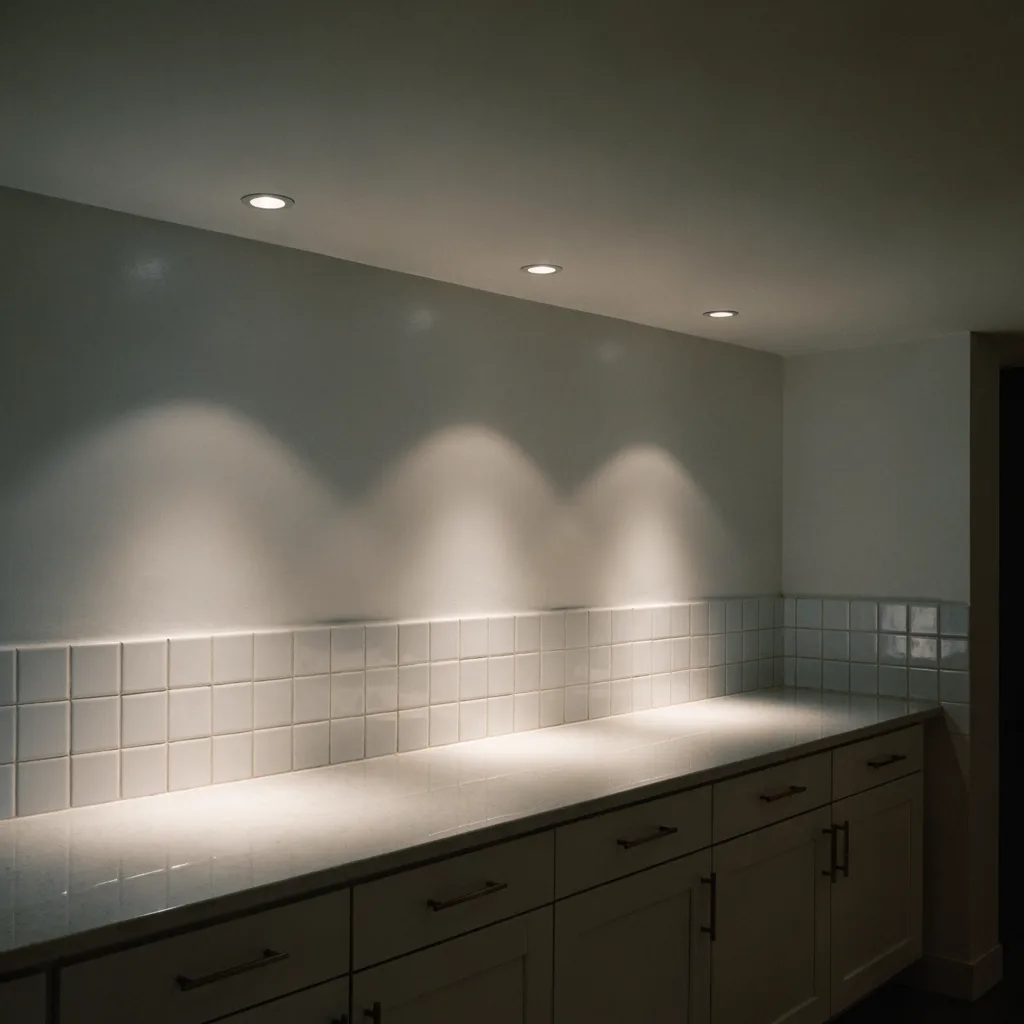
Three types, and they are not interchangeable. Puck lights are individual round fixtures spaced along the cabinet, cheap and easy, and they throw scallops of light with dark gaps between them, which shows badly against a glossy backsplash. Tape light is a flexible strip of small diodes, the most adaptable of the three, and it wants an aluminum channel with a diffuser over it or you see every individual dot reflected in the tile. A linear bar is a rigid fixture in a fixed length, the most even light of the three and the tidiest to wire, and it is what we hardwire behind the front rail on most jobs. Whichever one you choose, two things decide whether it looks professional: mounted at the front of the cabinet bottom rather than the back, and running long enough to reach the ends of the counter instead of leaving the corners dark.
Recent Kitchen Remodeling Projects in Davie
-
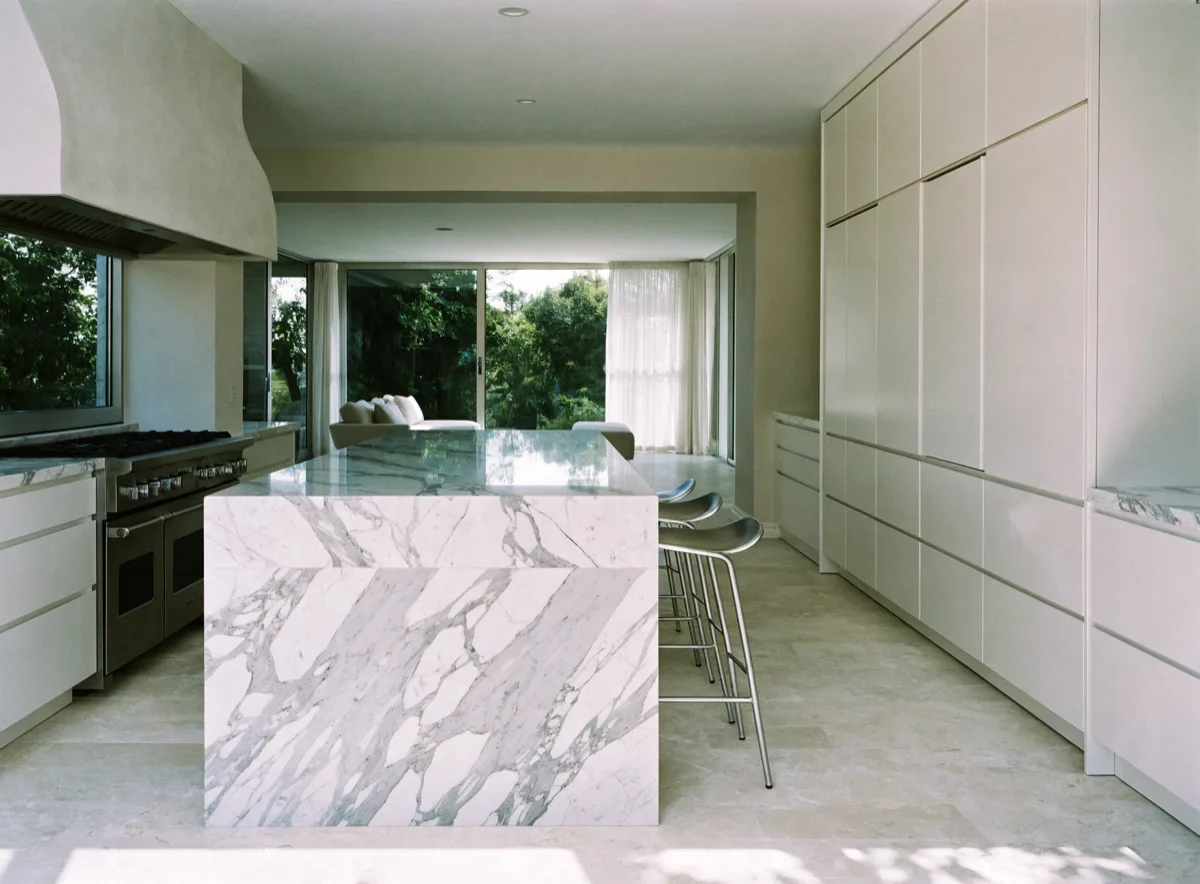
Kitchen opened to the living room, with a seated island Luxury kitchen remodeling -
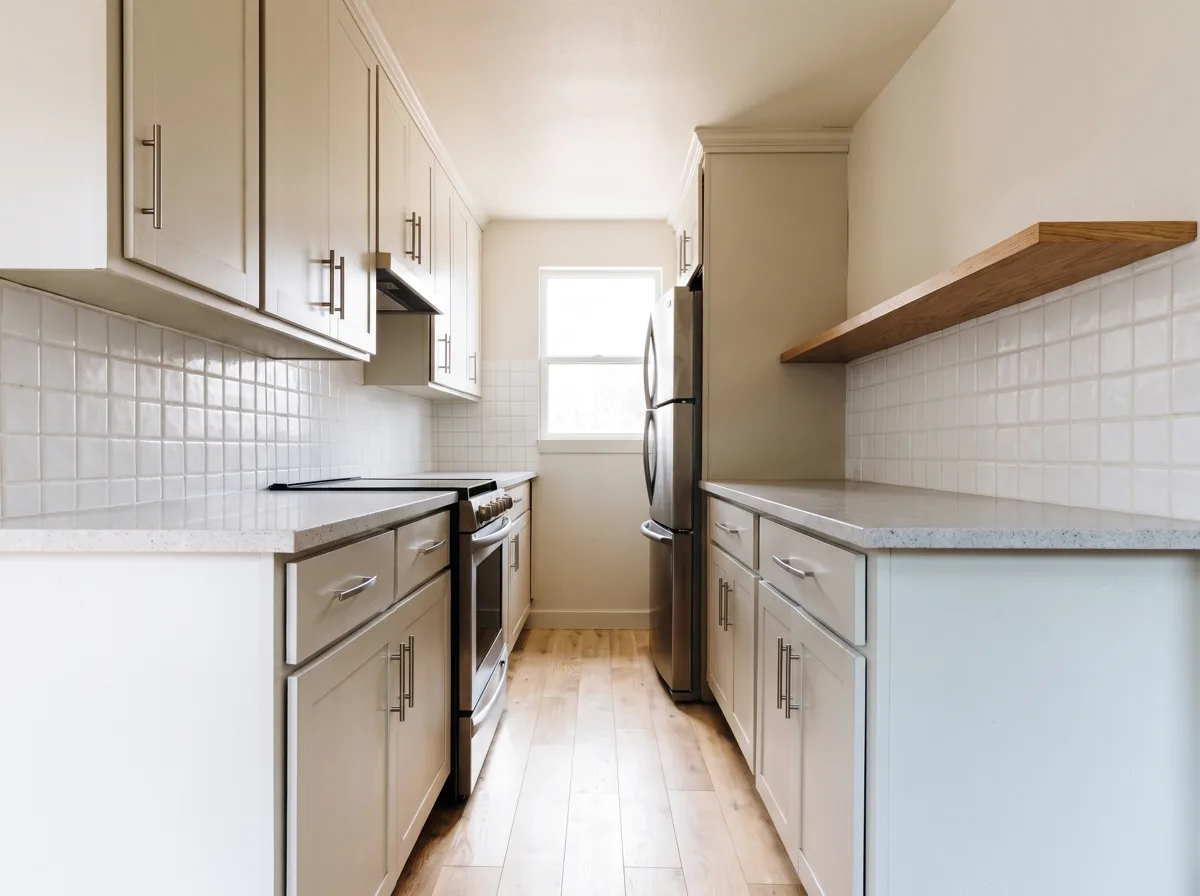
Galley kitchen opened up on one wall Galley kitchen remodeling -
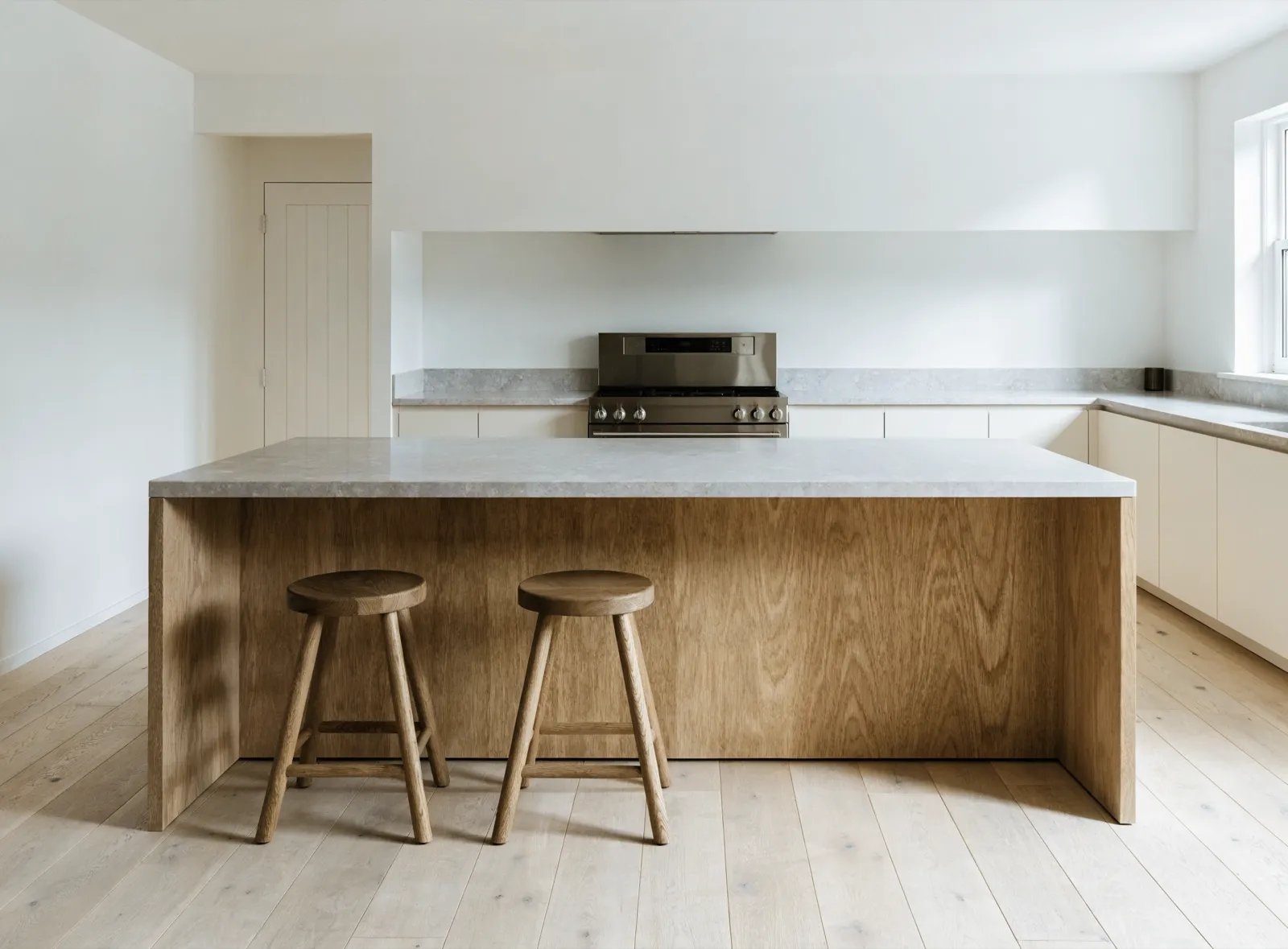
Island cabinetry with seating and a full perimeter run Kitchen island cabinetry -
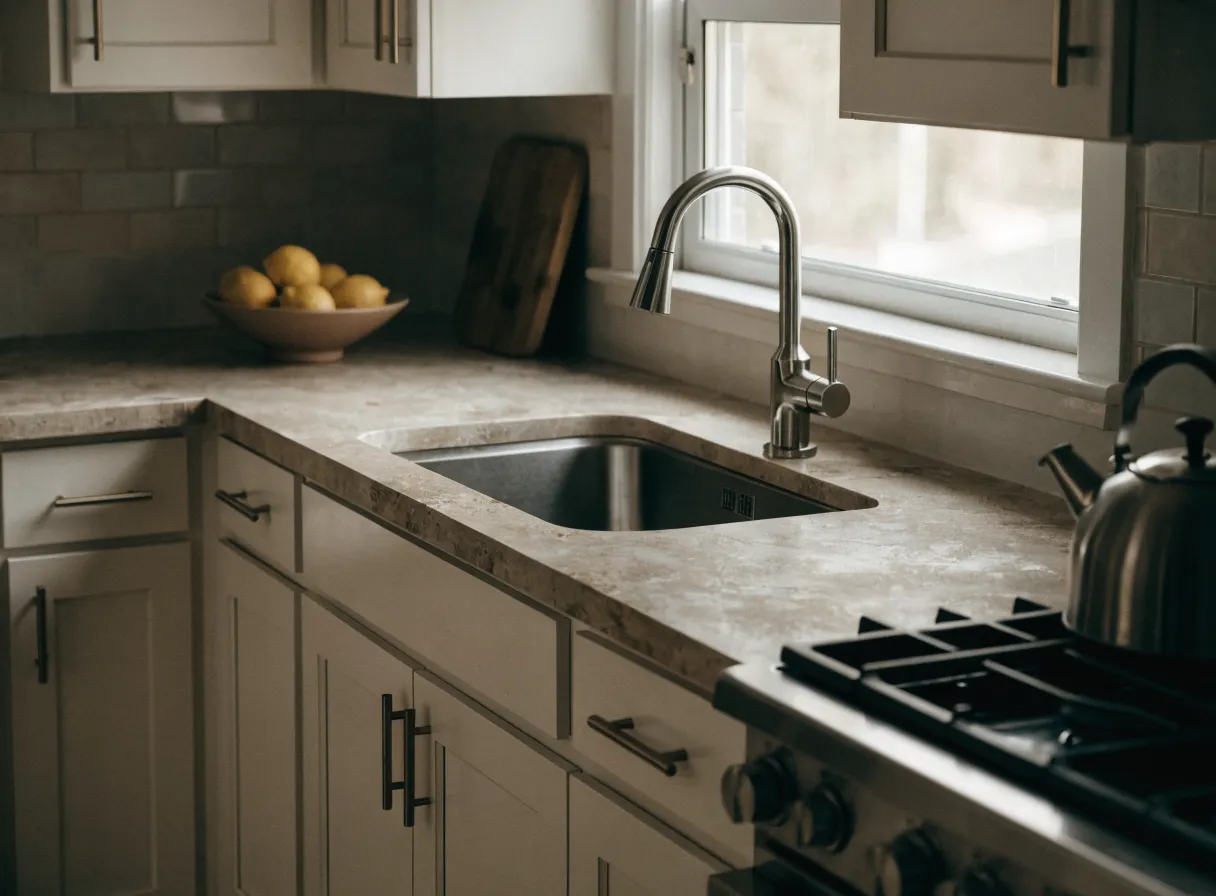
Refaced cabinets, shaker fronts and a tile backsplash Cabinet refacing
-
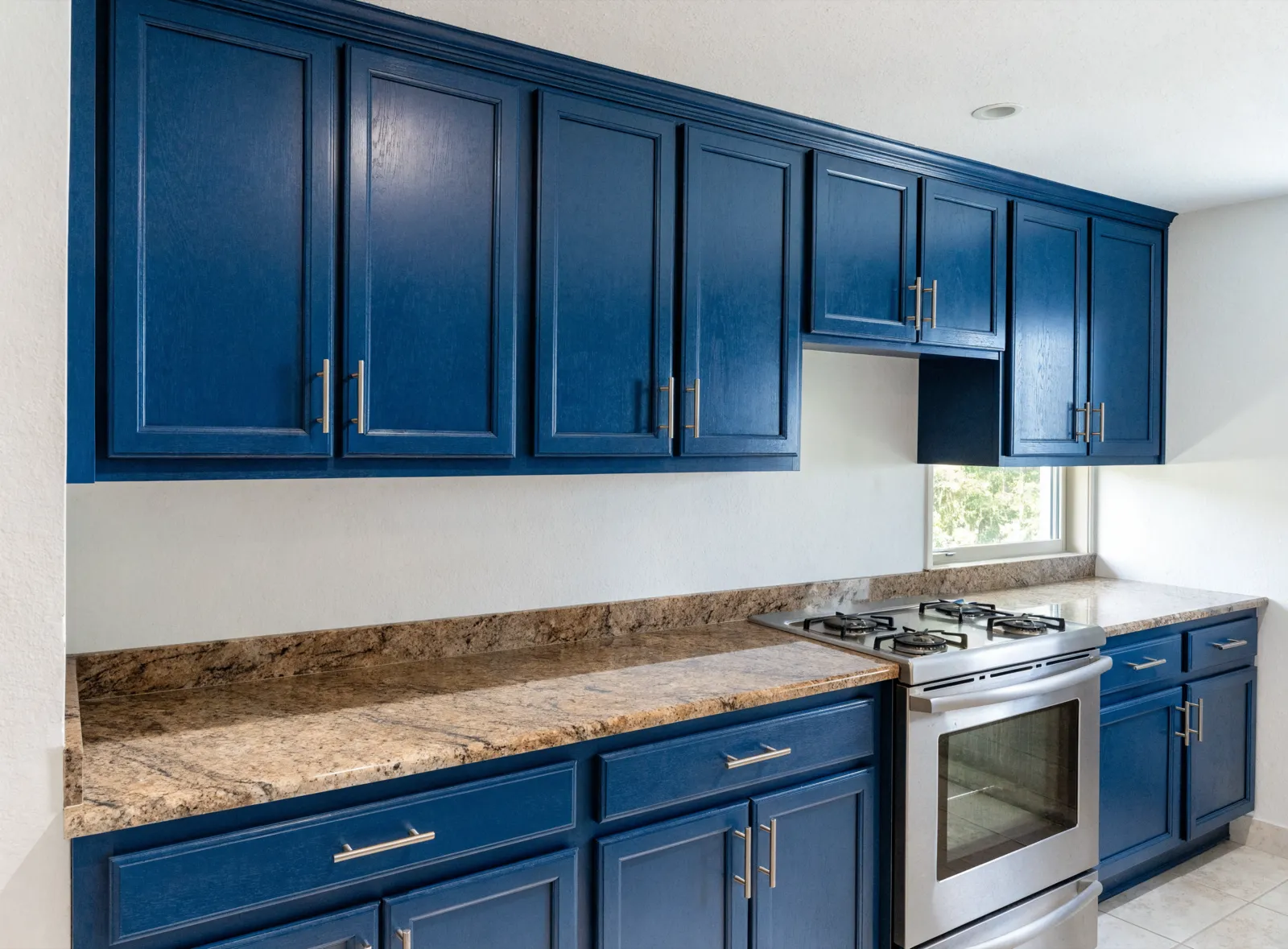
Cabinets refinished in navy under the existing granite Cabinet refinishing -
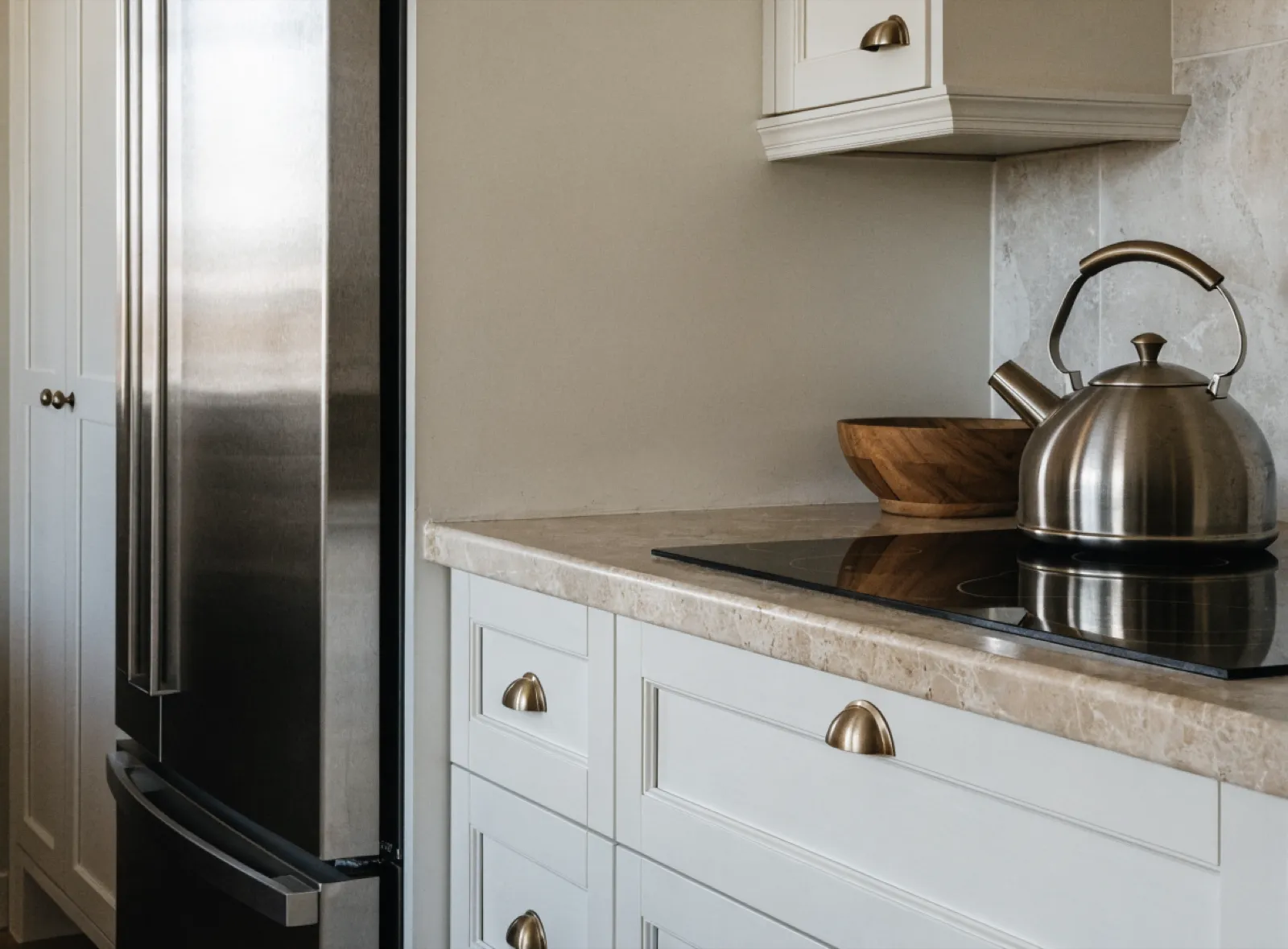
Drawer bank under the cooktop, pantry beside the fridge Custom kitchen cabinets -
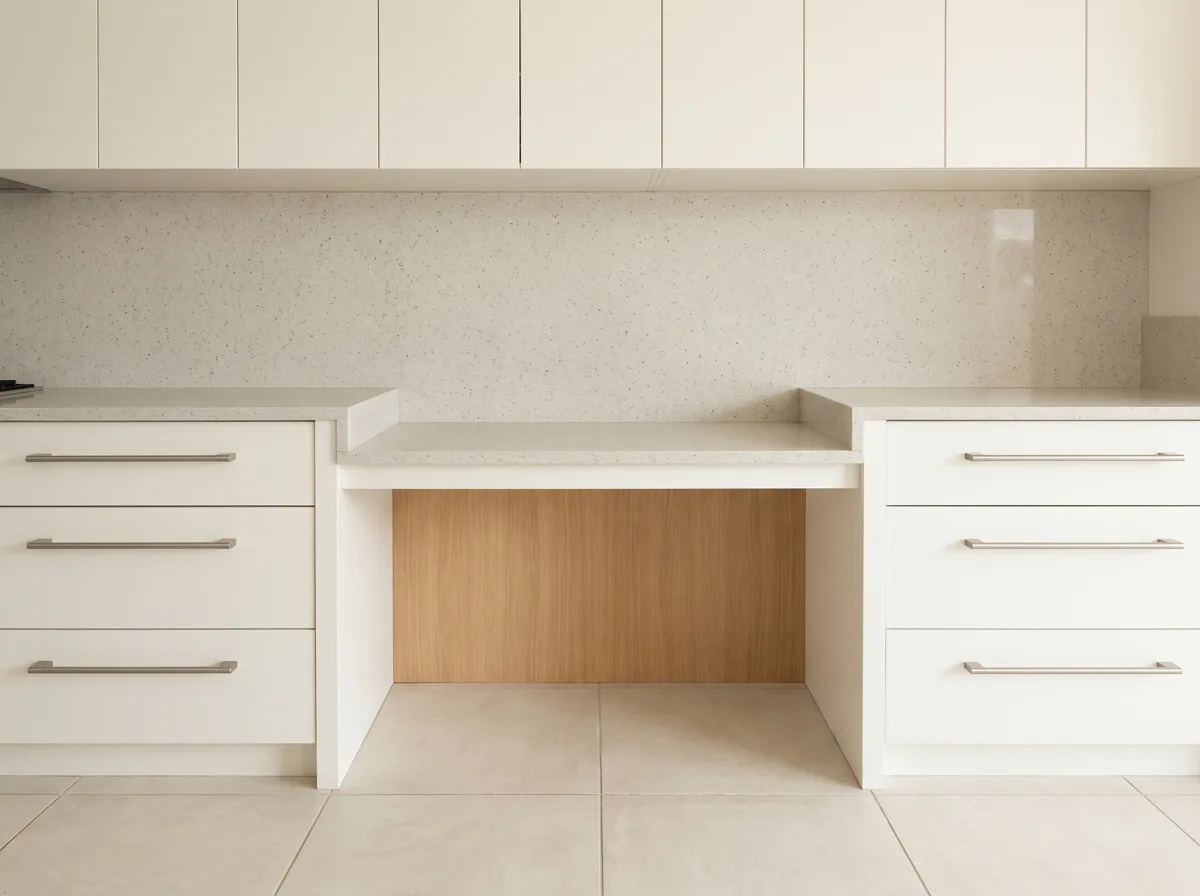
Counter at two heights, open underneath Accessible kitchen remodeling -
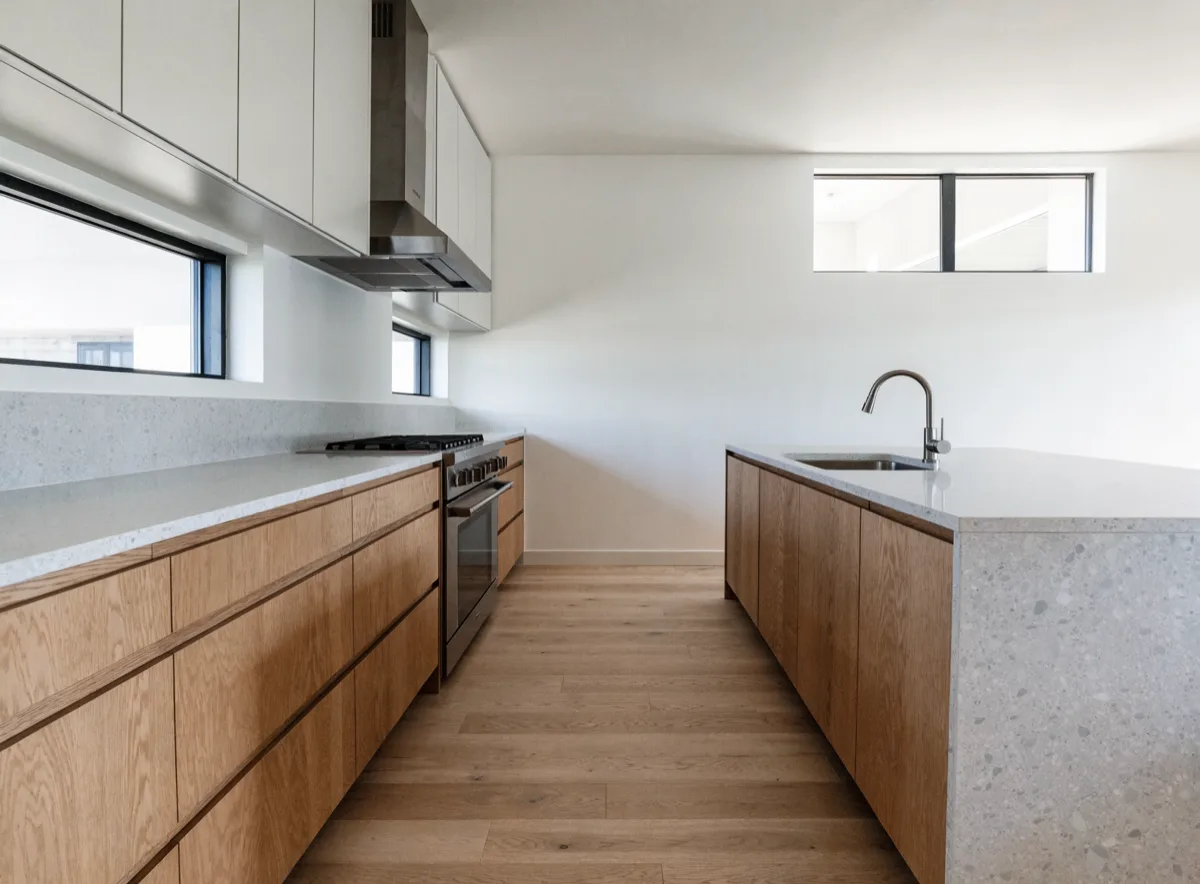
A wider walkway between the wall run and the island Kitchen layout redesign
Lighting is one of several ways this work gets scoped, and the one that fits alongside the others. See the rest of what Kitchen Remodeler Davie does, or compare it against the full list of kitchen remodeling services.
Tell us what is above your kitchen ceiling and how many switches the room has.
Attic, a second floor, or a flat concrete deck, and whether one switch by the door runs everything. Those two answers tell us more about what this job costs than a photograph of the room does, because one decides how the wire travels and the other decides how much of the work is already there. If the fix turns out to be a strip under two cabinets and a dimmer, we will say so at the measurement, and that is the shortest visit we make.
Call (786) 780-2728