
Porcelain Countertop Installation Davie, FL
Porcelain countertop installation Davie, a slab that can be six millimeters thick and still outlast the kitchen around it, as long as whoever cuts it knows how.
- Thickness
- 6 mm / 12 mm
- Sealing
- Never
- In your house
- 1–2 days
- License
- CGC1524886
- Licensed & insured: CGC1524886
- 500+ kitchens completed
- 2-year workmanship warranty
- Answered 7 AM–10 PM, 7 days
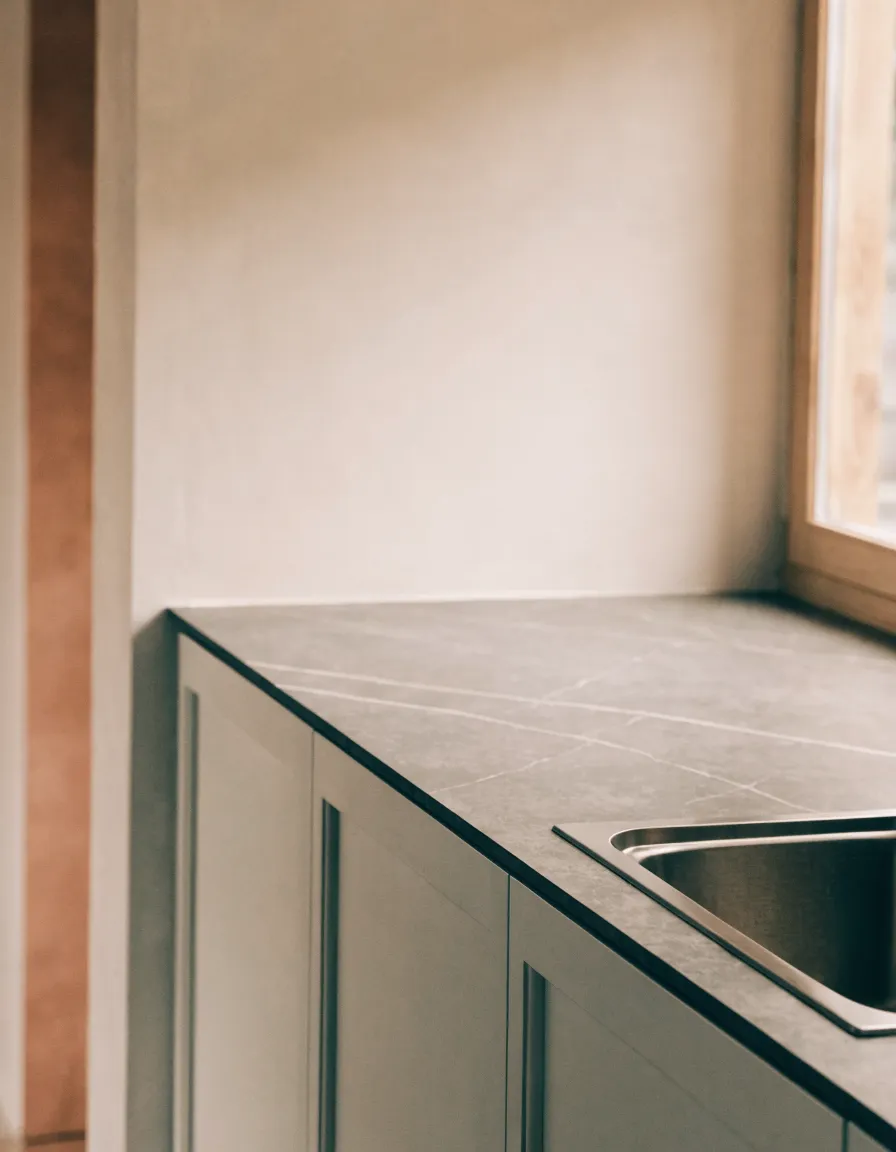
Porcelain is a tile, fired flat at temperatures that vitrify it into something with almost no porosity at all, and then made in slabs big enough to cover a kitchen. That gives you a counter that never needs sealing, does not stain, does not fade in sunlight and does not care about heat. It also gives you a slab that is a fraction of the thickness of stone, and that single fact decides everything else on this page, including who should be allowed to cut it.
When Porcelain Is the Right Counter for Your Kitchen
Porcelain is the surface for a Davie kitchen that wants a counter it never has to think about, and it earns that four ways.
You want zero maintenance and you mean it. Porcelain is vitrified the whole way through: there is nothing to seal, nothing to reseal, and nothing that soaks in. Red wine, olive oil, lemon and turmeric sit on the surface until you wipe them off. Of everything we install, it is the only material where the honest maintenance instruction is "wipe it".
You cook hard, or you want the counter outside. Porcelain came out of a kiln, so a pan straight off the burner is not an event, and it does not yellow or fade under sun the way a resin-bound surface can. That last part matters more here than almost anywhere: an outdoor kitchen in South Florida gets UV all year, and porcelain is one of the few counters that belongs out there. The tile industry now publishes a separate specification for the thicker 2 cm porcelain made for outdoor use, which tells you how seriously that use is taken, and also that outdoor porcelain is a different product from the slab that goes on your island.
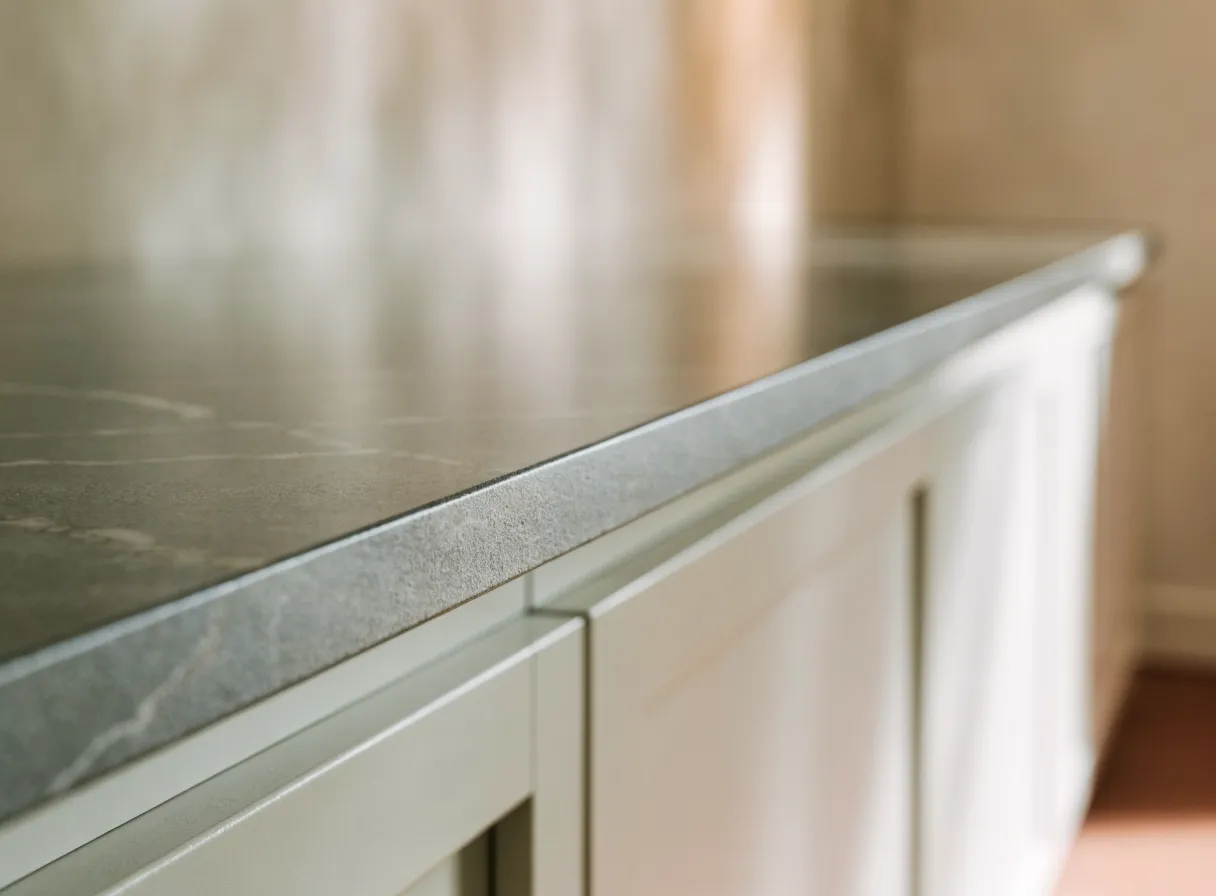
You want a very thin counter, or a very large one. Nothing else does a 6 mm edge. And porcelain slabs come in sizes that let a whole run, or a full-height backsplash, come out of one piece with no seam. If the look you have saved is a counter that reads like a sheet rather than a block, this is the only material that gets you there.
Where porcelain is the wrong call: when nobody on the job has cut it before. Porcelain is hard and brittle, and it is cut with different tooling, supported differently and handled by more people than a stone slab. Fabricated well it is bulletproof; fabricated by someone learning on your kitchen, it chips at the cutouts and cracks across the sink. This is the only material we install where we would tell you to choose the fabricator before you choose the slab.
Three Thicknesses, and the Edge Gives It Away
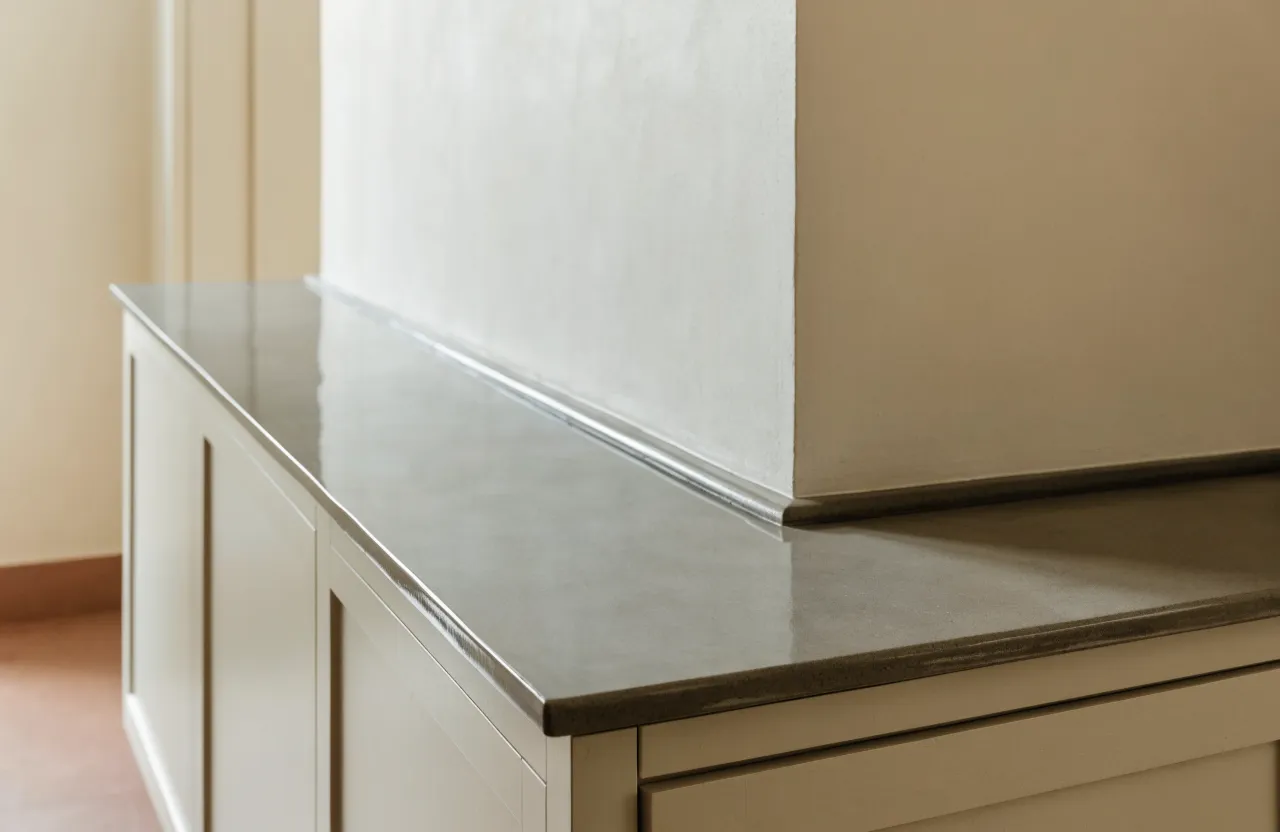
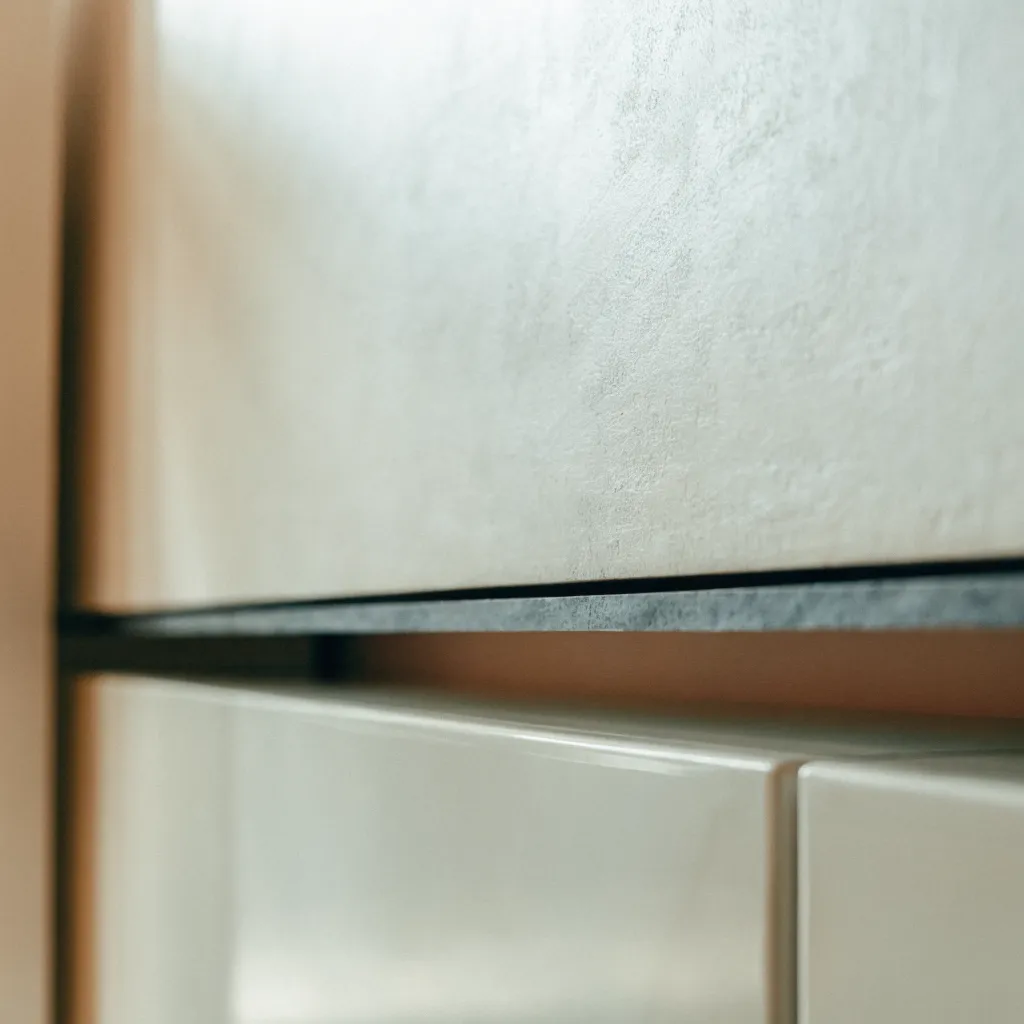
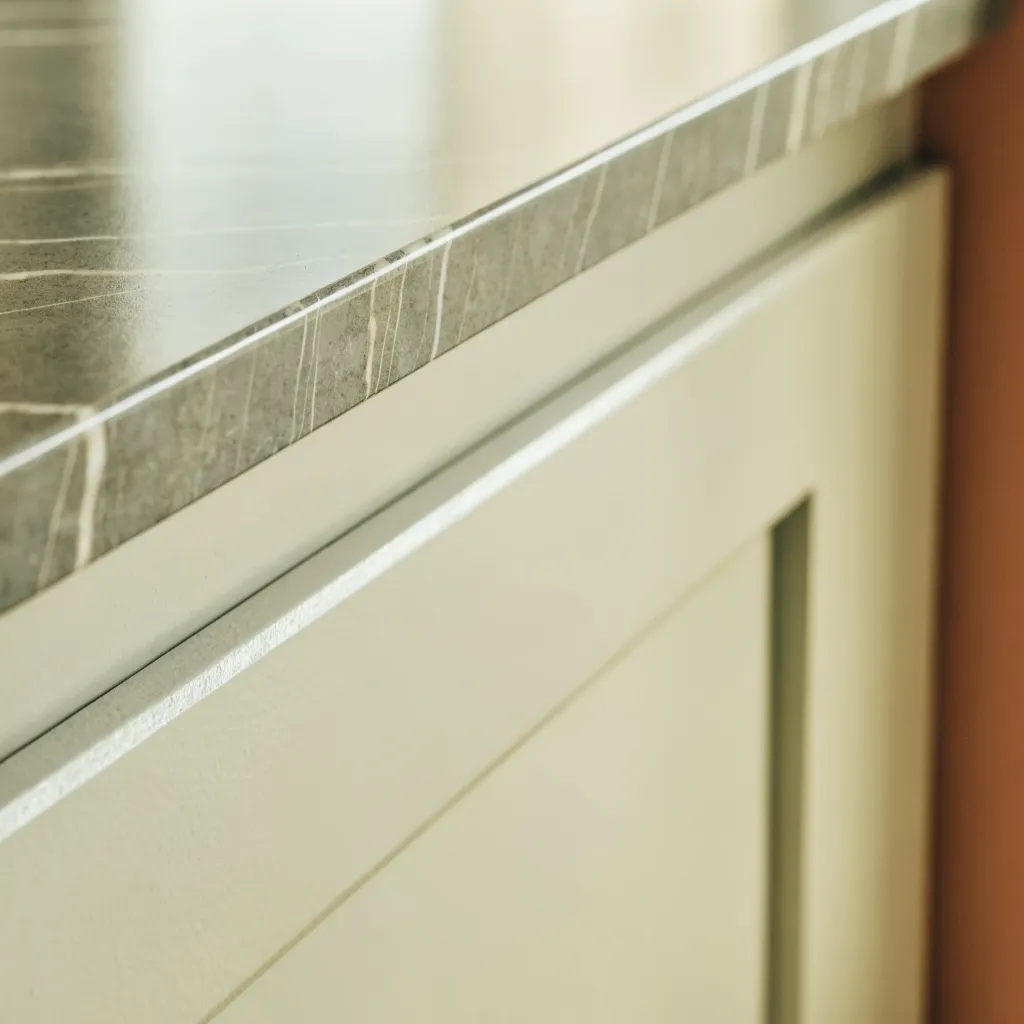
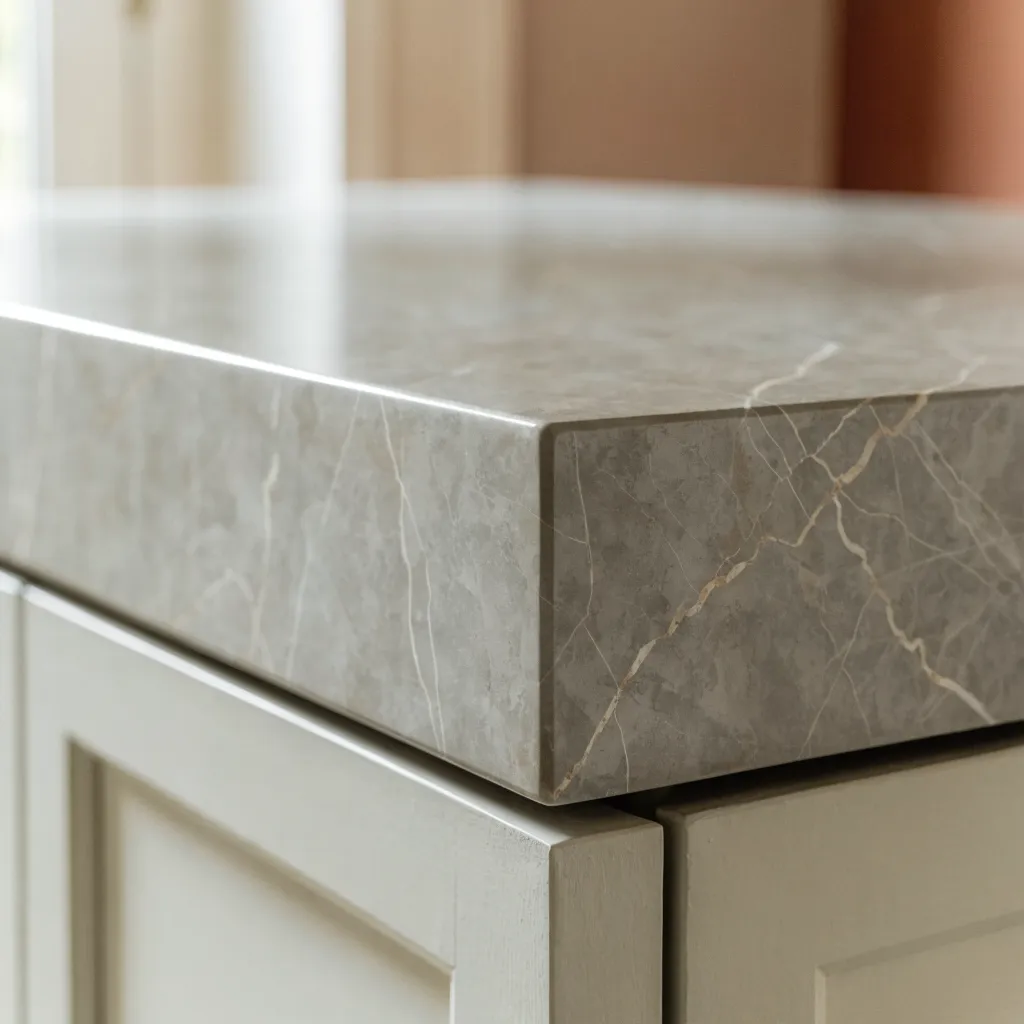
Porcelain is sold by thickness, and thickness is a specification rather than a preference. The trade calls these slabs gauged. The word means manufactured to a controlled thickness, and it is the basis of the American national standard that defines what a porcelain panel is and what it has to survive. Three choices reach a kitchen, and you can tell them apart from the doorway by looking at the edge.
6 mm
The thinnest, and the reason people fall for the material. On a counter it needs continuous support underneath, because it is a skin rather than a structure, so it usually goes over an existing substrate or onto a full-support subtop. It is also the one that goes up walls and onto cabinet faces, where its weight is the whole point. What it cannot do is span an unsupported overhang.
12 mm
The countertop standard, and what we quote unless you tell us otherwise. It carries a normal overhang, takes an undermount sink with proper support, and gives you a squared edge that reads as a deliberate thin line rather than as a compromise. If you are not sure, this is the one.
Mitered build-up
The same 12 mm slab, cut at 45 degrees and folded down at the edge so the counter reads 2, 4 or 10 centimeters thick from across the room while staying a thin panel underneath. It is the most expensive of the three because it is entirely fabrication: a long, exact miter with the pattern turning the corner so the joint disappears. Done well you cannot find it. Done badly it is the first thing anyone sees.
How a Porcelain Countertop Installation Runs, Step by Step
- Measure and scope, at your house, free. We measure the run, look at the sink and cooktop you have or want, check what the cabinet boxes can support, and write down what you want changed.
- A written number before anything is ordered. One price, itemized: material, fabrication, edge, cutouts, seams and installation. It does not move unless you approve a change in scope.
- Thickness and edge get decided here, not later. 6 mm, 12 mm or a mitered build-up changes the support under the counter, the price of the edge and how the finished kitchen reads. It is the one decision on a porcelain job that cannot be changed after fabrication starts.
- Templating, on the installed cabinets and not before. A digital template is taken off the real boxes once they are set and level. Countertop height, overhang and the clearances around the sink and the range come out of that measurement, not out of a drawing.
- Fabrication, which is where porcelain jobs are won or lost. The slab is cut with tooling made for porcelain, supported along its whole length while it is handled, and every internal corner of every cutout is radiused rather than cut square. A square inside corner is a crack waiting for the first hot pan, and it is the single most common failure on this material.
- Installation. The slab is set on a fully supported and level base, seamed with a color-matched adhesive, and the sink is attached and carried from below. Nothing gets sealed, because there is nothing to seal.
- Plumbing reconnect and walkthrough. Faucet, disposal and drain go back, we run water, and we go through the whole run with you and write down anything that is not right before we ask for the last payment.
What Porcelain Countertop Installation Costs in Davie
We do not publish our own price for porcelain, and the reason is the same one that applies to every number on this site: a rate per square foot without a kitchen attached to it is a guess. What we can do is show you the bands this market publishes and tell you what each one is measuring.
| Range | Slab | What it measures |
|---|---|---|
| $60 – $90 / sq ft | 6 mm, stocked | thin panels over full support, simple edge, installed |
| $90 – $130 / sq ft | 12 mm | where most Davie kitchens land, installed |
| $130 – $200+ / sq ft | mitered or large format | build-up edges, oversized slabs, full-height panels |
Those are installed figures for South Florida, which is the only kind worth quoting: a material-only price per square foot leaves out fabrication, cutouts and installation, and on porcelain those are even more of the job than usual. The slab is often the cheaper half. What you are paying for is somebody cutting a brittle sheet without breaking it.
What actually moves the number
The edge, first, and porcelain is the only material on this site where that is true. A squared 12 mm edge is close to free; a mitered build-up can add more than the slab cost, because it is hours of exact work. After that: square footage, the number of cutouts and their corners, whether the run needs one oversized slab or two normal ones, and whether a full-height backsplash comes out of the same piece.
Your zip code is not on that list. We charge the same in Davie, Weston and Fort Lauderdale.
One thing worth knowing before you compare quotes
Ask how many porcelain kitchens the company has fabricated, and ask what they do at the inside corners of the sink cutout. The answer you want is that they radius them. It is a small, specific question, the right answer takes one sentence, and it separates the shops that have done this from the ones that are about to learn on your counter. Then ask the ordinary version: whether cutouts, the edge profile and tear-out of the old counter are inside the number or outside it.
Why Choose Us
The counter is templated on your installed cabinets and fabricated before anything comes out, which is the operating rule behind the two numbers that matter here: two to three weeks from template to installation, and one to two days without a kitchen.
You get a written number before anything is ordered, itemized down to the cutouts, and it holds. With porcelain the itemization matters more than usual, because the edge is a genuine line item: you should be able to see what the miter costs and decide whether you want it.
We also tell you the truth about the failure mode. Porcelain does not stain, fade or scorch, so the only way this job goes wrong is fabrication: a square cutout corner, an unsupported overhang, a slab flexed while it is carried. That is why the cutouts get radiused, why the base has to be flat before anything is set down, and why we would rather talk you into 12 mm than sell you a 6 mm counter that needs a substrate nobody costed.
The crews work under Gaven Constructions, license CGC1524886, insured, with a two-year workmanship warranty on the installation. And someone answers this phone from 7 AM to 10 PM every day, which is the part most people end up caring about while they are collecting three estimates.
Licensed, Insured, and Permitted in Davie
A countertop swap on its own is usually the least regulated part of a kitchen: nothing structural moves, and the slab sits on cabinets that are already there. What pulls it into review is the plumbing. Disconnecting and reconnecting a sink is one thing; relocating the sink, moving a drain or changing a supply line is another, and so is any electrical that has to move for a new cooktop cutout. Porcelain is lighter than stone, which takes the weight question off the table, since a 12 mm porcelain top is a fraction of the load of a 3 cm granite one. The support question replaces it: a thin panel needs a continuous flat base, and building one is carpentry that has to be in the scope. The determination on your particular scope belongs to the Town of Davie Building Division, not to us. We do not publish a table telling you which side of that line your job falls on, because following a contractor's table is your exposure and not ours. What we publish is when you find out: in the written estimate, priced, before you approve the project.
- License
- CGC1524886 Certified General Contractor, verifiable in the Florida DBPR licensee search.
- Insurance
- Insured and bonded Certificates are available before any work is scheduled.
- Workmanship warranty
- 2 years On installation labor. Most of this market publishes one.
- Permits and design
- Priced before approval Requirements vary by project scope. Any required permitting, drawings, engineering, or design services are identified and priced before the project is approved.
- Who contracts the work
- Gaven Constructions Kitchen Remodeler Davie was acquired by Gaven Constructions, a licensed contractor since 2015. Every estimate and invoice is issued in that name, which is what puts the license behind the job.
Common Questions
What does porcelain countertop installation cost in Davie, FL?
Installed, most Davie kitchens land between $90 and $130 per square foot for 12 mm, with 6 mm panels over full support starting around $60 and mitered or oversized work running past $200. Those are installed numbers, which is the only kind worth comparing: a material-only rate leaves out fabrication, cutouts and installation, and with porcelain that is most of the price. The slab is frequently the cheaper half of the job. The unusual part of a porcelain quote is that the edge is a real cost: a squared 12 mm edge is nearly free, while a mitered build-up that makes the counter read thick can add more than the slab did, because it is hours of exact fabrication. Your zip code is not on the list: we charge the same in Davie, Weston and Fort Lauderdale. We will put a written, itemized figure in front of you before anything is ordered, and it holds unless you approve a change in scope.
Why is porcelain countertop installation more difficult than stone in a Davie kitchen?
Because it is hard, brittle and thin at the same time, and those three together punish every shortcut. A granite slab is thick enough to forgive being carried at the wrong angle; a 6 or 12 mm porcelain panel is not, and it will crack from a flex you would never notice on stone. It needs diamond tooling made for porcelain and a slower cut, it needs continuous support the entire time it is handled, and it needs more hands to move than a stone slab of the same size. The specific place jobs fail is the sink cutout: a square inside corner concentrates stress and cracks, sometimes weeks later, so every internal corner has to be radiused. None of that is exotic in a shop that fabricates porcelain regularly. All of it is a real risk in one that does not, which is why with this material we would tell you to pick the fabricator before you pick the slab.
How thick should a porcelain countertop be in a Davie kitchen?
12 mm for a countertop, unless there is a reason to do something else. That thickness carries a normal overhang, takes an undermount sink with proper support underneath, and gives you the thin squared edge that people choose porcelain for in the first place. 6 mm exists and it is genuinely useful, but it is a skin rather than a structure, so it needs continuous support beneath it and it cannot span an unsupported overhang; it belongs over an existing substrate, on walls, or on cabinet faces. And if you want the counter to look thick, you do not buy a thicker slab, you have a 12 mm one mitered and folded down at the edge so it reads 2, 4 or 10 centimeters from across the room. Thickness is a specification with consequences for support and price, not a matter of taste, and it is the one thing on a porcelain job that has to be settled before fabrication starts.
What are the drawbacks of porcelain countertops in a Davie kitchen?
Three, and only one of them is about the material. It chips at an edge if you hit it hard with something metal, because it is very hard and hard means brittle, so damage shows up as a chip rather than a dent, and the repair is a color-matched fill rather than a sand-out. The pattern is printed on the surface rather than running through the body, so on a deep chip or a thick mitered edge you can see that the inside of the slab is a different color than the top; the good manufacturers now do through-body patterning and it costs more. And the third is not the material at all: fabrication risk, which is entirely about who you hire. What porcelain does not have is the usual list: it does not stain, does not need sealing, does not fade in sun and does not scorch.
What is the easiest countertop to install in a Davie kitchen?
Laminate, and it is not close, but that is rarely the question people mean. Among the materials worth putting in a kitchen you plan to keep, engineered quartz and granite are the most forgiving to fabricate, because the slabs are thick enough to tolerate ordinary handling and every shop in South Florida cuts them daily. Porcelain is at the other end: it is the least forgiving of the common materials and the one where the gap between a good fabricator and an average one shows up most. That is worth knowing, but it is not a reason to avoid it. It is a reason to ask a different question when you collect quotes: not what does it cost, but how many of these have you done.
How is a porcelain countertop installed in a Davie kitchen, step by step?
The base gets prepared first, and with porcelain that means genuinely flat and continuous, not just level, because a thin panel bridges nothing and telegraphs everything under it. The slab is templated off the installed cabinets, then cut in the shop with porcelain tooling, with every internal cutout corner radiused. It is carried on edge and supported along its whole length, which for a large panel means several people and a frame. It is set into adhesive on the prepared base, seams are closed with a color-matched joint, and the undermount sink is attached and carried from below rather than hung from the slab. Then plumbing goes back and we walk the run with you. There is no sealing step, ever, which is the shortest and best part of owning one.
Can porcelain go outside in a Davie outdoor kitchen?
Yes, and it is one of the few materials we would recommend for one here. Porcelain does not fade under UV, does not absorb water, and does not care about the temperature swings an uncovered South Florida counter goes through. What changes outdoors is the product: outdoor porcelain is normally a thicker 2 cm format with its own specification, not the 12 mm slab that goes on an interior island, and the support and drainage details are different. So the answer is yes, with the same caution as inside: the material will outlast the house, and everything depends on the person who cuts and sets it.
Recent Kitchen Remodeling Projects in Davie
-
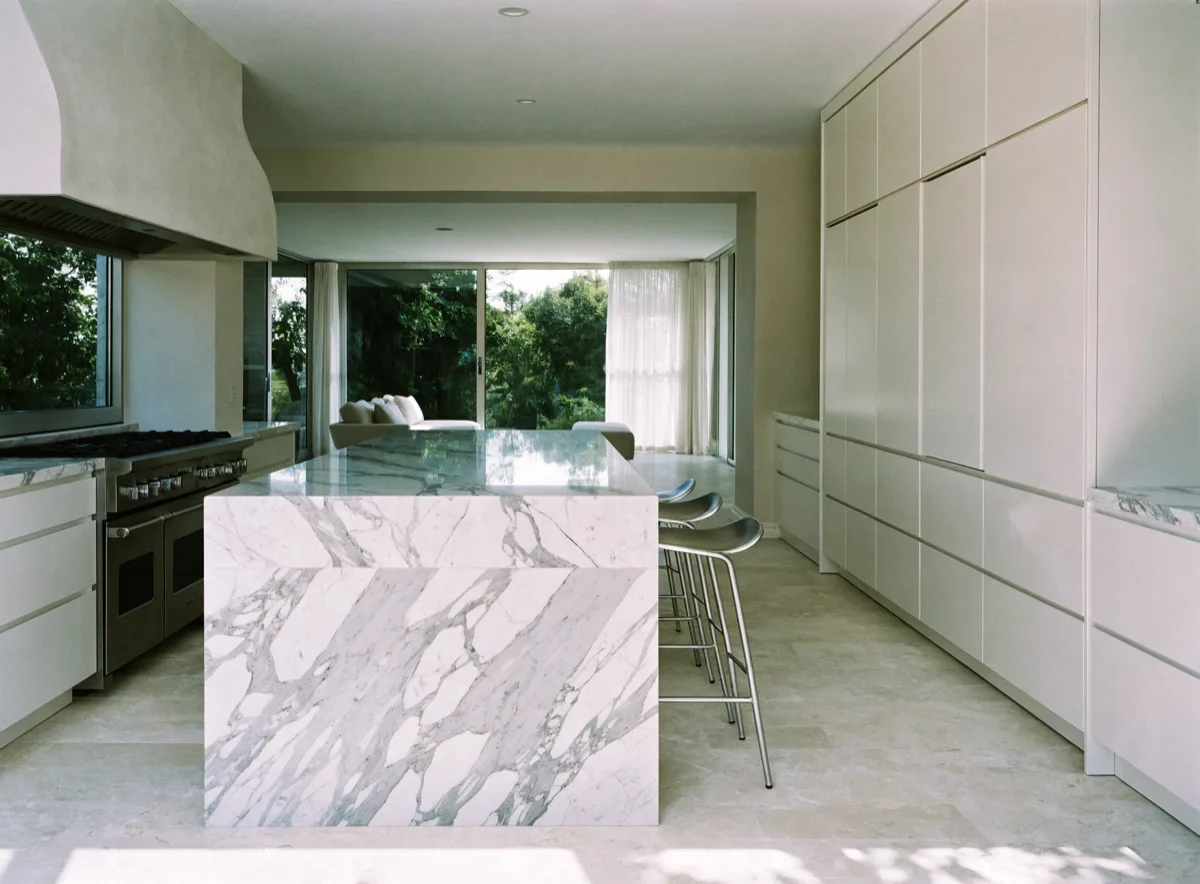
Kitchen opened to the living room, with a seated island Luxury kitchen remodeling -
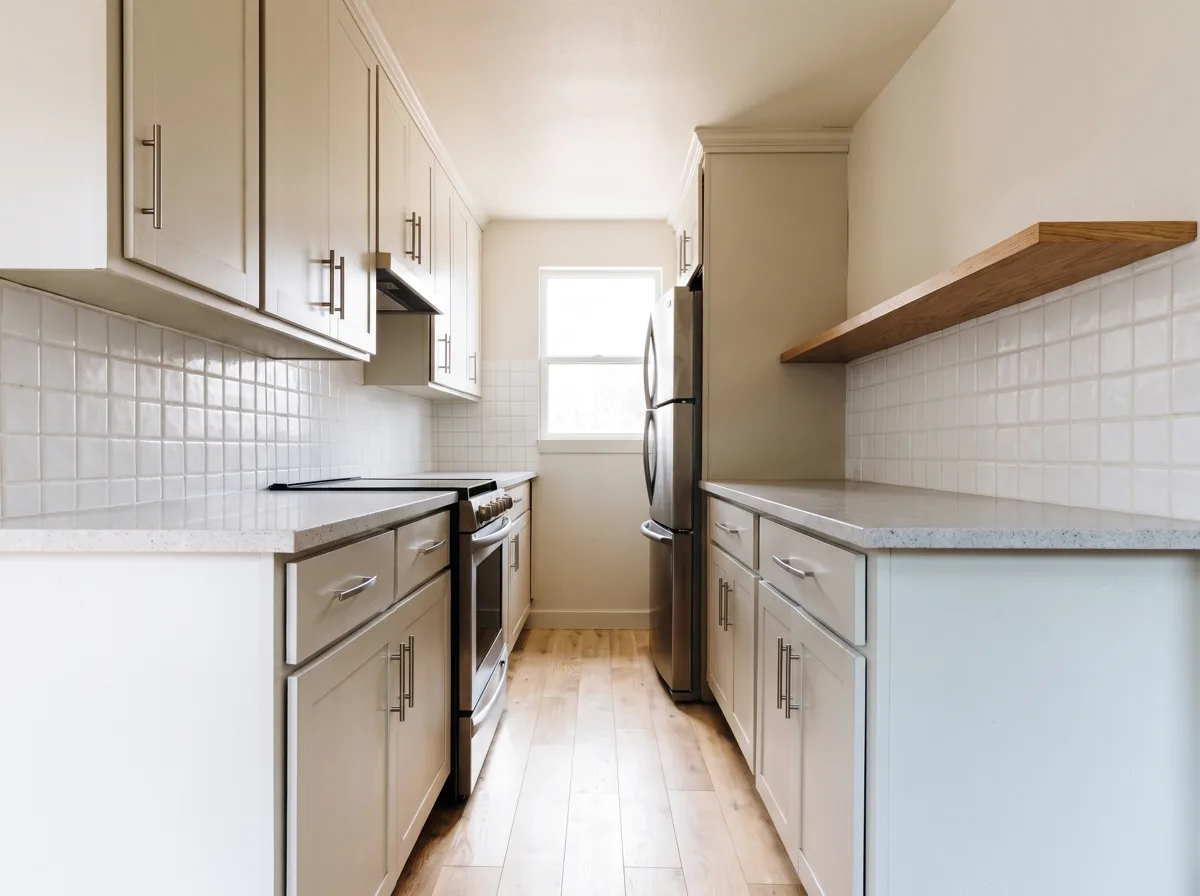
Galley kitchen opened up on one wall Galley kitchen remodeling -
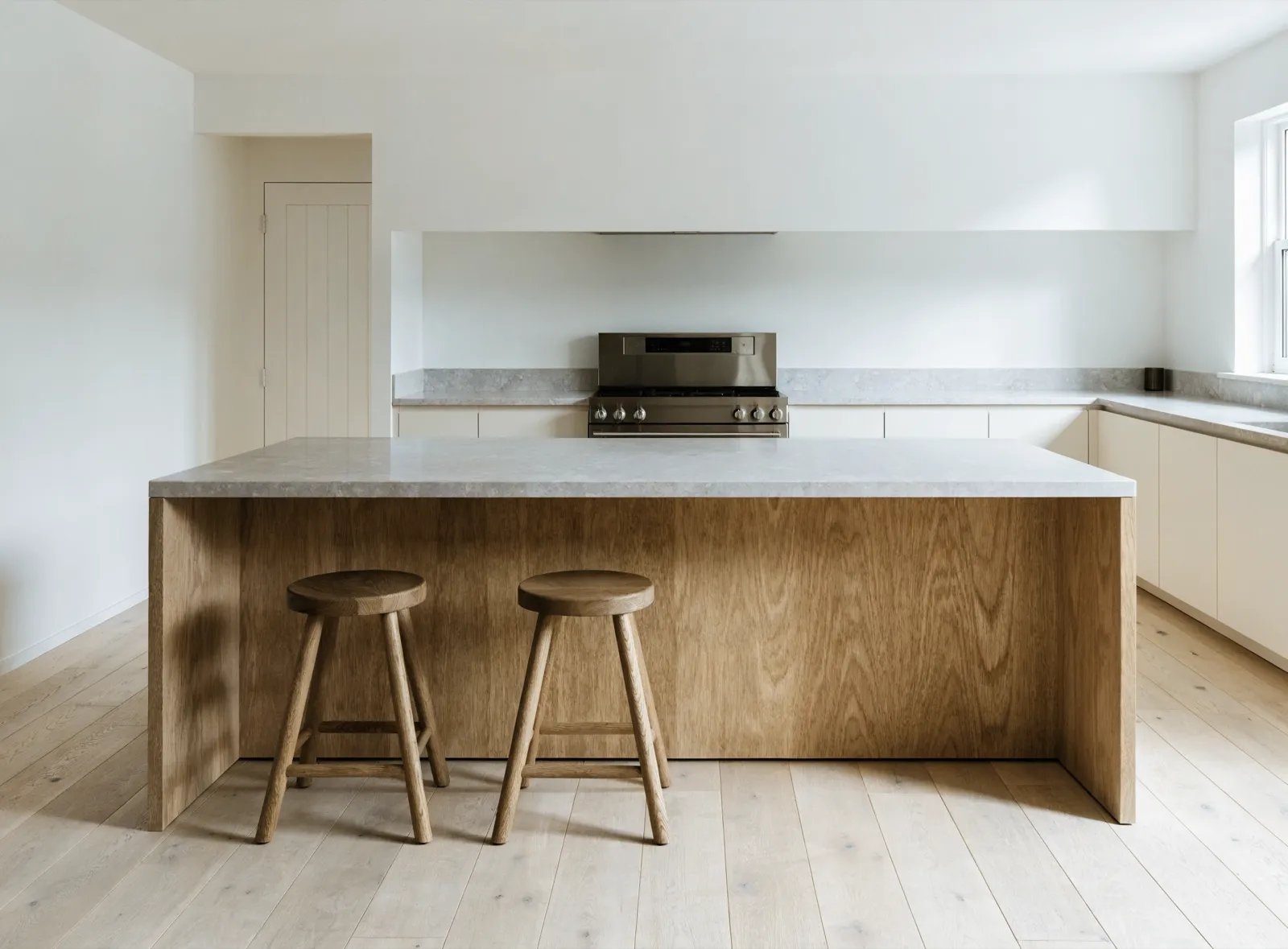
Island cabinetry with seating and a full perimeter run Kitchen island cabinetry -
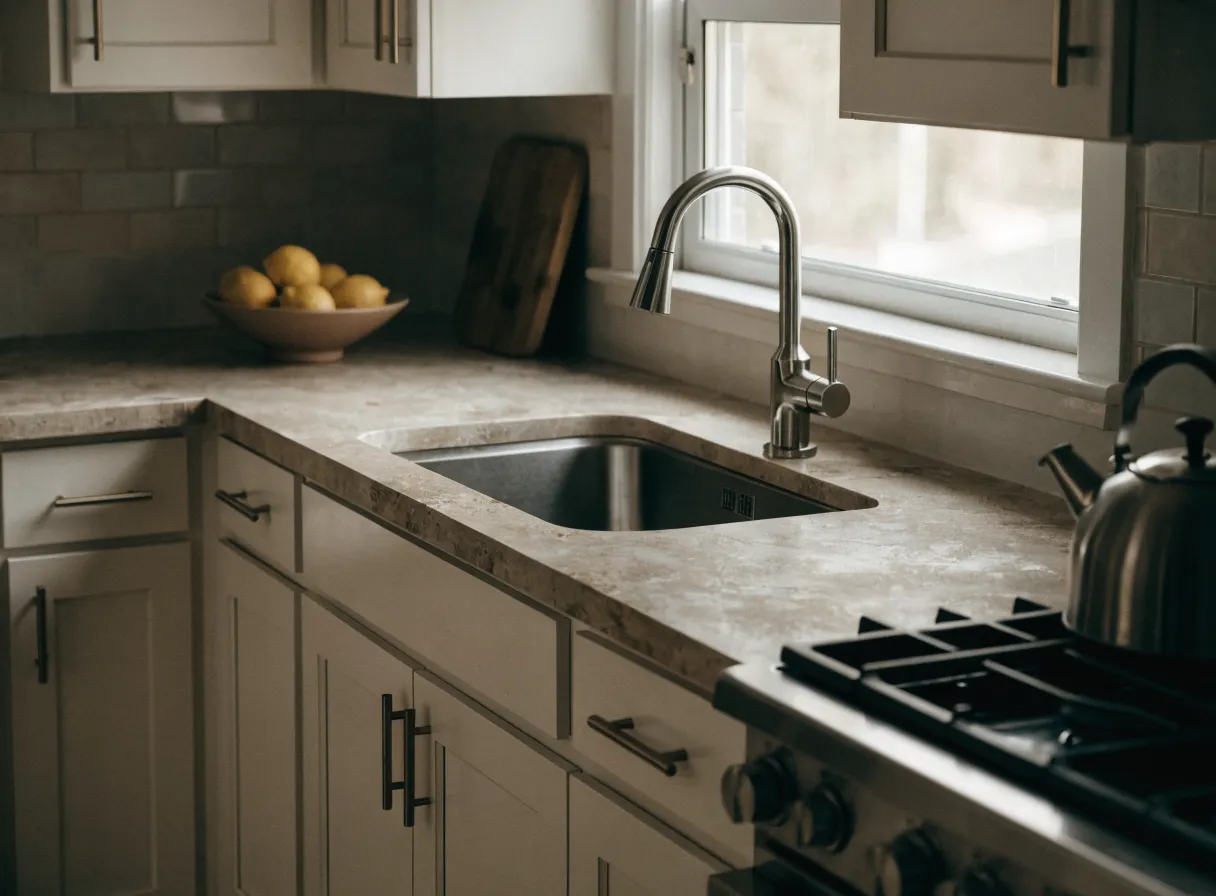
Refaced cabinets, shaker fronts and a tile backsplash Cabinet refacing
-
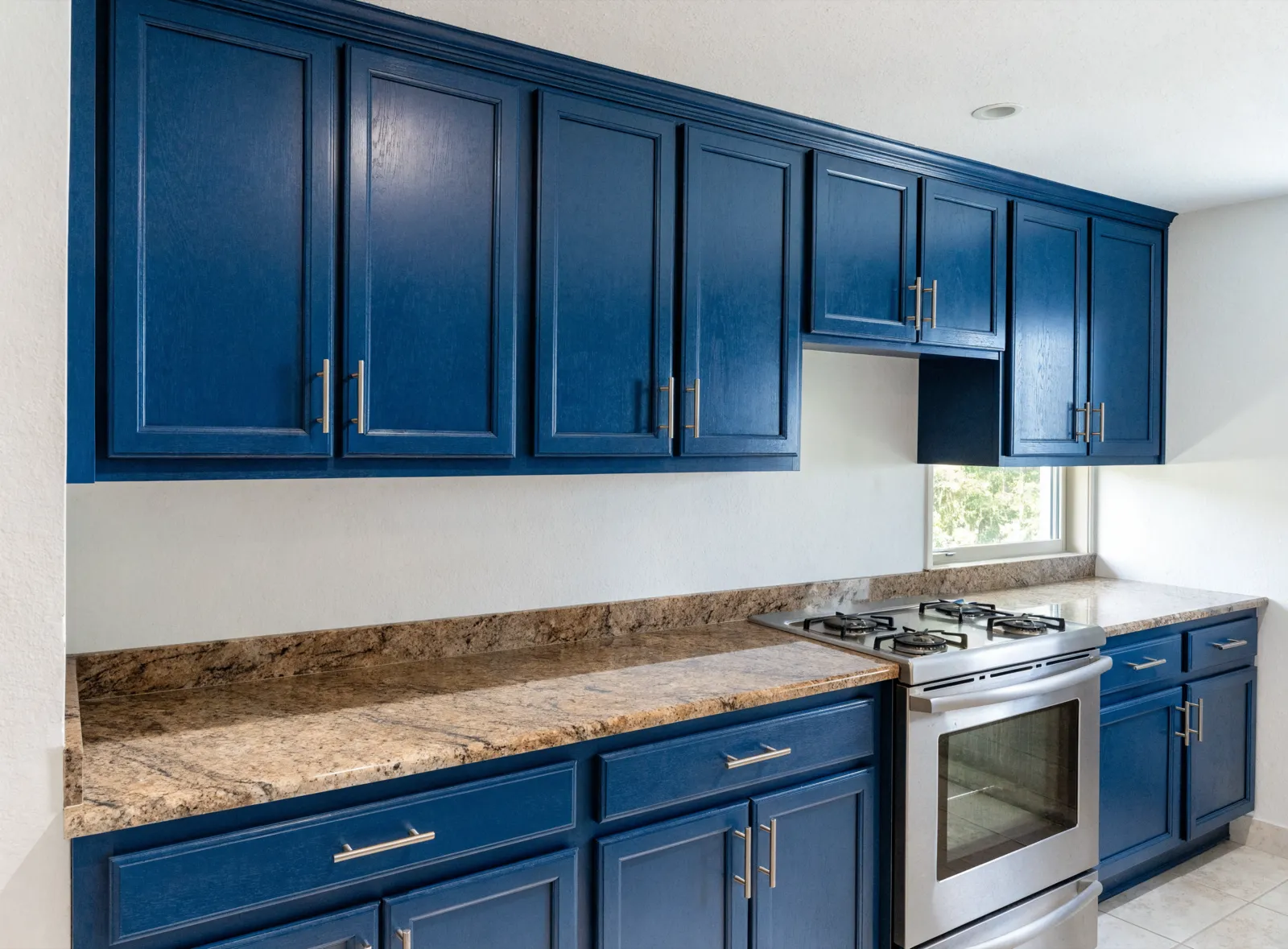
Cabinets refinished in navy under the existing granite Cabinet refinishing -
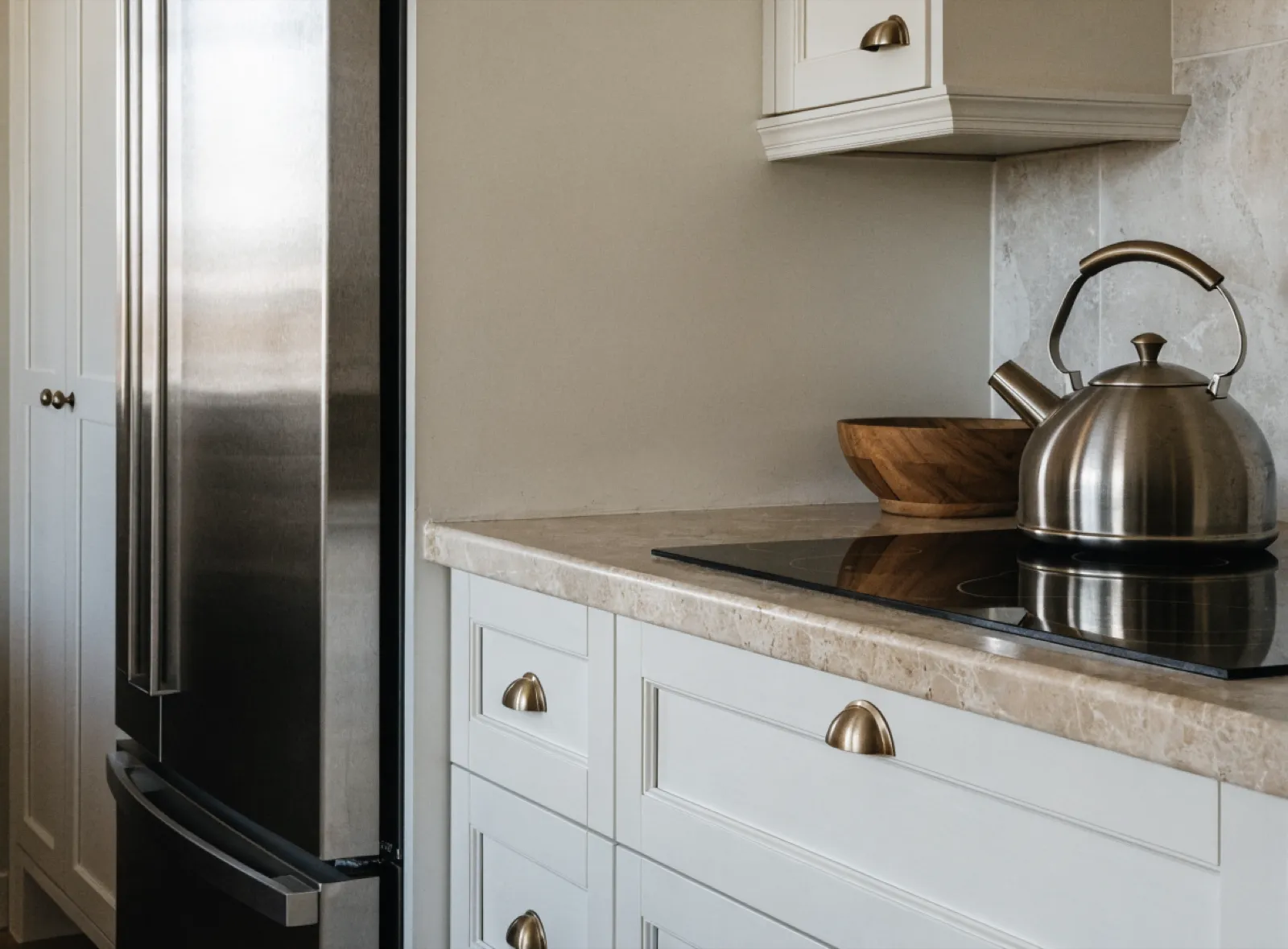
Drawer bank under the cooktop, pantry beside the fridge Custom kitchen cabinets -
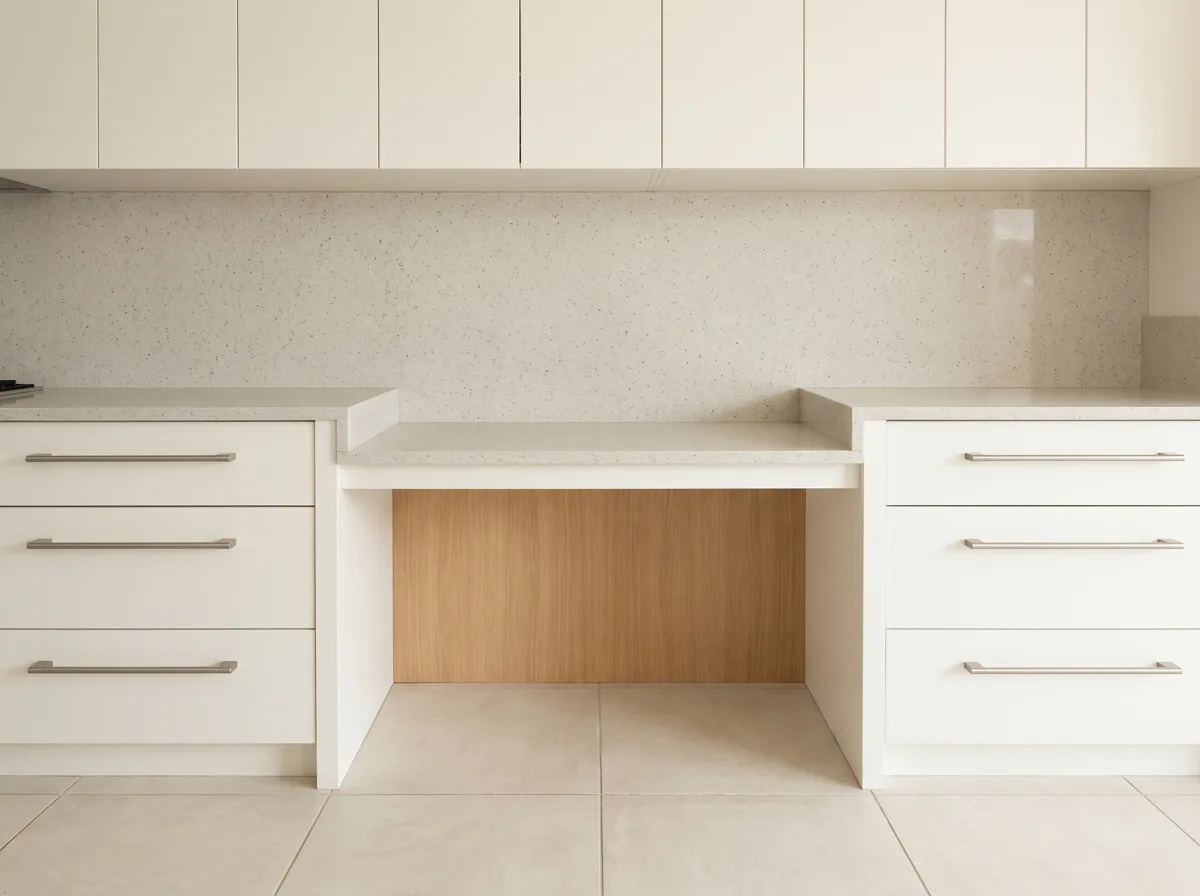
Counter at two heights, open underneath Accessible kitchen remodeling -
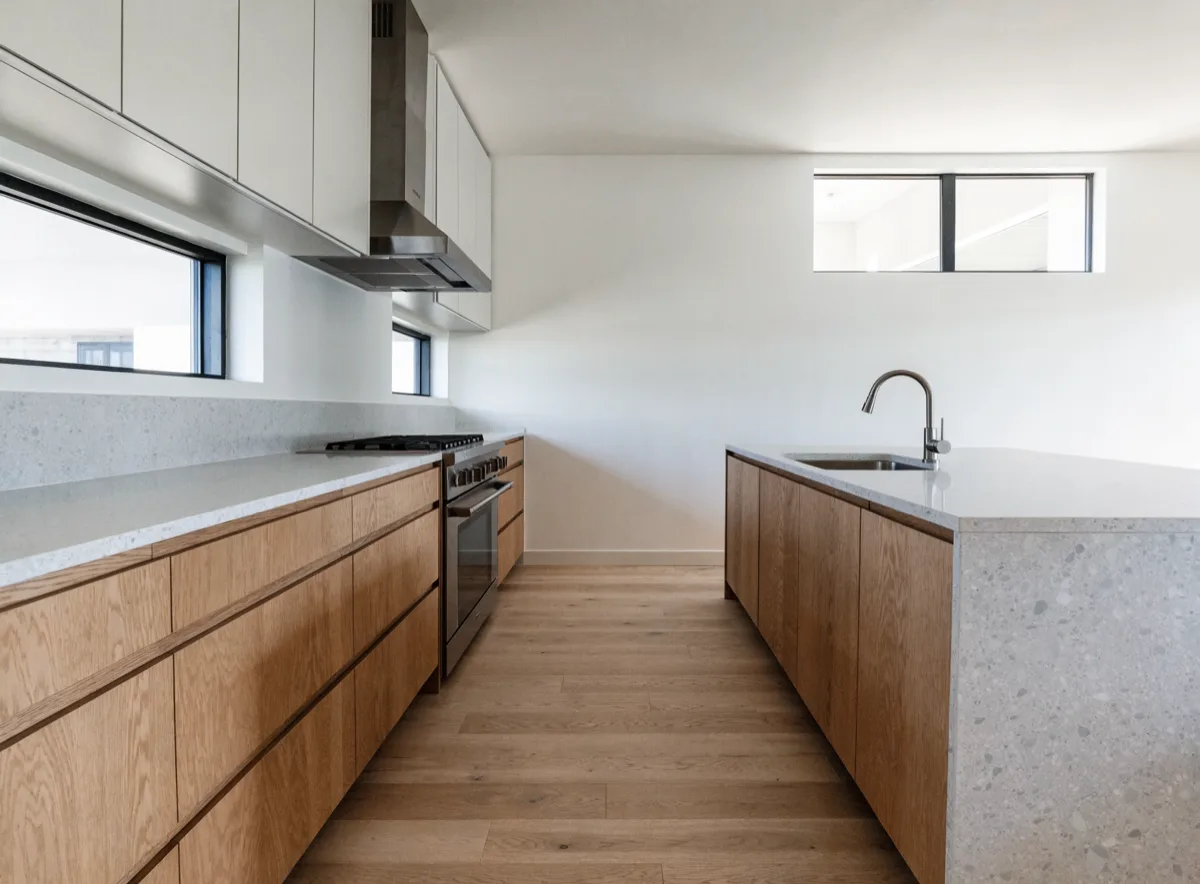
A wider walkway between the wall run and the island Kitchen layout redesign
Porcelain is one of several surfaces we install. See how it compares against the others on the countertop contractor page, or start from what Kitchen Remodeler Davie does.
Tell us the run and the look, and we will tell you which thickness the job needs.
Measure the run of counter along each wall, tell us the sink and the cooktop, and say whether the counter should read thin or thick from across the room. Thickness is where porcelain gets decided, and it is easier to settle before you fall in love with a slab than after.
Call (786) 780-2728