Gas or induction · Davie, FL
Should a Kitchen Remodel Go Gas or Induction in Davie?
Should a kitchen remodel go gas or induction in Davie depends less on taste than on what the house already has. In a town where most homes heat with electricity, induction usually needs a dedicated 240-volt circuit and room in the panel, while gas needs a supply line that many kitchens never had. Cooking is the smaller part of the choice: the bigger part is the work behind the wall and the cutout in the counter.
- Induction heat that reaches the pot
- about 85%
- · ENERGY STAR, electric cooking products
- Gas heat that reaches the pot
- about a third
- · same ENERGY STAR comparison
- Licensed & insured: CGC1524886
- 500+ kitchens completed
- 2-year workmanship warranty
- Answered 7 AM–10 PM, 7 days
What Each Cooktop Asks of the House
A gas cooktop needs fuel at the spot where it sits. That is either a utility gas line or a tank outside, and a pipe run to a shutoff behind the cabinet. In a kitchen that already cooks on gas, the line is there and the new cooktop connects to it. In a kitchen that never had gas, the line has to be brought in, and gas piping is work for a licensed gas contractor.
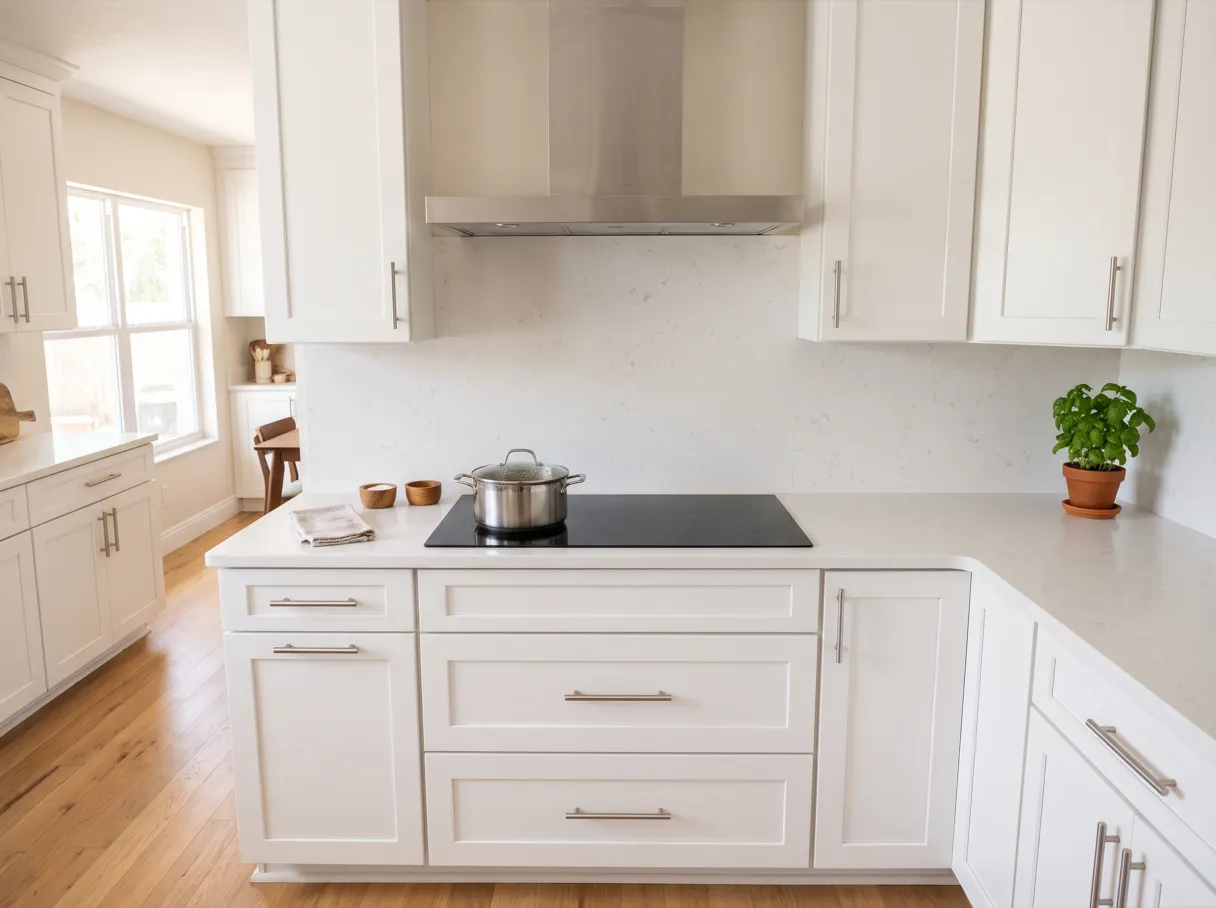
An induction cooktop needs a dedicated 240-volt circuit sized to its rating. The size is printed on the cooktop's label and in its installation manual, and it varies from model to model. Two things decide how hard that is. The first is the panel: is there space for a new double breaker, and does the service have the capacity? The second is the path: how far the cable has to travel from the panel to the cooktop.
A kitchen that already has an electric range usually has that circuit. Whether it is big enough for the new model is a question for the label, not a guess.
How the Two Compare at the Stove
The efficiency gap is large. ENERGY STAR puts it this way: about 85% of an induction cooktop's heating energy reaches what is in the pan, against only a third with gas. The same page says boiling water on induction can take nearly half the time.
Induction heats the pan, not the glass. The surface around the pot stays cooler, less heat spills into the kitchen, and a spill does not bake onto a hot burner. The catch is the cookware. It has to be magnetic. Cast iron and most stainless steel work, and a fridge magnet tells you in a second. Aluminum, copper and glass pans do not.
Gas keeps what people who cook on it like: a visible flame, instant response, and any pan at all. It also adds combustion gases to the kitchen air, which is why the hood over a gas cooktop is a bigger decision than the hood over induction.
Neither one is wrong. The question is which one the house can take, and what each one changes in the cabinets around it.
What Changes in the Cabinets and Counter
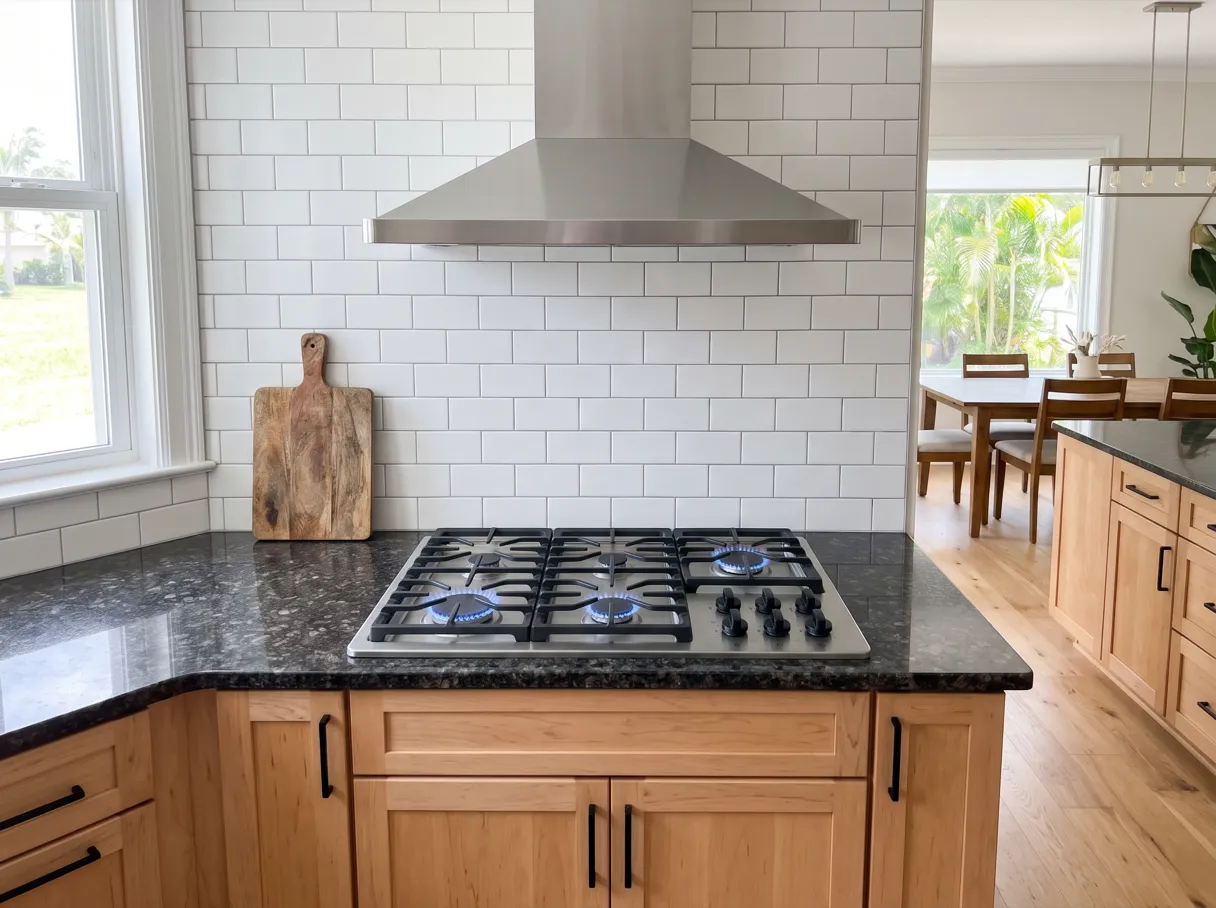
The cooktop is chosen before the counter is templated, because the cutout is cut to the model. A cooktop sits in a hole in the countertop. A slide-in range sits between two runs of counter. Those are two different counters and two different base cabinets, and switching later means cutting stone again or replacing it.
Width comes next. Most cooktops run 30 to 36 inches, and the base cabinet underneath is built to that number. Going from a 30-inch gas cooktop to a 36-inch induction model is a cabinet change, not just an appliance swap.
Then the space underneath. An induction cooktop holds its electronics below the glass, and its installation manual sets how much room it needs and whether a drawer can sit right under it. A gas cooktop needs its connector and shutoff reachable. Both answers come from the manual of the model you pick, so the model comes first.