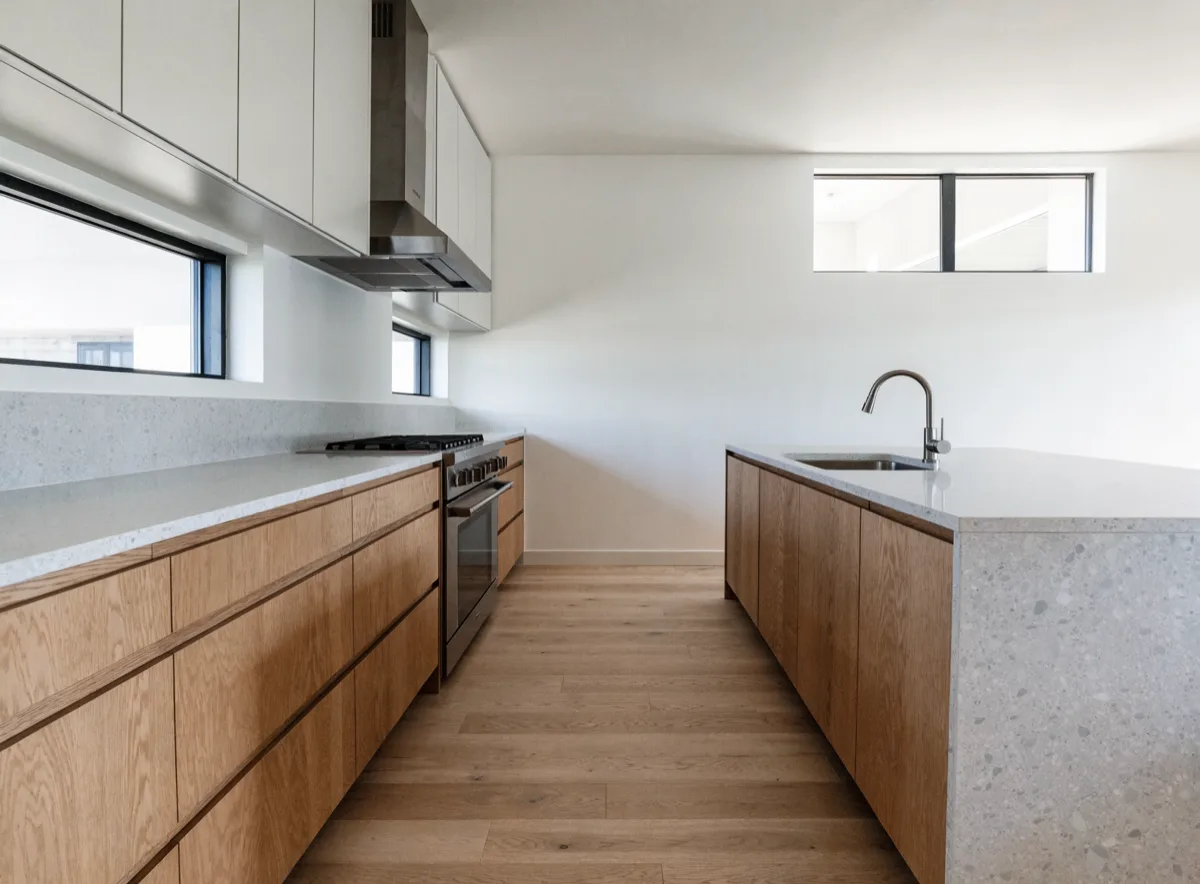
Range hoods and the code · Davie, FL
When a Range Hood Has to Vent Outside in Davie
When a range hood has to vent outside in Davie comes down to the Florida Building Code: a ducted hood must discharge outdoors through an airtight metal duct with a back-draft damper, and never into the attic. A listed ductless hood can skip the duct if the kitchen keeps its own ventilation. Above 400 cfm, a single-family home may also need makeup air, depending on what else in the house burns fuel.
- Makeup air rule starts above
- 400 cfm
- · FBC Residential M1503.4, the base rule
- Single-family exception reaches
- 800 cfm
- · with no gravity vent appliance in the living space
- Licensed & insured: CGC1524886
- 500+ kitchens completed
- 2-year workmanship warranty
- Answered 7 AM–10 PM, 7 days
What the Florida Code Says About the Duct
The rule sits in Section M1503 of the 2023 Florida Building Code, Residential, which stays in force until the 2026 edition takes over on December 31, 2026. It opens plainly: range hoods discharge to the outdoors through a duct.
That duct has conditions. Its inside has to be smooth. It has to be airtight, carry a back-draft damper and stay independent of every other exhaust fan in the house. The material is galvanized steel, stainless steel or copper. Plastic pipe is allowed only for a down-draft unit whose duct runs under a slab poured on grade, and only when five conditions are met.
Where the duct ends matters as much as where it starts. A range hood duct cannot terminate in an attic, in a crawl space, or anywhere else inside the building. A hood blowing into the space above the ceiling has not vented anything. It has moved the grease and the steam to a place nobody checks.
The one way around the duct is the ductless hood, and it brings conditions of its own.
Ducted or Ductless Over Your Range
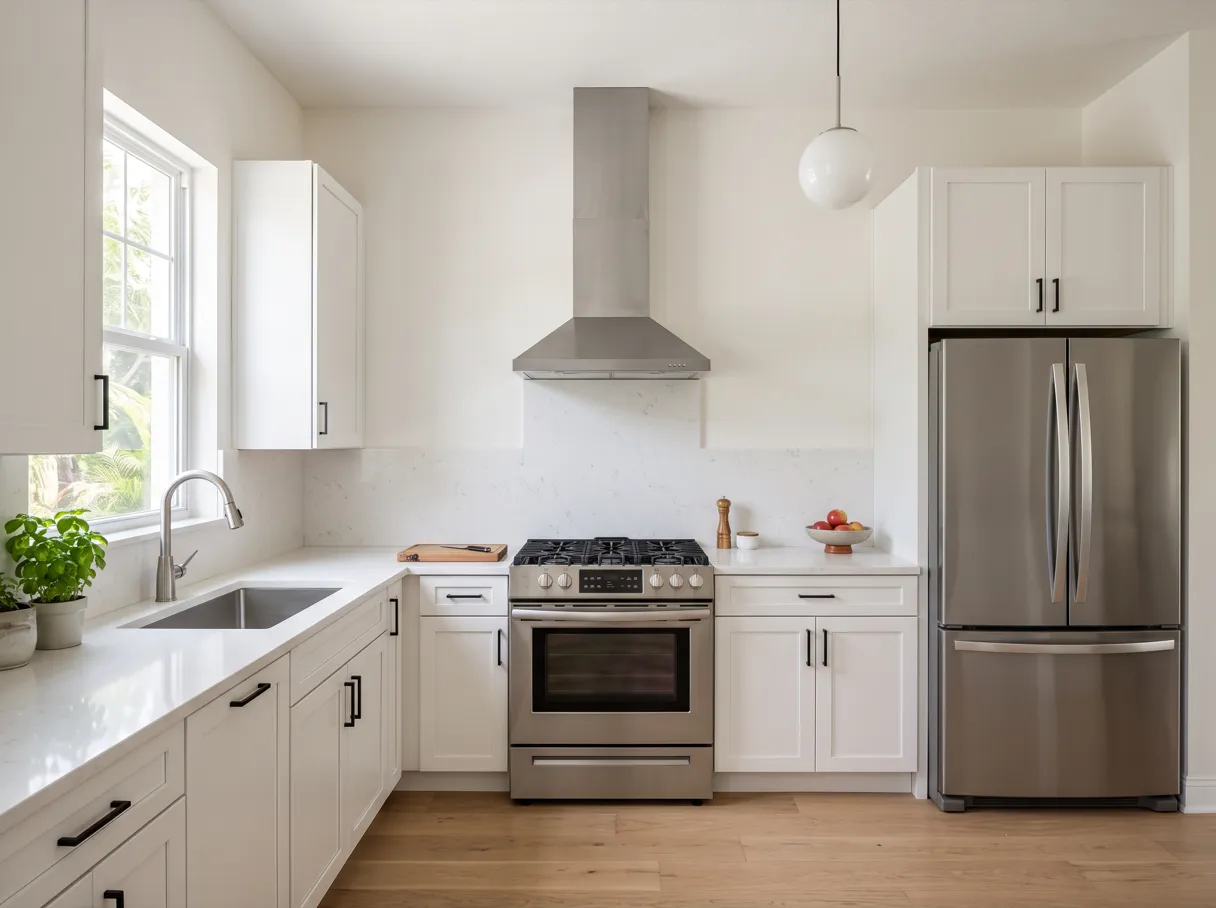
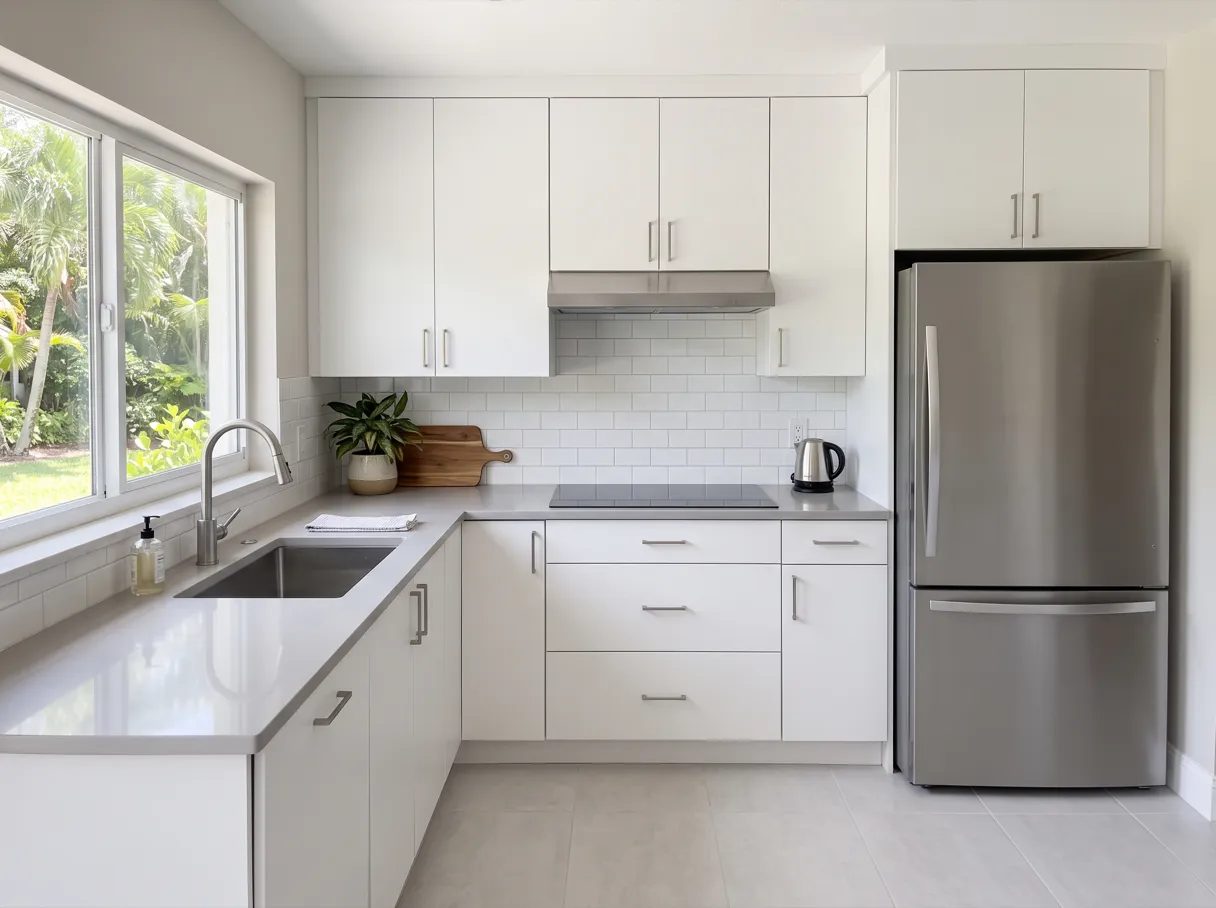
A ductless, or recirculating, hood pulls air through a filter and sends it back into the kitchen. The code accepts one when the hood is listed and labeled for use without a duct, is installed by its manufacturer's instructions, and ventilation is otherwise provided. That word matters. The window or the exhaust fan has to exist apart from the hood.
What the filter holds back is grease, and with a charcoal stage, part of the smell. Whatever it misses returns to the room, and that includes the heat and the steam off the pot.
The range under the hood changes the answer. Gas burners add combustion gases to the kitchen air, and the EPA's advice for homes with gas stoves is to install and use an exhaust fan vented to the outdoors. Over an electric or induction cooktop, a ductless hood is a compromise the code allows. Over gas, the federal advice points the other way.
In a remodel the real question is simpler. Where can a duct run: up through the roof, out through a wall, or nowhere?
When a Bigger Hood Needs Makeup Air
Section M1503.4 adds a second rule for strong hoods. A hood that can exhaust more than 400 cubic feet per minute needs makeup air brought in at roughly the same rate, through a damper that opens when the fan runs.
The reason is pressure. Air pulled out of a closed house has to come back in from somewhere. The EPA's remodeling guide lists kitchen range hoods among the forces that depressurize a home, and warns that enough of it can pull combustion products back down a flue, such as that of a gas water heater.
Florida's residential code carries an exception for single-family homes. Makeup air is not required up to 400 cfm. It is not required between 400 and 800 cfm either, as long as no gravity vent appliance sits inside the conditioned living space. Above 800, it is required.
Before ordering a hood rated over 400, ask one thing: does an appliance indoors burn fuel and vent up a flue by gravity, like a standard tank gas water heater? If not, the hood can reach 800 without makeup air.