Refacing · Davie, FL
Where Cabinet Refacing Falls Short in Davie
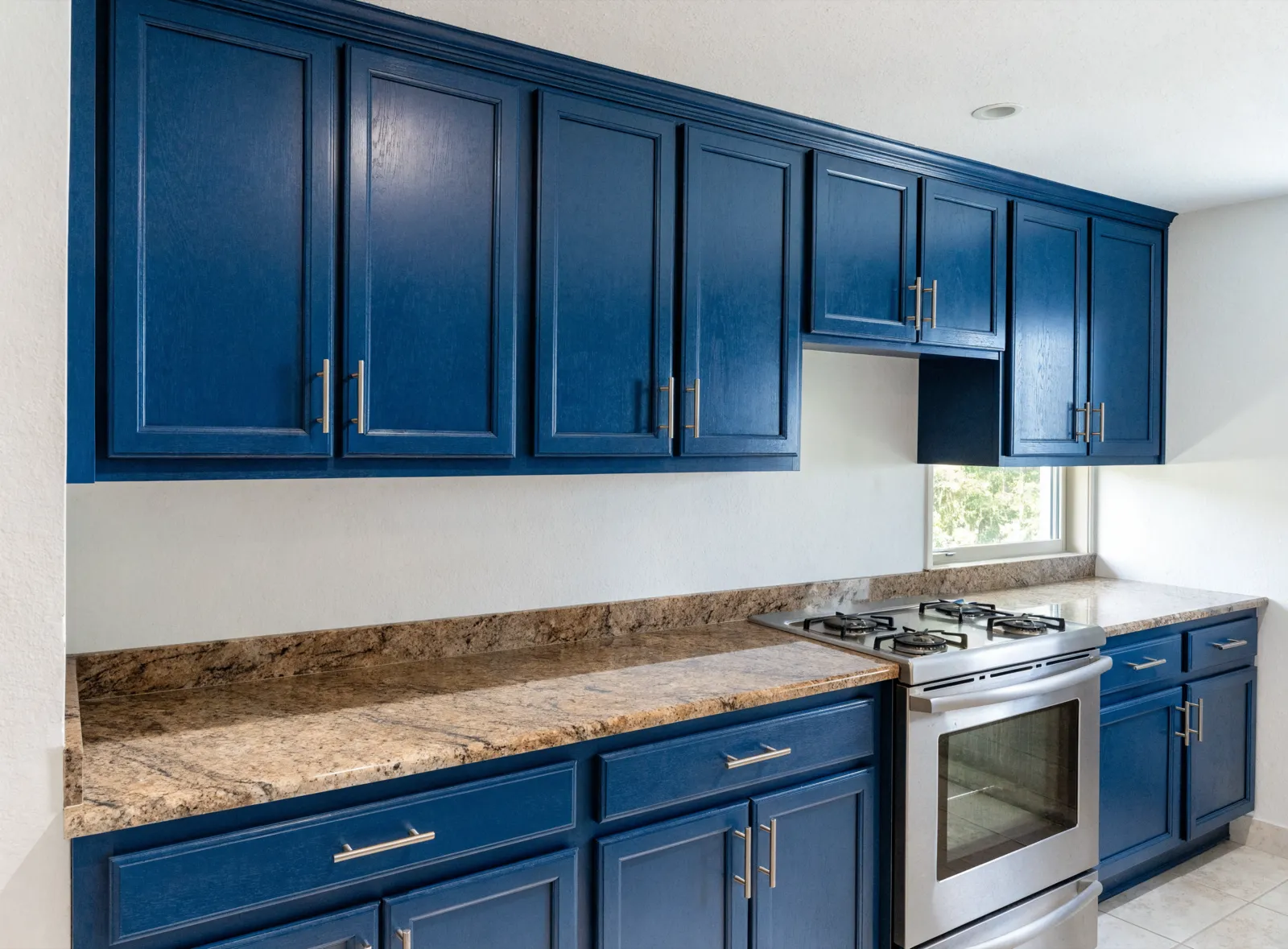
Where cabinet refacing falls short in Davie is everything behind the door. A reface replaces what you see and touch: doors, drawer fronts, hinges, pulls, and the face frames around them. It does not change the inside of a single box, it does not move anything, and it does not reset the age of the cabinet it is bolted to. Those three limits apply to every refacing job, including a good one.
- What a reface replaces
- What you see
- Doors, fronts, frames, hardware
- What it leaves
- What you open
- Shelves, slides, box interiors
- Licensed & insured: CGC1524886
- 500+ kitchens completed
- 2-year workmanship warranty
- Answered 7 AM–10 PM, 7 days
What the New Doors Do Not Reach
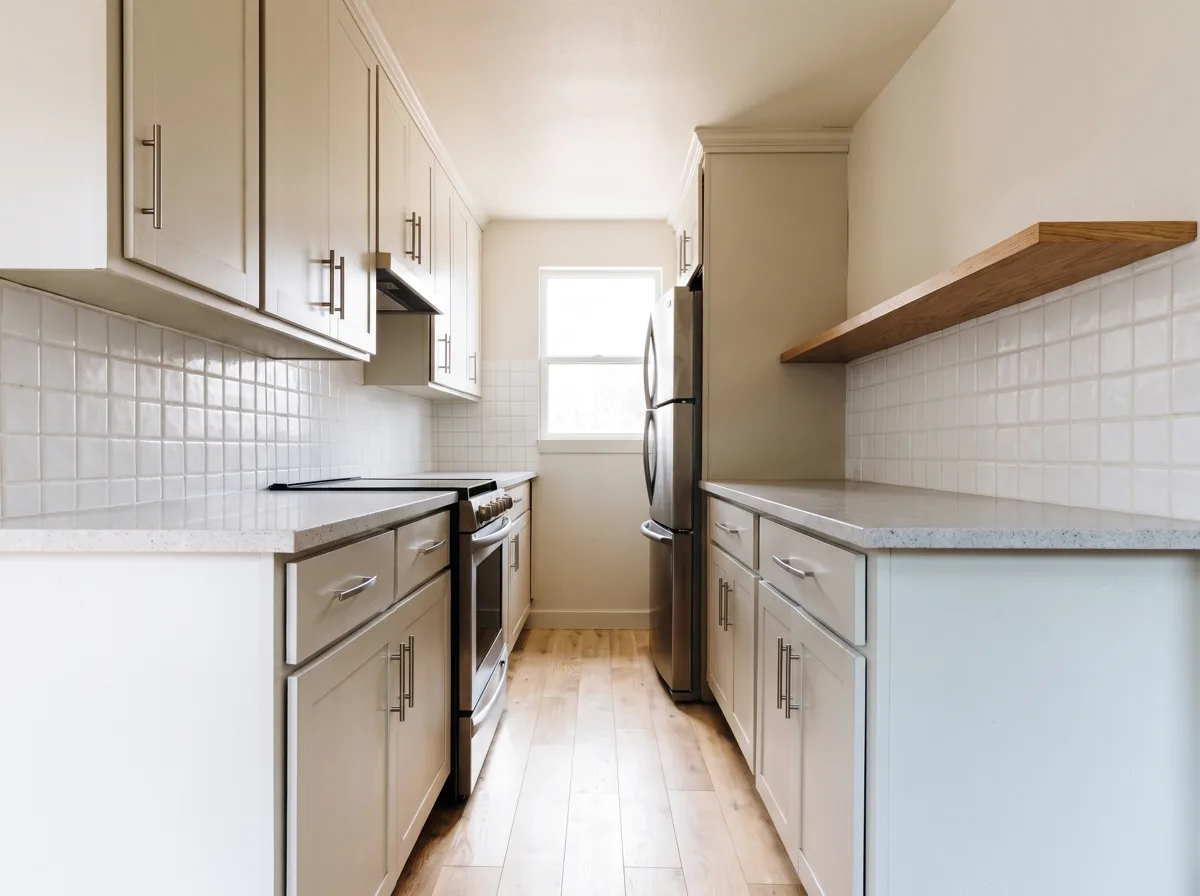
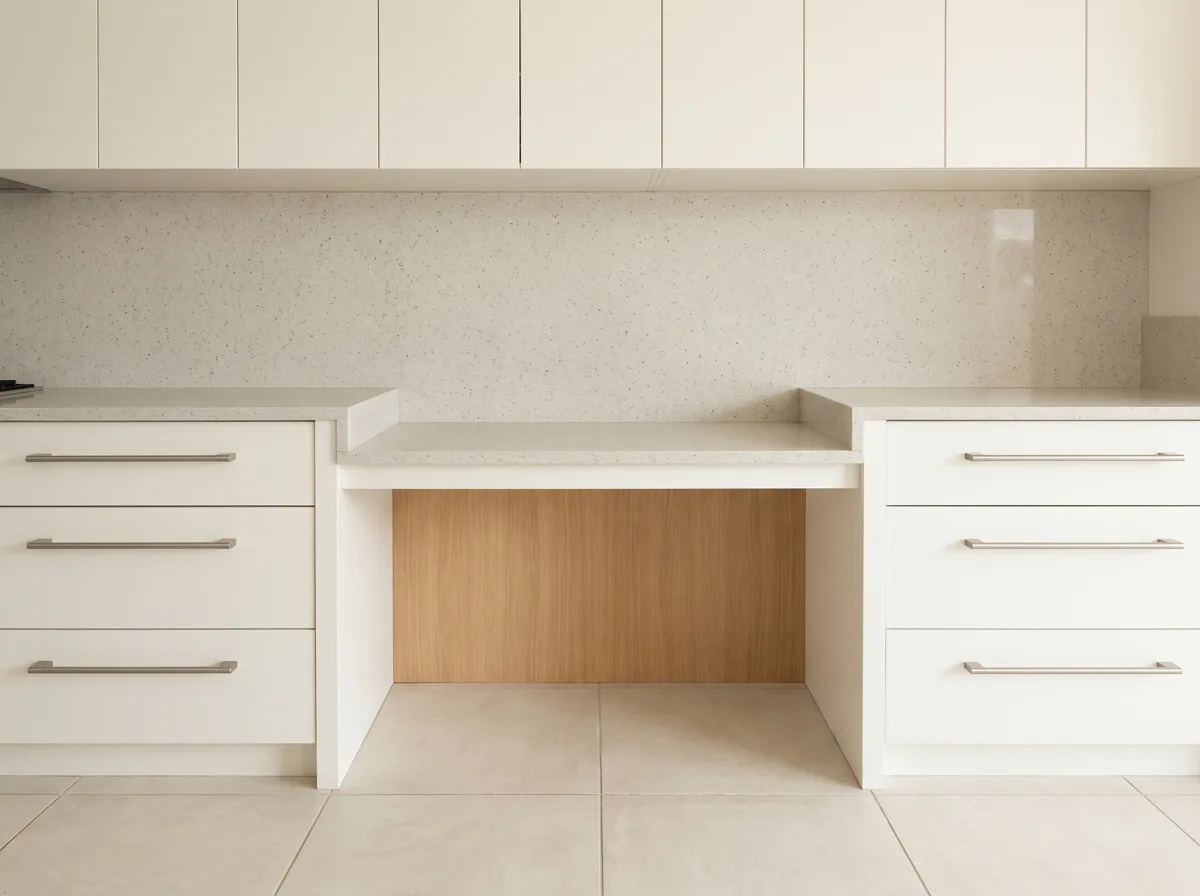
Open a base cabinet in a kitchen built in the eighties and the problem is usually not the door. It is the single fixed shelf with a cavern under it, the wall cabinet that is only eleven inches deep, the drawer that rides on wooden runners and sticks in August, the corner unit you have to lie down to reach. New fronts leave all of it. You get a kitchen that looks new and opens exactly the way it opened before.
Some of that is retrofittable and some is not. Roll-out trays, soft-close slides and new drawer boxes can go into a sound carcass, and they are worth pricing at the same time as the doors, because the labor overlaps. Depth cannot be retrofitted. Neither can a corner. The industry reference designers plan from, the NKBA planning guidelines, treats functional storage, clear floor spaces and equipment location as separate design decisions, and a reface touches none of the three.
The Surfaces Sitting Beside New Doors
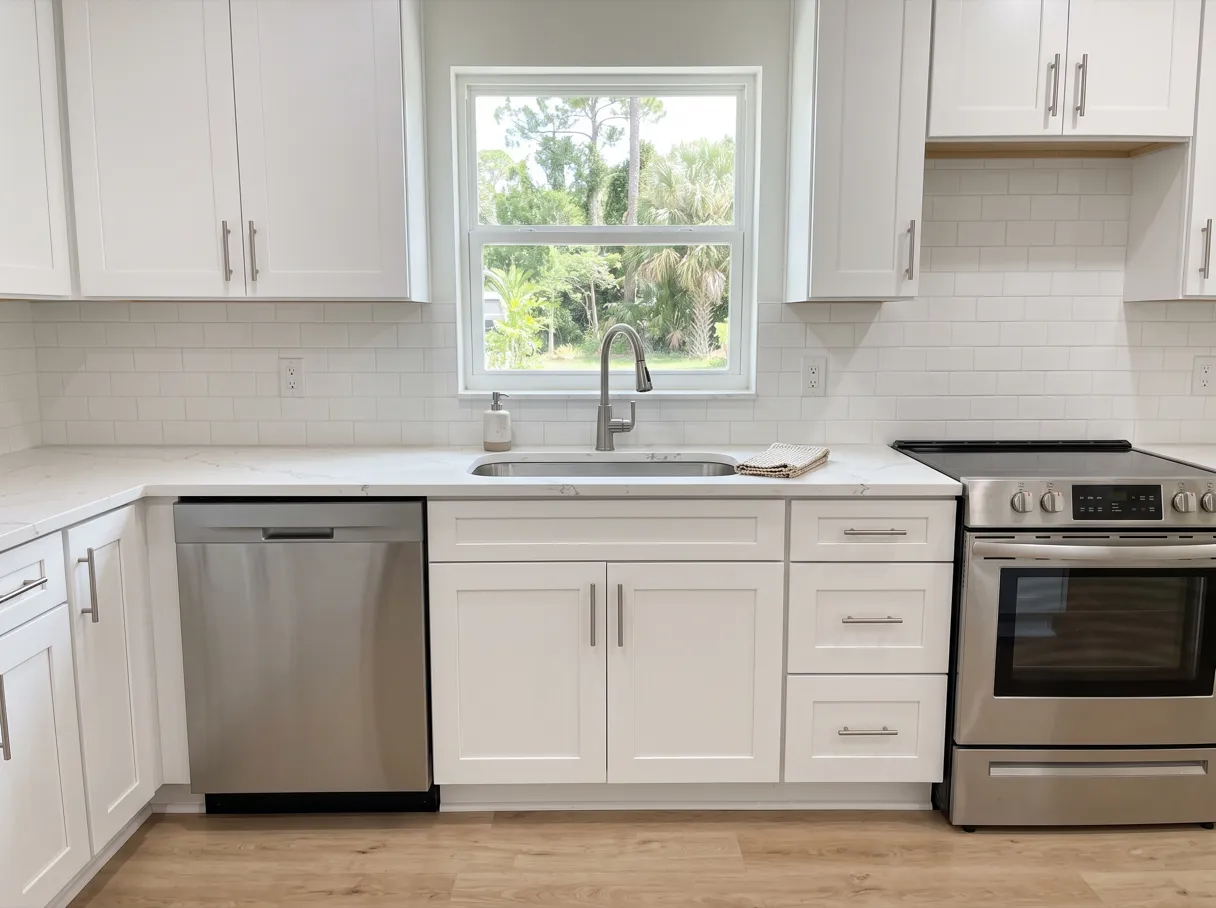
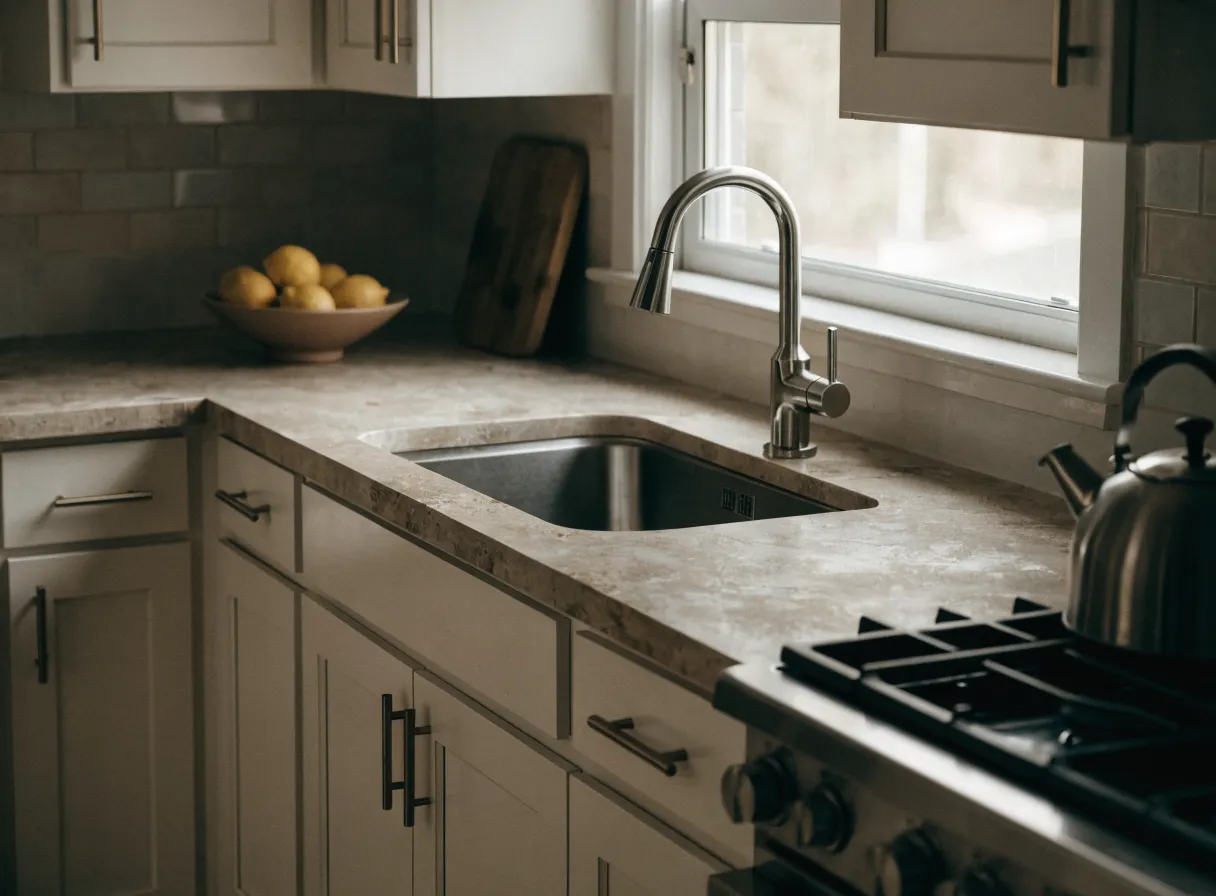
New doors change what the rest of the kitchen looks like next to them. The countertop stays, the backsplash stays, the floor stays, and a laminate counter that read as neutral for twenty years reads as old the day the shaker doors go on. That is the most common regret after a reface, and it is a sequencing problem rather than a quality one.
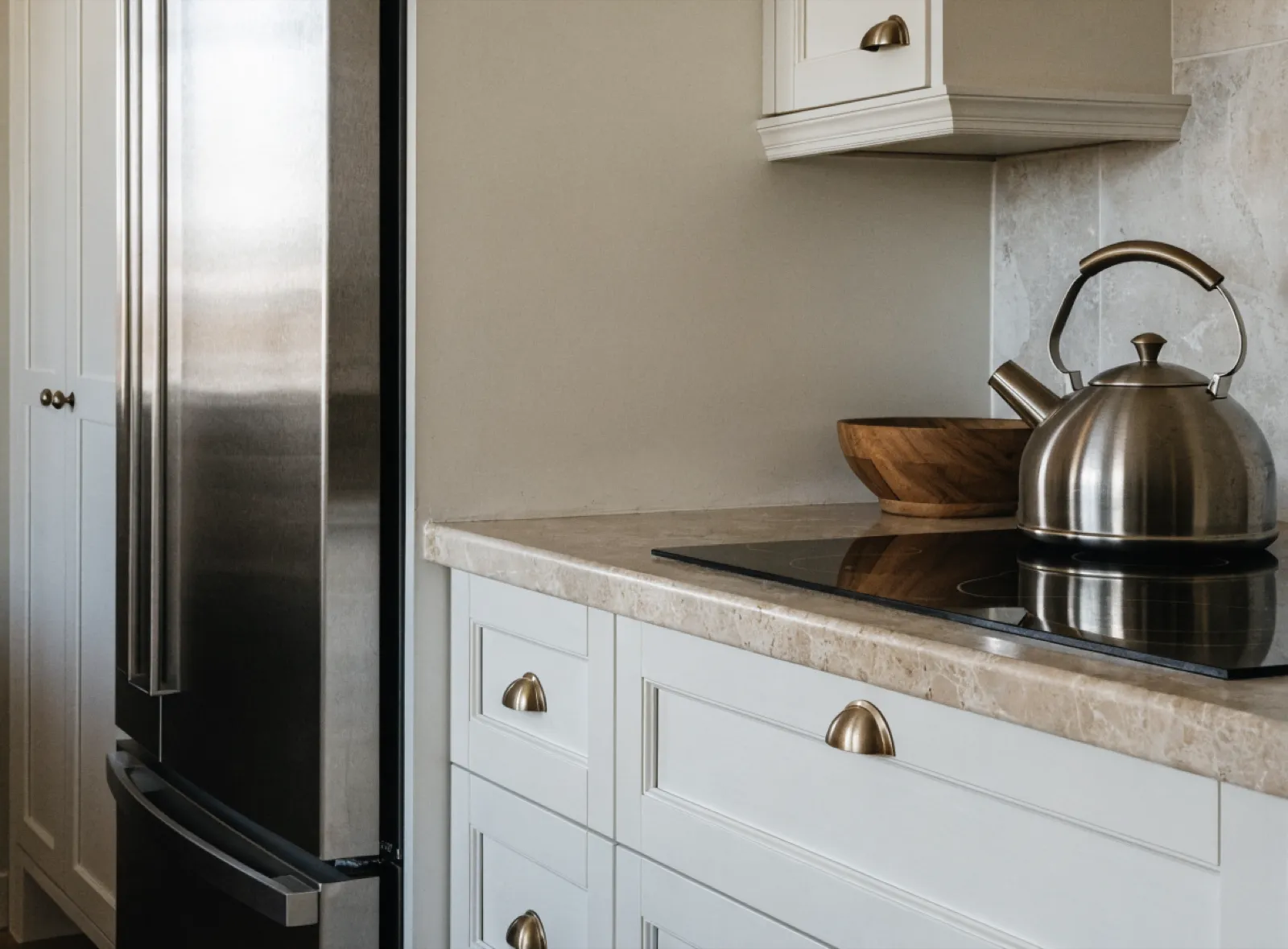
You can put a new counter on refaced cabinets, but the two jobs constrain each other. Stone fabricators work off the boxes you already have: the old top has to come off first, with time built in to repair cabinets damaged in the removal, and the runs have to be level before a slab can be set on them. Thirty-year-old boxes are not always level. Appliance openings are the other fixed dimension. A reface cannot widen the gap the refrigerator sits in, so a counter-depth model that needs more width is a cabinet job, not a door job.
How Long the Result Holds
Refacing has a reputation for aging badly, and its lifespan is decided by two things nobody looks at in a showroom: the surface and the preparation under it. A film-wrapped door beside a heat source and a veneer laid over a frame that was never sanded flat both fail early, and visibly, at an edge or a corner where the eye goes first. The same job on a flat frame, in a material chosen for where it sits, lasts as long as a new kitchen's doors, because past the surface there is no difference.
The part that does not get longer is the box. A reface resets the visible age of the kitchen and none of the actual age of the cabinet, so a carcass with fifteen good years left has fifteen good years left afterward. That is fine when the fronts are the complaint. It is expensive when the boxes were the complaint and the doors got blamed.