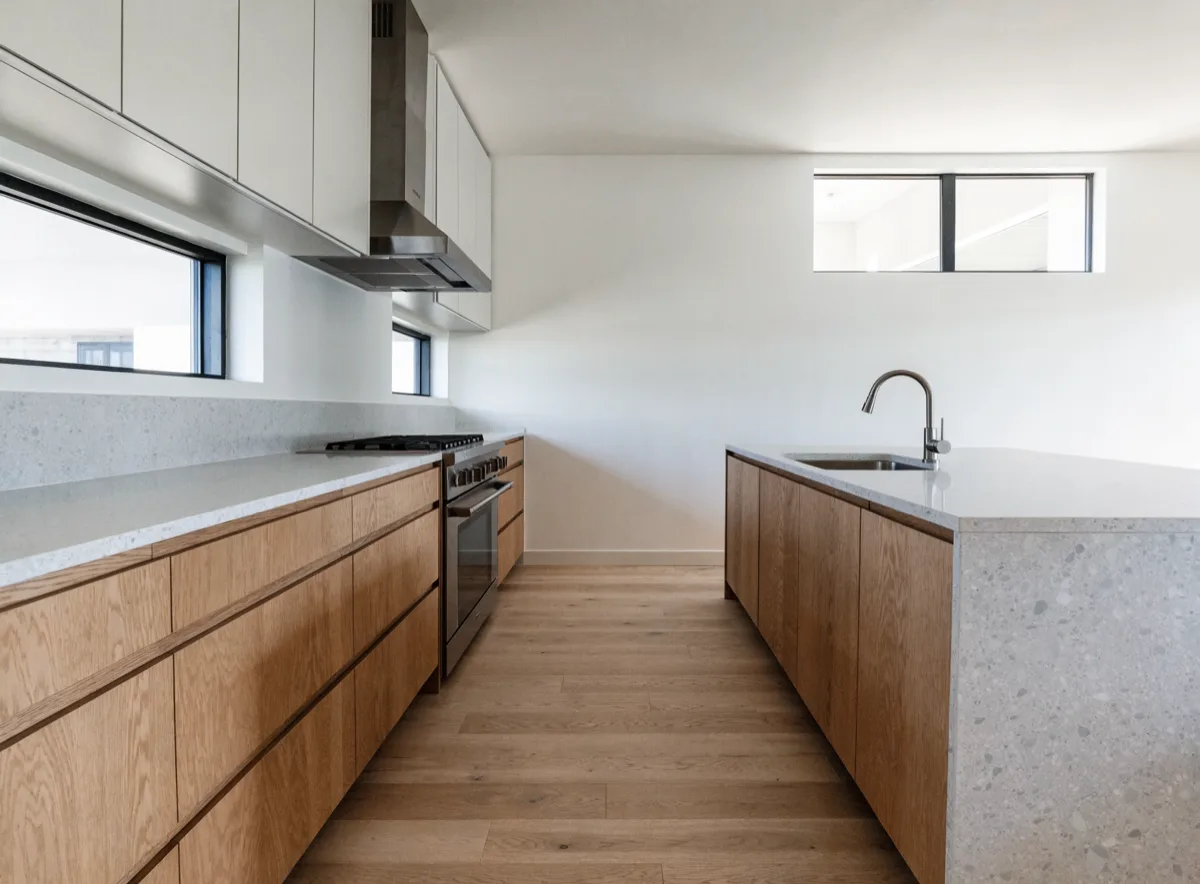
Countertops · Davie, FL
Which Countertop Material Suits Your Kitchen in Davie
Which countertop material suits your kitchen in Davie is settled by three properties, not by a ranking: how easily the surface scratches, whether household acid marks it, and how much it absorbs. The three are independent, so no material wins all of them and no chart can rank them for you. Work out which of the three your household tests every week and the shortlist writes itself.
- Properties that decide it
- Three
- Scratch, acid, absorption
- Materials that win all three
- None
- So the shortlist is yours
- Licensed & insured: CGC1524886
- 500+ kitchens completed
- 2-year workmanship warranty
- Answered 7 AM–10 PM, 7 days
Start With Your Own Week
Nobody uses a kitchen the average way, and the average is what every comparison chart is built on. So start with your own week instead.
Do knives, ceramic dishes and grocery bags land straight on the counter, or is there always a board under them? Does citrus, wine or tomato sauce sit on the surface while you cook, or does it go into a bowl? And is a spill wiped within the hour, or found the next morning?
Those three habits are the three properties, asked in plain language. Each honest answer takes materials off the list. Answer all three and most people are down to two or three candidates before they have looked at a single slab.
The mistake is doing it in the other order. Pick the slab you love first and the rest of the decision turns into looking for reasons that slab will be fine. It usually will be, right up until the one property you never thought about is the one your kitchen tests every day.
Test It Yourself
You do not have to take anyone's word for any of this, which is the part almost nobody is told. Ask the fabricator or the slab yard for offcuts of the two or three materials you are down to. Most will hand them over.
Then run the tests. Use Natural Stone, the consumer arm of the stone industry, publishes the whole procedure: scratch the sample against a glass tile for hardness, puddle lemon juice or vinegar on it for a few minutes to see whether it etches, and put water on an unsealed piece to watch whether it beads, shadows or soaks straight in. Nothing on that list costs anything.
Take the samples home first. Showroom light is not your kitchen's light, and the point is to watch the material behave in the room it will live in. Twenty minutes at your own sink beats a week of comparison charts, because it is your slab and your eyes deciding instead of a general claim about a category.
What the Rules Get Wrong
Two rules of thumb travel further than they deserve, and both cost people money.
The first is that granite has to be sealed. The Natural Stone Institute's own published position is that most granite countertops do not need to be sealed, and that sealing a resin-treated slab adds resistance to a surface that already resists. Whether yours wants a sealer is a question about your slab, answered by the water test. It is not a maintenance sentence that arrives attached to the word granite.
The second is that hard means durable. Hardness is resistance to scratching and nothing else. A stone can be harder than a knife blade and still etch when a lemon sits on it overnight, and sealing does not stop that, because etching is a little of the surface dissolving rather than a stain sinking in.
The last thing worth saying is that one kitchen is allowed two answers. A hardworking perimeter and an island that mostly holds the mail are not being asked the same questions, and no rule says they get the same slab.